
Turkish Towels Guide: Peshtemal vs Terry, Weight, Sizes, Quick-Dry Benefits and Care
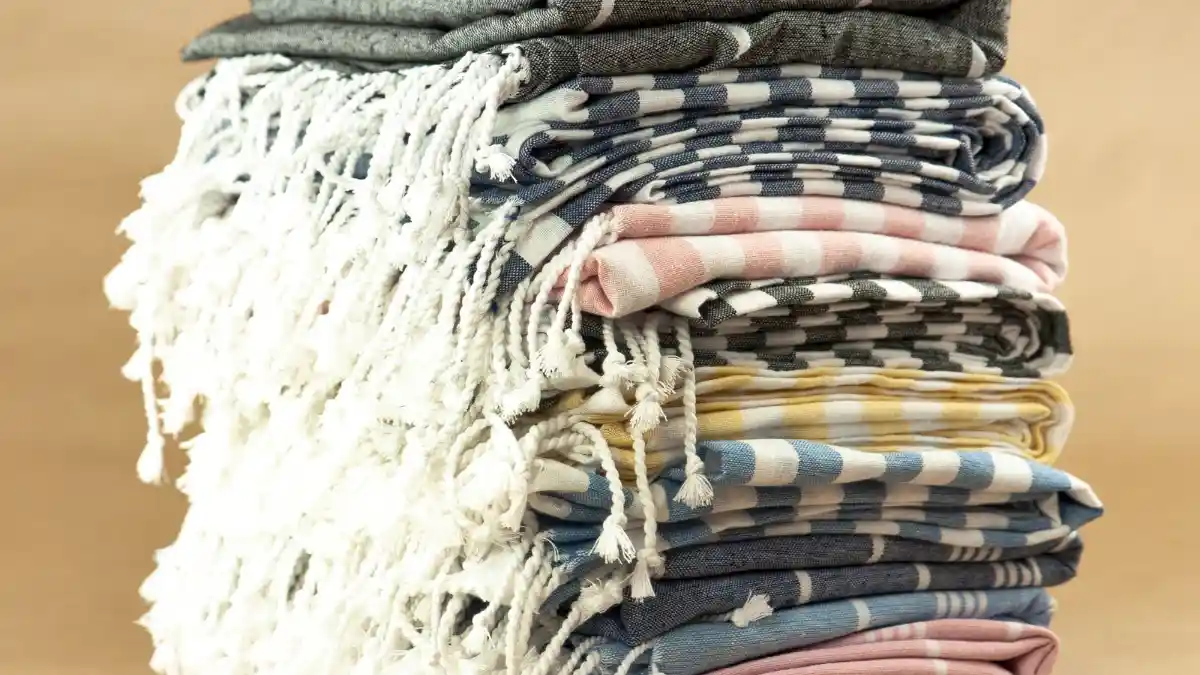
Turkish towels are thin, flat, lightweight towels with a woven pattern and fringed ends. They fold small, dry fast and look stylish. People use them at the beach, at the spa, in the bathroom, on the sofa and even as scarves or blankets. They are very different from fluffy, thick terry towels, and that difference is the whole point.
This article is part of our bath towel and bath mat guide, where you can compare related options.
A Turkish towel, often called a peshtemal, is a flat-woven cotton towel with a long history in Turkish baths. Unlike terry, it has no loops. This guide explains how Turkish towels differ from terry towels, the pros and cons, GSM and sizes, what to use them for, how to care for them and how to choose one.
What Is a Turkish Towel?
A peshtemal is a flat-woven towel traditionally used in Turkish baths (hammams). It is made of cotton, sometimes with linen or bamboo blends, and is woven in stripes or patterns with fringed ends. The weave is flat, not looped. That makes it thin and light.
Some modern versions are “terry-backed”: a flat weave on the front and a thin layer of terry cloth on the back, to add absorbency. One listing describes a traditional Turkish fouta on the front and a thin layer of terry on the back.
Peshtemal vs Terry
Peshtemals are generally lighter, faster-drying and more compact than terry towels, but they absorb less bulk moisture and are less plush.
A standard terry beach towel holds water in thousands of looped fibers, which makes it absorbent but slow to dry, heavy when wet and bulky in a bag. See the terry cloth guide.
| Feature | Turkish towel (peshtemal) | Terry towel |
|---|---|---|
| Weave | Flat | Looped pile |
| Weight | Light (about 270 GSM for light versions) | Heavy (about 500 to 700 GSM) |
| Drying | Fast | Slow |
| Absorbency | Lower per use | High |
| Feel | Thin, crisp | Plush |
| Packing | Folds small | Bulky |
| Sand | Shakes off | Sticks |
Pros of Turkish Towels
Dries quickly and packs small. One source says they dry more quickly, take up less space and are easy to carry. Lightweight. Lightweight versions run about 270 GSM versus 500 to 700 GSM for terry. Sand falls off. Because they are flat-woven, sand shakes right off instead of sticking to the fabric. Less musty. Faster drying helps avoid the musty smell that can come from humidity held in terry. Versatile. Use as a beach towel, bath towel, picnic blanket, sofa throw, scarf or travel wrap. Stylish. Stripes, patterns and fringe look good displayed. See the towel rack guide. Gets softer with washing.
Cons of Turkish Towels
Lower absorbency per use. A lightweight peshtemal soaks up less than a thick terry towel. Less plush. Some people miss the cozy feel of terry. Thin. Lightweight ones can feel too thin for daily bath use. Fringe can tangle in the wash if not treated gently.
Heavier Turkish towels in the 400 to 700 GSM range work well for daily bath use, so choose by weight.
Sizes
Beach-size listings commonly show about 35 by 60 inches or 39 by 70 to 71 inches, a bit larger than a standard beach towel. One listing gives 71 by 152 centimeters for a microfiber beach towel. Bath-size peshtemals are also sold, and one retailer lists a 195 GSM Turkish cotton bath towel as oversized and quick-drying.
| Use | Typical size (listing examples) |
|---|---|
| Hand or kitchen | About 20 by 40 inches |
| Bath | About 30 by 60 inches |
| Beach | About 35 by 60 or 39 by 71 inches |
| Throw or blanket | Larger |
Check the dimensions on each listing.
Uses
Key points: beach and pool. The most popular use. Sand-free, quick-dry; bath and shower. Heavier weights work best; spa and gym; travel. Packs small. See the portable shower and portable bidet guides for other travel items; picnic and blanket; sofa throw. See the wool blanket and pillow covers guides; kitchen towel. Absorbs spills and dries fast; baby wrap or nursing cover. (Check safety and fabric.); scarf or sarong.
Quality: What to Look For
100% cotton, long-staple. Check labels. See the Egyptian cotton sheets guide for label warnings. GSM. Match the weight to the use. Weave density. A dense, even weave is more absorbent and durable. Edge finish. Neat fringe or hemmed edges. Colorfastness. New colorful towels may bleed. Wash separately. Certifications, if you care. Check what they cover. Honest labels. Be careful with vague “Turkish quality” claims.
One note: products labeled as Turkish towels are not all alike. Some are 100% cotton and some are blends with polyester, which absorb less.
Care
Retailers generally recommend: Wash at 30 to 40 degrees Celsius (about 86 to 104 degrees Fahrenheit) with a gentle detergent. Skip fabric softener, which reduces absorbency. Line dry or tumble dry on low to protect the fibers. Avoid bleach and high heat in the dryer. Check the label. Wash new towels separately the first time. Trim loose fringe threads instead of pulling. Fold or roll to store.
Turkish towels often get softer and more absorbent with each wash.
Matching a Turkish Towel to Your Bathroom
Hang on a bar or hooks for a spa look. Use a mix of Turkish and terry towels: terry for the daily bath, Turkish for the beach or travel. Coordinate colors.
See the best towels guide for comparing towel types.
How to Choose a Turkish Towel
Decide the use: beach, bath, travel or decor. Choose the weight: light (about 270 GSM) for beach and travel, heavier (400 to 700 GSM) for daily bath use. Choose the size. Check the fiber: 100% cotton or a blend. Check the weave and edges. Check the care label. Choose colors and patterns. Read reviews for absorbency and fringe quality.
What mistakes should you avoid?
A few common mistakes are worth avoiding: buying a very thin towel and expecting it to feel plush; using fabric softener; drying on high heat; not washing new colors separately; pulling loose fringe threads; ignoring blends that reduce absorbency.
Frequently Asked Questions
What is a Turkish towel?
A flat-woven cotton towel, also called a peshtemal, that is light, quick-drying and compact.
Are Turkish towels absorbent?
They absorb well, but less per use than thick terry. Heavier ones work well for daily use.
What is the difference between a Turkish towel and a terry towel?
Turkish towels are flat-woven and thin. Terry towels have loops and are thick and plush.
Are Turkish towels good for the beach?
Yes. They dry fast, pack small and shed sand easily.
What size is a Turkish beach towel?
Listings commonly show about 35 by 60 inches or 39 by 70 inches.
How do I wash a Turkish towel?
Use a gentle cycle at 30 to 40 degrees Celsius, skip fabric softener and line dry or tumble on low.
Conclusion
Turkish towels are light, fast-drying and stylish, and they are perfect for the beach, travel and anywhere you want a compact towel. They absorb less than terry per use, so choose a heavier weight for daily bathing.
Check the fiber and weight, wash gently and enjoy a towel that gets softer with time.
Related guides
 Best Towels Guide: GSM, Cotton Types, Absorbency, Lint and How to Choose Bath TowelsA good towel does one job: it dries you. A bad towel moves water around, leaves lint on your skin or turns…Read more →
 Microfiber Towel Guide: GSM, Waffle vs Chenille Weave, Car, Gym and Hair Uses and Care Without Fabric SoftenerQuick answer: microfiber towels are made of very fine synthetic fibers that soak up water quickly. GSM (grams…Read more →
 Hand Towels Guide: Standard Size (50 x 90 cm), GSM, Materials, Hand vs Guest Towel and CareQuick answer: a standard hand towel is about 16 by 28 inches, or roughly 50 by 90 centimeters. A weight of 500…Read more →
 Small Laundry Room Ideas: Stacked Machines, Folding Counters, Vertical Storage and Layouts That WorkQuick answer: the best small laundry room ideas are to stack the washer and dryer, add a folding counter or…Read more →



One Comment