
Paper Towel Dispenser Guide: Wall-Mounted, Touchless, Roll and Handheld Types and Installation Tips
Quick answer: a paper towel dispenser holds and dispenses paper towels in a bathroom, kitchen or workplace. Main types are wall-mounted, touchless (sensor or mechanical), roll and handheld. Choose by traffic, power (batteries or outlet) and accessibility, mount it where users can reach it and confirm the wall can bear the load.
This article is part of our bath towel and bath mat guide, where you can compare related options.
A paper towel dispenser keeps towels clean, reduces waste and limits touching. It is common in restrooms and commercial kitchens, and it fits well in a home powder room or workshop. But the product category is crowded, and the search results were mostly low-quality, keyword-stuffed pages. I rely only on manufacturer and distributor listings for specifications, and mark general guidance as general. For accessibility and installation heights, check the manufacturer’s instructions and local rules, such as ADA reach ranges.
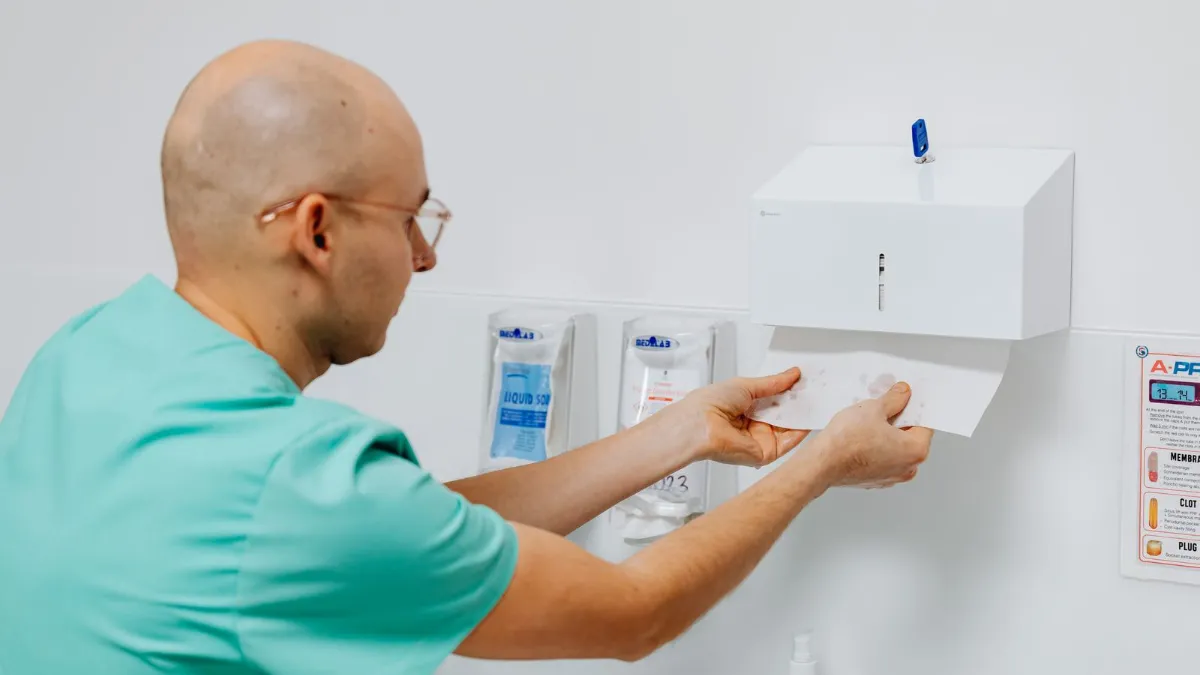
Types of Paper Towel Dispensers
Wall-Mounted
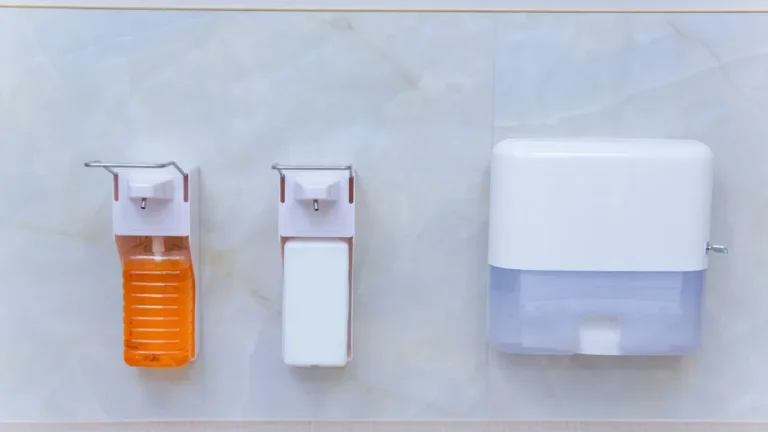
Wall-mounted models save floor space and are easy to access. They suit restrooms and commercial kitchens, per listings.
Touchless: Sensor and Mechanical
Touchless models reduce contact with the unit.
Sensor (motion-activated). A sensor releases a towel when motion is detected. A listing describes a model that dispenses when motion is detected, and another model’s sensor works without a handle. Mechanical touchless. A lever or wave-free mechanism that dispenses a sheet without direct contact. The von Drehle wall-mount mechanical touchless dispenser and the NVI Locor manual touchless are examples.
Sensor models need batteries or power. One San Jamar-style touchless wall-mount listing gives dimensions of 11.75 inches wide by 9.25 inches deep by 16.5 inches high and notes that it requires four D batteries (not included).
Roll Dispensers
Roll dispensers wrap paper towels into rolls, automatically cutting and dispensing sheets. They are described as a cost-effective choice for low-traffic areas.
Hard Roll vs Center-Pull
(General knowledge, not from the search.) Hard roll dispensers hold large rolls. Center-pull ones feed from the middle. Check which rolls fit.
Handheld
Handheld dispensers are portable and suit small or healthcare spaces. They are designed for easy portability, perfect for small kitchens, nurseries or healthcare settings where mobility matters.
Countertop and Under-Cabinet
Countertop and under-cabinet types did not come up in the results. Home kitchens commonly use countertop towel holders and under-cabinet holders, but I did not verify products. See the bathroom accessories guide for towel holders and hooks.
Sizes
Listings show dimensions like: 14.5 by 9.5 by 16 inches for a wall-mount von Drehle dispenser. 12.38 by 16.76 by 10 inches for a wall-mount NVI Locor hard roll. 11.75 by 9.25 by 16.5 inches for a touchless wall-mount San Jamar.
Check the roll size the dispenser takes (core size and roll width). Measure wall space with room for the unit and for restocking.
Power: Batteries or Plug
Battery models. Usually take D batteries. Check battery life, and use quality batteries. Plug-in or adapter models. Need an outlet nearby. Hardwired. Installed by an electrician. Low-voltage options. The search notes sensor models need proximity to power or low-voltage options.
Choose battery-powered for easy installation.
Where to Mount
One low-quality guide suggested placing the roll or sensor between 30 and 60 inches above floor level for average users. I treat that as unverified and urge you to check: the manufacturer’s installation instructions; local accessibility codes (such as ADA reach ranges); user needs: children and wheelchair users need lower reach.
Placement tips: mount near the sink, but out of splash; leave clear space in front for access; avoid placing behind a door swing; keep a waste bin nearby; avoid blocking walkways.
For powder rooms, see the powder room guide for clearances.
Wall Strength and Mounting
Confirm the wall can bear the load, especially for wall-mounted units full of towels.
Key points: use studs or rated anchors; drywall alone may not hold a full dispenser; follow the maker’s hardware list; use a level; re-check mounting periodically.
See the floating nightstand guide for stud mounting tips.
Home Use
At home, a paper towel dispenser can help: In a powder room, where guests use disposable towels. See the hand towels guide for cloth alternatives. In a workshop or garage. In a laundry room. See the small laundry room ideas guide. In a home bar or kitchen.
Use a decorative dispenser that matches your bathroom accessories finish.
Hygiene and Waste
Paper towels are single-use. They reduce shared cloth towels but create waste. Some guides compare paper with cloth and air dryers. I did not verify claims, so choose based on your needs. Recycle where possible, and use compostable towels if available.
Maintenance
Key points: wipe the exterior with a mild cleaner; replace batteries before they run out; clear jams promptly; check the cutter or tear bar; restock before empty; replace broken locks or covers.
What are the main strengths and weaknesses?
| Type | Pros | Cons |
|---|---|---|
| Wall-mounted | Saves floor space | Needs mounting |
| Touchless sensor | Hygienic, easy | Needs power, batteries |
| Mechanical touchless | No power | Can jam |
| Roll | Low-cost, efficient | Rolls specific size |
| Handheld | Portable | Smaller capacity |
How to Choose a Paper Towel Dispenser
Decide the location and traffic. Choose the type: wall-mounted, touchless, roll or handheld. Check roll size compatibility. Decide on power: batteries or plug. Check dimensions and wall space. Check accessibility and mounting height rules. Check wall strength. Choose a finish that matches the room. Read reviews for jams. Check the warranty.
What mistakes should you avoid?
A few common mistakes are worth avoiding: mounting without studs or anchors; ignoring accessibility; buying the wrong roll size; forgetting batteries; placing it in the splash zone; trusting low-quality guides.
Frequently Asked Questions
What types of paper towel dispensers are there?
Wall-mounted, touchless, roll and handheld.
Do touchless dispensers need batteries?
Sensor models usually do. One listing requires four D batteries.
How high should I mount a dispenser?
Follow the manufacturer’s instructions and local accessibility rules.
Are roll dispensers good for low traffic?
Listings call them a cost-effective choice for low-traffic areas.
Can I use one at home?
Yes, in powder rooms, garages or kitchens.
Do I need to mount it into studs?
Confirm the wall can bear the load. Use studs or rated anchors.
Conclusion
A paper towel dispenser keeps hand drying clean and simple. Choose the type that fits your traffic and power, check roll compatibility, mount it securely and confirm accessibility rules.
Then your dispenser will work smoothly.
Related guides
 Best Towels Guide: GSM, Cotton Types, Absorbency, Lint and How to Choose Bath TowelsA good towel does one job: it dries you. A bad towel moves water around, leaves lint on your skin or turns…Read more →
 Microfiber Towel Guide: GSM, Waffle vs Chenille Weave, Car, Gym and Hair Uses and Care Without Fabric SoftenerQuick answer: microfiber towels are made of very fine synthetic fibers that soak up water quickly. GSM (grams…Read more →
 Hand Towels Guide: Standard Size (50 x 90 cm), GSM, Materials, Hand vs Guest Towel and CareQuick answer: a standard hand towel is about 16 by 28 inches, or roughly 50 by 90 centimeters. A weight of 500…Read more →
 Soap Dispenser Guide: Foam vs Liquid, Automatic vs Pump, Refills and How to ChooseA soap dispenser is one of the most used items in a bathroom or kitchen, and also one of the most overlooked.…Read more →




One Comment