Wall Shelf: Types, Anchors, Weight Capacity and Installation Tips
A wall shelf is one of the easiest ways to add storage and style. It holds books, plants, photos and everyday items without taking floor space. But a shelf that’s hung with the wrong hardware can pull away from the wall. How you mount it matters as much as the shelf itself.
This article is part of our shelves, bookcases and storage furniture guide, where you can compare related options.
A wall shelf is any shelf attached to a wall. It can be a plain board on brackets, a floating shelf with hidden supports, a ledge for frames, a set of cube shelves or a corner unit. Shelves can be wood, metal, glass or a mix.
This guide explains the main types, how anchors and studs affect weight capacity, how to install a shelf and how to avoid common mistakes. You’ll also find a comparison table, a checklist and answers to common questions. Shelf height and styling advice here is general, since my sources focused on mounting.
Types of Wall Shelves
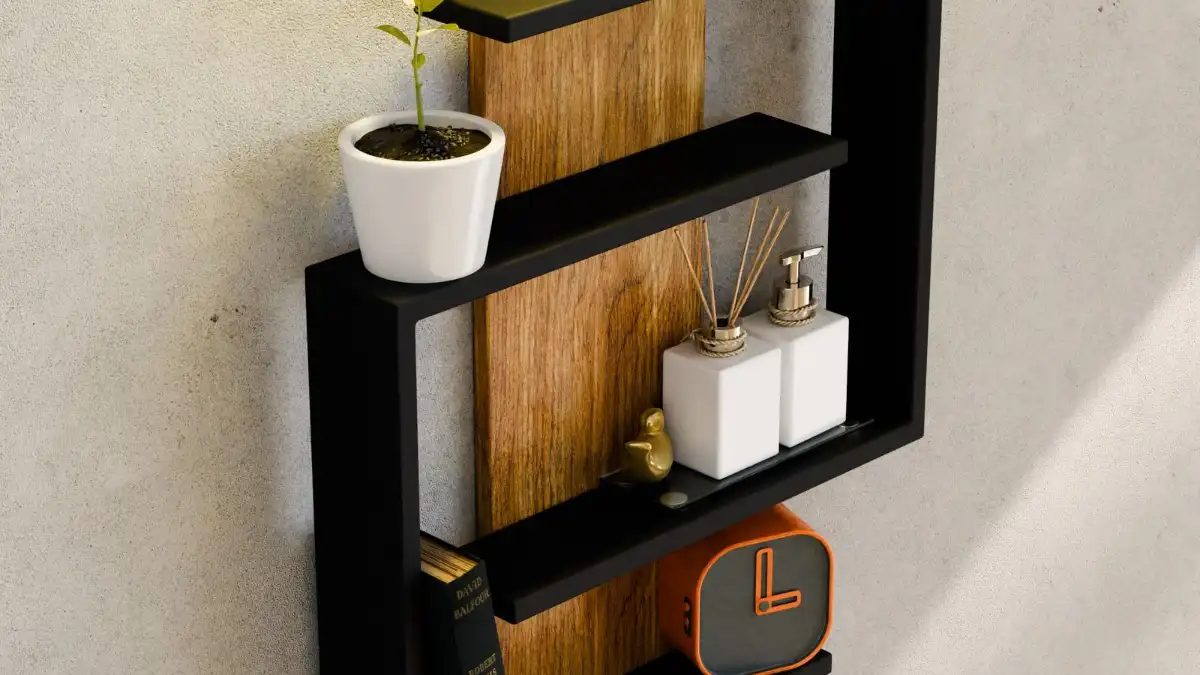
Bracket shelf: a board that rests on visible brackets. It’s strong and simple. Floating shelf: hidden brackets or a rail give a clean, bracket-free look. See the floating shelves guide. Picture ledge: a narrow shelf for frames and light decor. Cube shelf: square boxes mounted on the wall for books and baskets. Corner shelf: fits into a corner. See the corner shelf guide. Shelf with hooks: combines a shelf with hooks for keys or coats. Ladder shelf: a leaning shelf that doesn’t need wall mounting, though it should be anchored. Glass shelf: light and modern. Needs careful mounting. Wire or metal shelf: industrial and airy.
| Type | Look | Strength | Best for |
|---|---|---|---|
| Bracket | Visible supports | Strong | Books, heavier items |
| Floating | Clean | Depends on mounting | Light to medium |
| Picture ledge | Slim | Light | Frames |
| Cube | Modular | Medium | Books, baskets |
| Glass | Modern | Light | Display |
Studs vs Drywall Anchors
Generally, shelves hung on studs can hold more weight than those hung on drywall alone. Anchoring into studs is the safer choice for heavier shelves.
If you can’t hit a stud, you need anchors rated for the load. Ratings differ by source, so use them as rough guides.
Plastic anchors. One guide puts them at 10 to 25 pounds, while another gives 10 to 50 pounds. They’re fine for light decor. Toggle bolts. Generally the strongest common option for drywall. One table lists them at roughly 30 to 100 or more pounds, and they’re reusable. Molly bolts and steel hollow-wall anchors. Listed at higher ranges, up to about 100 to 200 pounds in some sources.
Never exceed the anchor’s weight limit. Ratings on packaging are also based on a certain wall thickness. Wider spacing between mounting points generally distributes the load more effectively, which enhances the shelf’s overall capacity.
For tile, brick, plaster or concrete, use hardware made for that material. If you aren’t sure what’s behind the wall, check for pipes and wires before you drill.
How Much Weight Can a Wall Shelf Hold?
Shelf ratings vary widely. One source says shelves are rated from 200 pounds per shelf to well over 1,000 pounds per shelf, depending on the manufacturer and design, but those are for heavy-duty hardware. Most decorative shelves hold far less.
What decides capacity: the shelf and bracket design; the wall. Studs vs drywall; the anchors; shelf depth. Deeper shelves create more leverage; weight distribution. Spread weight along the shelf.
Check the maker’s stated limit for your exact shelf, and stay well under it. A shelf of books gets heavy fast. A foot of hardcover books can weigh around 20 pounds or more, so add up the load before you stack.
How to Install a Wall Shelf
- Choose the location. Consider furniture, doors, lights and how you’ll use the shelf.
- Find the studs with a stud finder. Mark them.
- Decide on the height. Think about who will use it and what it will hold.
- Mark and level. Use a level and a pencil to mark the bracket positions.
- Check for pipes and wires. Use a detector if needed.
- Drill pilot holes.
- Install anchors if you can’t use studs. Choose a type rated well above the load.
- Attach the brackets. Tighten securely.
- Place the shelf and secure it, following the maker’s guide.
- Test with light weight first, then load gradually.
For corner shelves, each arm anchors independently into one wall, so if one side hits a stud and the other doesn’t, you can use different anchor types.
Where to Use Wall Shelves
Living room: books, plants and photos. Kitchen: spices, mugs and cookbooks. Bathroom: towels and toiletries. Use moisture-resistant materials. Bedroom: a reading shelf, a nightstand alternative or display shelves. Home office: supplies and files. Entryway: keys, mail and a small basket. Kids’ room: books and toys, mounted out of reach or at a safe height.
Styling Tips
My sources did not cover styling, so these are general ideas.
Key points: group items in odd numbers; mix heights and textures; leave some empty space; put heavier items near the wall and at the ends near the supports; match shelf color to your wall or contrast it; add lighting for a feature wall; don’t overload.
How to Choose a Wall Shelf
Decide what it will hold. Check the weight. Add up your items. Pick the type. Bracket for strength, floating for style. Choose the size. Length, depth and thickness. Choose the material. Wood, metal or glass. Check the mounting hardware. Is it included? Is it suitable for your wall? Check stud locations. Think about moisture for kitchens and bathrooms. Match the style. Read reviews for notes on sagging and installation.
What mistakes should you avoid?
A few common mistakes are worth avoiding: using drywall anchors for heavy loads (they can pull out); ignoring the weight rating (overloaded shelves sag or fail); skipping the level (the shelf looks crooked and items slide); not checking behind the wall (you could hit a pipe or wire); choosing a shelf that’s too deep (more leverage, more strain); using the wrong hardware for tile or brick.
Frequently Asked Questions
How much weight can a wall shelf hold?
It depends on the shelf, brackets and wall. Studs hold more than drywall alone. Check the manufacturer’s rating.
Do I need studs to hang a shelf?
For heavy loads, yes. For light decor, strong anchors may be enough.
What is the best anchor for drywall?
Toggle bolts and steel hollow-wall anchors are generally stronger than plastic anchors. Match the anchor to the load.
How do I hang a shelf on drywall without studs?
Use heavy-duty anchors rated well above the weight and keep the load light.
How high should I hang a wall shelf?
It depends on the use. Think about reach, furniture and sight lines.
How do I keep items from sliding off?
Level the shelf, and use a lip, a rail or non-slip pads.
Conclusion
A wall shelf adds storage and style when it’s mounted correctly. Choose the type that fits your needs, find the studs and use anchors rated well above the load.
Level the shelf, check behind the wall and load it gradually. With the right hardware and a little planning, your wall shelf will stay secure.
Related guides
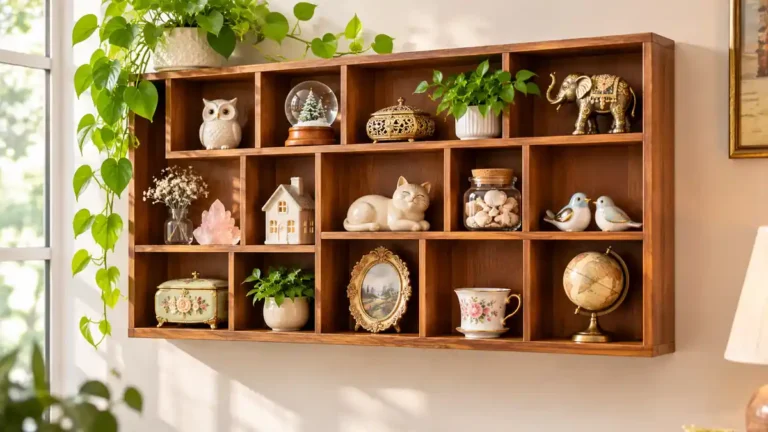 Trinket Shelf Guide: Small Display Shelves for Collectibles, Sizes, Weight Limits and StylingA trinket shelf is a small shelf made to hold small treasures: tiny figurines, crystals, candles, keepsakes,…Read more →
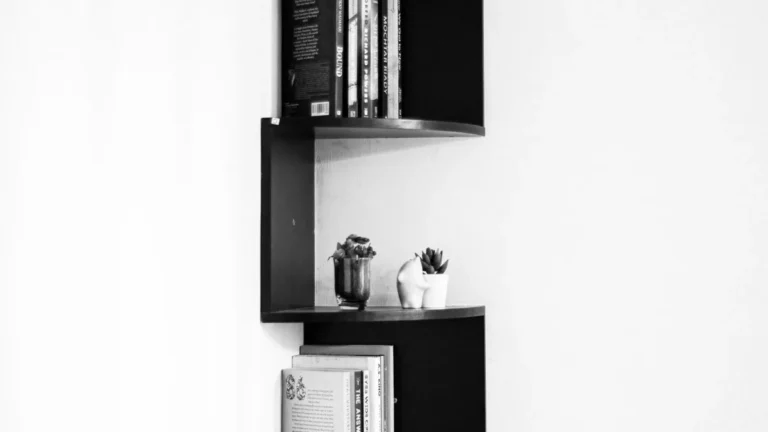 Corner Shelf: Types, Weight Limits, Installation and Small-Space IdeasCorners are the most wasted space in a room. A corner shelf puts that space to work. It can hold books, plants,…Read more →
 Book Shelf: Types, Sizing, Anchoring and How to ChooseA book shelf does more than hold books. It organizes your space, shows off the things you love and can turn a…Read more →
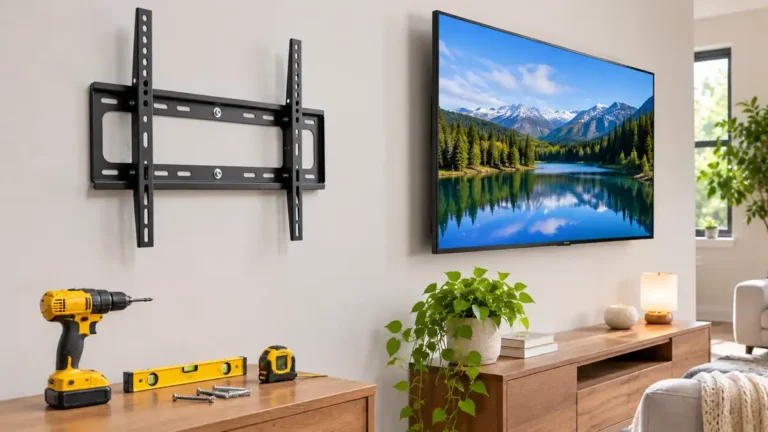 How to Mount a TV on the Wall: Studs, VESA, Height and Cable TipsMounting a TV on the wall frees up floor space and gives your room a clean look. It also adds risk if it s done…Read more →