Memory Foam vs Hybrid Mattress: Comparison Table and How to Choose
Memory foam and hybrid are two of the most popular mattress types. They can look similar from the outside, but they feel different, sleep at different temperatures and cost different amounts. If you’re choosing between them, a clear comparison saves time.
This article is part of our mattress buying guide, where you can compare related options.
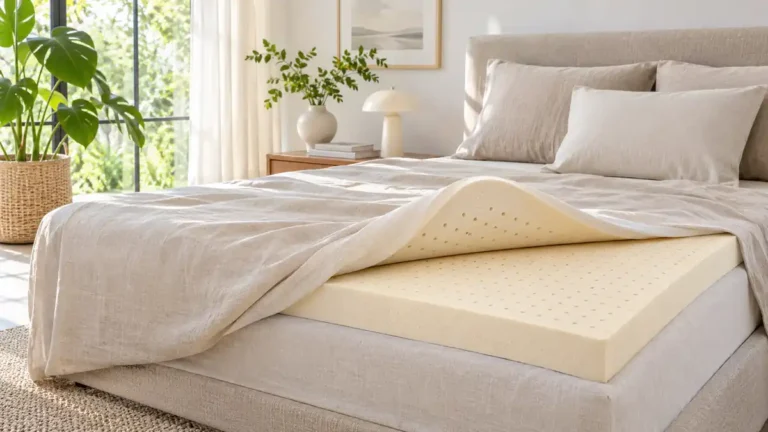
A memory foam mattress is made of layers of foam, often with a dense base and a contouring top layer. A hybrid mattress has a coil support core with foam or latex comfort layers on top. The coils are what set it apart.
This guide gives you a side-by-side comparison table, then explains each factor in plain language: feel, cooling, motion isolation, support, edge support, durability and price. It also tells you who each type suits. It does not rank brands. You’ll also find a checklist and answers to common questions.
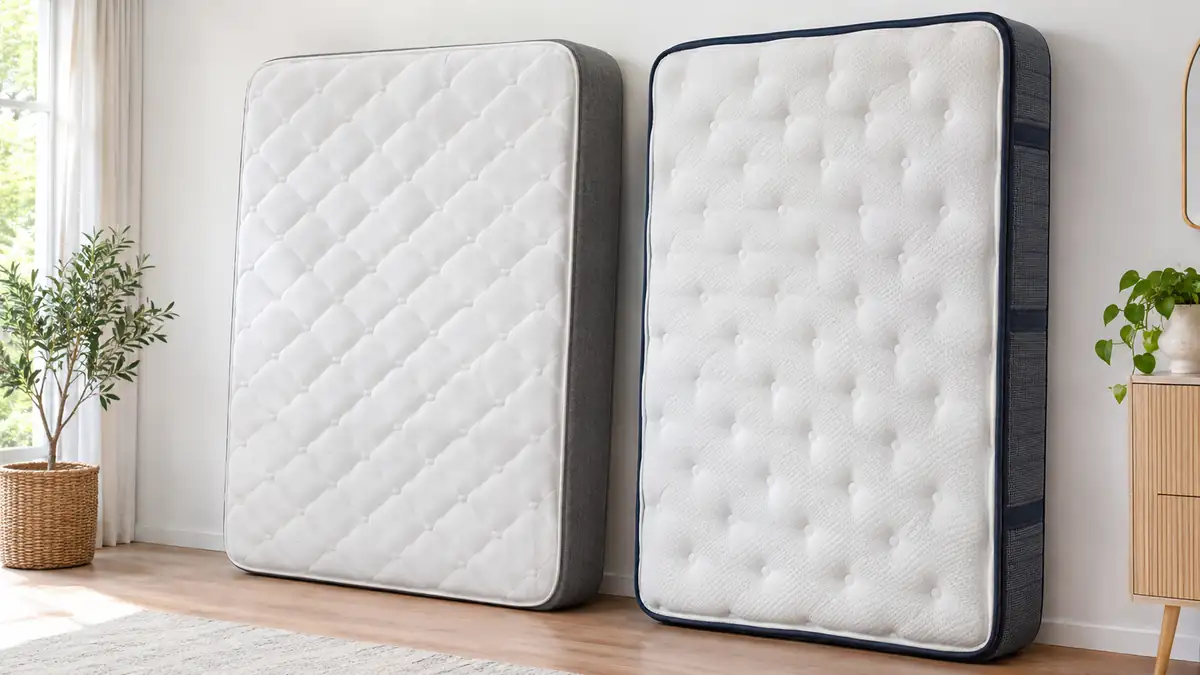
Memory Foam vs Hybrid: Comparison Table
| Factor | Memory foam | Hybrid |
|---|---|---|
| Construction | All foam layers | Coil core plus foam or latex layers |
| Feel | Body-hugging, contouring | Balanced contour and bounce |
| Cooling | Often warmer | Usually more breathable |
| Motion isolation | Usually excellent | Good, can vary |
| Support | Dense foam support | Coil support, often stronger |
| Edge support | Often weaker | Usually stronger |
| Durability | Mixed evidence | Mixed evidence |
| Price | Usually lower | Usually higher |
| Weight | Lighter | Heavier |
| Bounce | Slow response | More bounce |
Feel
Memory foam: is generally described as a body-hugging, contouring feel. It molds to your shape and responds slowly when you move. Some people love the cradling feeling. Others feel stuck. Hybrids: pair foam comfort layers with a coil support core. They offer good support while still providing pressure relief, and one review says hybrid mattresses are just as capable of providing excellent pressure relief. They feel more responsive and bouncy than all-foam beds.
If you like to sink in, choose memory foam. If you like to sleep on top of the bed and move easily, choose a hybrid.
Cooling
Hybrids come out ahead here. One review calls them more breathable, and the coil layer helps airflow. Individually wrapped coils promote better airflow than a solid foam core.
Memory foam tends to trap body heat. Cooling-specific models exist for both types, using heat-dissipating materials like gel or open-cell foam. But dense comfort layers, particularly memory foam, tend to trap ambient heat in hybrids too.
If you sleep hot, a hybrid with breathable layers is a better starting point.
Motion Isolation
Memory foam is the usual winner. It’s known for body-contouring and motion isolation, so you’re less likely to feel a partner move. Hybrids can transfer more movement. One review of a gel-foam-on-coils hybrid notes some motion transfer.
Hybrids with individually wrapped coils can reduce motion transfer, which makes them a common pick for couples. If your partner tosses and turns, test both types.
Support
Hybrids are generally viewed as more supportive, since coils provide the core. Memory foam relies on dense foam layers for support. Heavier sleepers may prefer a hybrid because coils resist compression better. Body weight matters: a heavier individual will naturally place more stress on a mattress’s components.
Edge Support
Hybrids usually win. A coil-based hybrid can have excellent edge support, so you can sit on the side of the bed or sleep near the edge without sliding off. A retailer guide describes a specific all-foam model as having limited edge support.
If you share a smaller bed or sit on the edge to put on shoes, edge support matters.
Durability
Sources conflict. TechRadar says hybrids tend to last longer, while Tom’s Guide says memory foam models are usually longer-lasting than hybrids. The gap likely depends on build quality.
One source puts a high-quality hybrid’s lifespan at seven to ten years, depending on the density of its foam layers and the quality of its pocketed coils. Foam density matters for both types. Higher-density foam usually lasts longer. Look at the specs and the warranty, not just the type.
Price
Memory foam is usually cheaper. One review says hybrids are more expensive than all-foam beds, though another notes all-foam models are cheaper, but not always. Hybrids typically cost more due to their complex construction and quality materials. High-end hybrids use premium foams like latex or memory foam, durable coils and superior comfort layers.
No firm price ranges, so compare current prices.
Weight and Noise
Hybrids are heavier because of the coils. That makes them harder to move and more difficult to rotate. One source lists expensive, heavy and potential for noise as common complaints about hybrids. Coil noise can occur, though well-made individually wrapped coils tend to be quiet. Memory foam is silent.
Who Should Choose Memory Foam?
Key points: side sleepers who want strong pressure relief; light sleepers who are disturbed by a partner’s movement; shoppers on a tighter budget; people who like a hugging, sink-in feel; those who don’t mind a slower response.
Who Should Choose a Hybrid?
Key points: hot sleepers; people who want more bounce and easier movement; heavier sleepers who want stronger support; those who sit on the edge of the bed; couples who want balanced motion isolation and airflow, if the coils are individually wrapped; combination sleepers who change positions often.
How to Test Before You Buy
Check the trial period. Look for at least 100 nights. Sleep on it for 30 nights. Your body needs time to adjust. Test in your usual position. Pay attention to your shoulders, hips and lower back. Test with your partner. Check motion transfer and edge feel. Check temperature. Note whether you wake up hot. Read the return terms. Look for fees. Use a good base. A solid or closely slatted foundation helps either type.
Checklist: Memory Foam vs Hybrid
Do you sleep hot? Lean hybrid. Do you share the bed? Think about motion isolation. Do you need strong edges? Lean hybrid. Is your budget tight? Lean memory foam. Do you want to sink in? Lean memory foam. Do you weigh more? Lean hybrid, or high-density foam. Do you move often? Consider the weight of the mattress. Check the foam density and coil type. Check certifications. CertiPUR-US, for example. Compare warranties.
What mistakes should you avoid?
A few common mistakes are worth avoiding: choosing by type alone (build quality matters more); ignoring heat (all-foam beds can run warm); skipping the trial (you can’t judge a mattress in a store); forgetting weight (hybrids are heavy); assuming hybrids always cost more (check actual prices); believing every cooling claim (read real reviews).
Frequently Asked Questions
Is memory foam or hybrid better?
Neither is better for everyone. Memory foam suits motion isolation, contouring and lower cost. Hybrids suit airflow, edge support and bounce.
Which sleeps cooler, memory foam or hybrid?
Hybrids are generally more breathable because of the coil layer. Cooling memory foam models also exist.
Which lasts longer?
It depends on the build quality, foam density and care.
Are hybrid mattresses good for side sleepers?
Yes, if they have a plush comfort layer for pressure relief at the shoulders and hips.
Are hybrids good for couples?
Hybrids with individually wrapped coils can reduce motion transfer, which makes them a common pick for couples.
Which is cheaper?
Memory foam is usually cheaper, but prices vary.
Conclusion
Memory foam and hybrid mattresses each have strengths. Memory foam gives deep contouring, strong motion isolation and a lower price. Hybrids give more airflow, better edge support and a bouncier feel.
Think about how you sleep, how hot you run and who shares your bed. Use the sleep trial to test your choice, and judge the mattress by its materials and build, not just its type.
Related guides
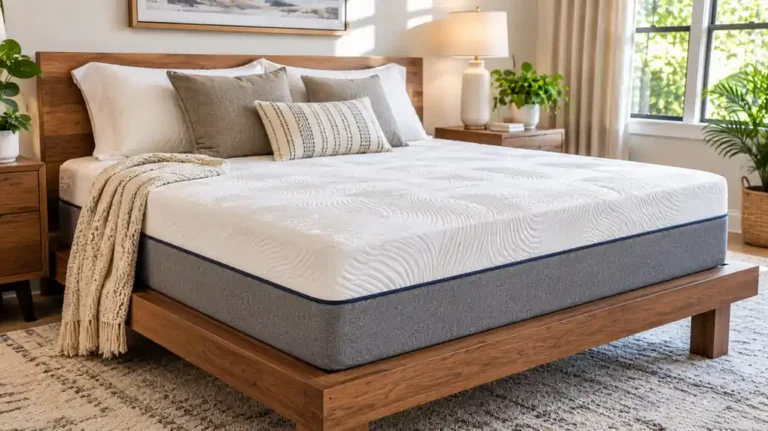 Best Memory Foam Mattress Guide: Density, Firmness, Thickness, CertiPUR-US, Heat and Sleep TrialsQuick answer: the best memory foam mattress matches your sleep position and weight, uses certified foam,…Read more →
 Memory Foam Mattress: Density, Firmness, Heat and How to ChooseA memory foam mattress hugs your body. It softens under your weight and heat, then springs back slowly when you…Read more →
 Hybrid Mattress: How It’s Built, Pros, Cons, Lifespan and Who It SuitsA hybrid mattress tries to give you the best of two worlds: the cushioning of foam and the support of coils. It…Read more →
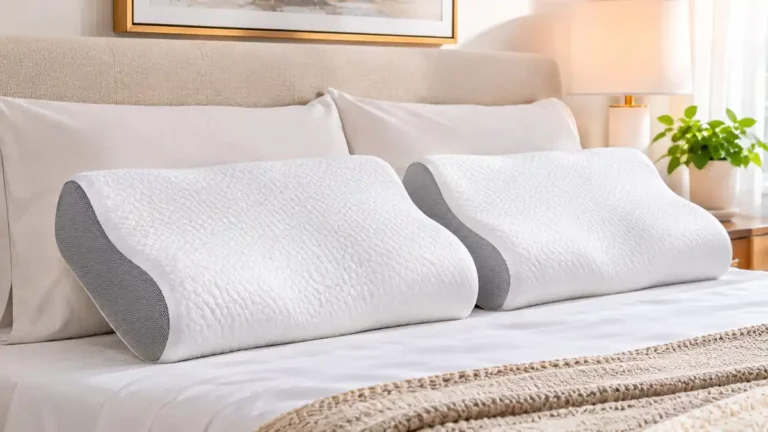 Memory Foam Pillows Guide: Solid vs Shredded vs Contour, Loft, Heat and CareA good pillow keeps your head and neck in a comfortable position all night. Memory foam pillows are popular…Read more →