
How to Clean a Shower Curtain: Fabric, Plastic Liner, Mold and Mildew
A shower curtain lives in the dampest place in your house. Soap scum, body oils and moisture build up on it, and pink or black spots of mildew can show up at the bottom. Cleaning it takes a few minutes and a washing machine, and it saves the cost of replacing it.
This article is part of our bathroom cleaning and mold prevention guide, where you can compare related options.
To clean a shower curtain, check the care label, wash it in the machine on a gentle cycle with detergent and a few towels, then hang it to dry. Use a cool, gentle cycle for plastic liners, and a warmer wash for fabric curtains. Treat mold and mildew first with vinegar or a suitable cleaner.
This guide explains how to wash fabric and plastic curtains, how to remove mold and mildew, when to replace a liner and how to prevent buildup. You’ll also find a comparison table and answers to common questions.
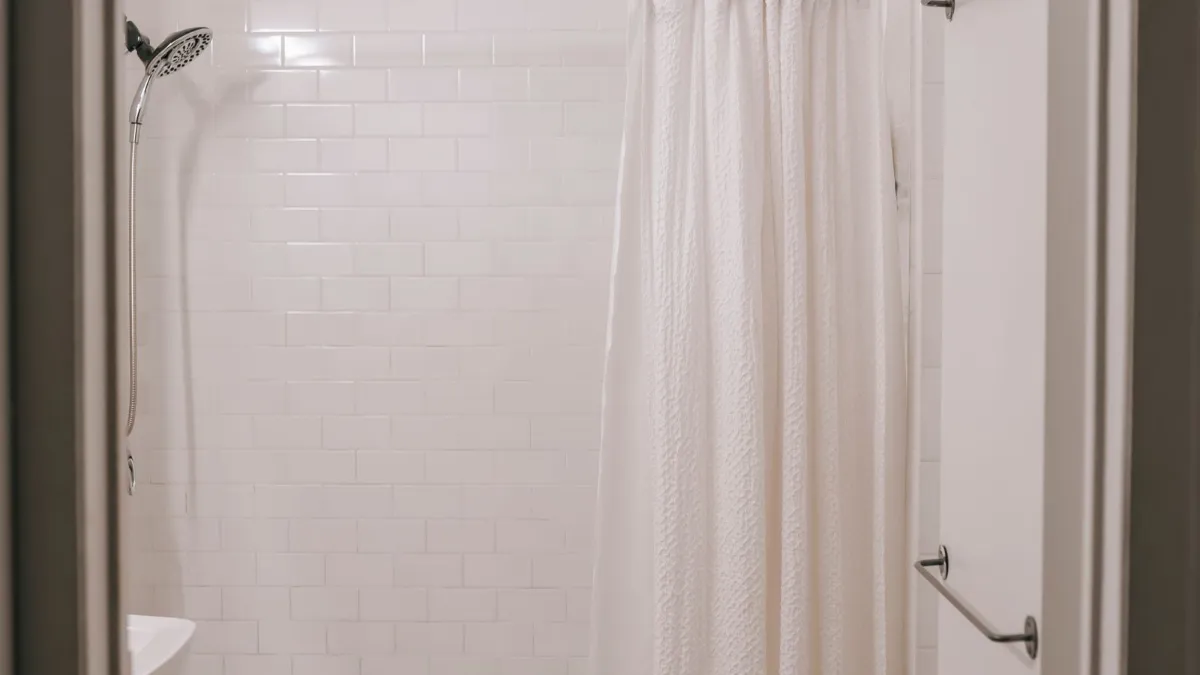
Before You Start: Check the Care Label
Not every curtain can go in the machine. Look for a tag. Fabric curtains usually can. Plastic and vinyl liners often can on a gentle cycle. Some PEVA liners should be hand washed, according to one maker. If there’s no label, use cool water and a gentle cycle, or hand wash.
Supplies
Key points: mild laundry detergent; white vinegar; baking soda; two or three old towels; a soft brush or sponge; a spray bottle; liquid bleach (optional, for plastic liners, when the label allows); gloves.
How to Wash a Fabric Shower Curtain
On this approach.
- Take the curtain down. Remove the rings or hooks.
- Place it in the machine with a few old towels. The towels help scrub the curtain and balance the load.
- Add detergent and, if you like, a cup of vinegar. Vinegar is effective against mold, according to one source.
- Choose a warm or cool wash, a gentle cycle, as the label advises. One source suggests a high spin for fabric because it holds more water.
- Check it after the cycle. Repeat if needed.
- Hang it back on the rod while still damp, or air dry. The weight of the water helps smooth wrinkles.
Avoid the dryer unless the label says it’s safe. Heat can shrink or damage the fabric and any water-resistant coating.
How to Wash a Plastic or Vinyl Liner
Plastic doesn’t absorb water, so a gentler approach works.
- Remove the liner and rings.
- Wash it with towels on a gentle or cool cycle. Sources recommend a slow spin, since plastic doesn’t absorb water. Heat can warp or melt plastic, so cool water is the safer choice.
- Add detergent and a cup of vinegar or baking soda.
- Do not dry in the dryer. Hang the liner to dry.
- Rehang it and spread it out so it dries flat.
Check the label for PEVA. One maker advises hand washing and air drying, since machine washing may damage some PEVA liners.
How to Hand Wash a Shower Curtain
If the label says not to use the machine, or the curtain is delicate:
- Fill a tub with warm water and mild soap.
- Submerge the curtain and let it soak for 15 to 30 minutes.
- Scrub spots with a soft brush or sponge.
- Rinse well with clean water.
- Hang to dry.
Do this over the tub, or spread the curtain on a clean surface.
How to Remove Mold and Mildew
Mold and mildew show up as black, pink or green spots, especially at the hem.
Vinegar method (gentle): soak the curtain in a tub with equal parts white vinegar and warm water for an hour. Scrub spots with a brush. Then wash in the machine as above. Vinegar is a common first choice and works on many curtains. Baking soda paste: mix baking soda with water, apply it to stains, let it sit and scrub gently. Bleach (plastic liners only, if allowed): several sources favor bleach for mold and mildew on plastic liners. Some say a half cup of liquid bleach works for a very moldy plastic liner washed by itself. Others warn that bleach can damage vinyl or fabric, so check the care label and spot test first. Safety: never mix bleach and vinegar. One source warns that the mixture can be toxic, so don’t use them in the same load or step. Ventilate the bathroom and wear gloves.
If mold is heavy, deeply stained or has a lasting smell, replace the liner. New liners are inexpensive.
| Material | Wash method | Temperature | Dry | Mold treatment |
|---|---|---|---|---|
| Fabric | Machine with towels | Warm or cool, gentle | Hang or low heat if allowed | Vinegar soak |
| Plastic/vinyl | Machine, slow spin | Cool, gentle | Hang | Vinegar or bleach if label allows |
| PEVA | Hand wash (some) | Cool | Air dry | Vinegar, spot clean |
How Often Should You Clean a Shower Curtain?
Washing about once a month helps prevent mildew, according to one source. Wash fabric curtains and liners more often if they get dirty or smell musty. Replace liners when they stain or stay slimy after washing.
How to Keep a Shower Curtain Clean
Spread it out after every shower. Fully opening the liner after each shower helps it dry. A bunched curtain stays wet. Run the bathroom fan or open a window. Leave a gap at the bottom so air can circulate. Rinse the curtain with water now and then to remove soap. Wipe soap scum as you see it. Use a fabric liner or a mildew-resistant liner. Replace the liner every few months if it gets grimy.
Choosing the right material helps. Quick-drying fabrics and mildew-resistant liners reduce buildup. A good bathroom fan also makes a big difference.
What mistakes should you avoid?
A few common mistakes are worth avoiding: using hot water on plastic (it can warp or melt); using the dryer on liners (heat can ruin them); mixing bleach and vinegar (it creates a toxic mixture); skipping the label (some curtains need hand washing); leaving the curtain bunched up (it stays damp and grows mold); using too much bleach (it can weaken the material).
Frequently Asked Questions
Can you put a shower curtain in the washing machine?
Yes, many fabric curtains and plastic liners can. Check the label, use a gentle cycle and add towels.
How do I get mold off a shower curtain?
Soak it in a vinegar and water solution, scrub the spots and wash. Some plastic liners can be treated with bleach if the label allows. Replace heavily moldy liners.
Can I use bleach on a shower curtain?
Some recommend it for plastic liners, others warn it can damage vinyl or fabric. Check the label and spot test. Never mix bleach with vinegar.
How often should I wash my shower curtain?
About once a month to prevent mildew, and sooner if it looks or smells dirty.
Should I put a shower curtain in the dryer?
Usually no. Heat can damage plastic and coatings. Hang it to dry.
How do I keep my shower curtain from getting moldy?
Spread it out after each shower, ventilate the bathroom and wash it regularly.
Conclusion
Cleaning a shower curtain is easy. Check the label, wash it with towels on a gentle cycle and use vinegar for mold and mildew. Be careful with heat and never mix bleach with vinegar.
Open the curtain after every shower, run the fan and wash it monthly. When a liner is stained or smelly beyond rescue, replace it. A clean curtain makes the whole bathroom feel fresher.
Related guides
 How to Clean Shower Tiles: Soap Scum, Grout and Mold Step by StepShower tiles get dirty fast. Soap scum builds up, grout turns gray, and mold can start in the corners. Most of…Read more →
 Shower Squeegee Guide: How to Use It Daily, Prevent Mold and Hard Water Spots, Blade and Handle TipsQuick answer: a shower squeegee removes water from glass, tile and fixtures right after you shower, before it…Read more →
 Eucalyptus in the Shower: How to Hang It, How Long It Lasts, Benefits and SafetyQuick answer: tie a bundle of fresh eucalyptus stems together and hang it from the shower head or a hook where…Read more →
 Shower Curtain: Standard Size, Liners, Materials and CareA shower curtain keeps water inside the tub and gives your bathroom some personality. It s one of the cheapest…Read more →

One Comment