Desk with Drawers Guide: Pedestal Layouts, File Drawer Sizes, Depth and Legroom
A desk with drawers keeps pens, papers, chargers and files out of sight. It’s a smart choice for a home office, a dorm or a small apartment where clutter piles up fast. But drawers also take up space under the desk, so the layout affects your legroom and the way the desk fits in the room.
This article is part of our home office desk guide, where you can compare related options.
A desk with drawers is a desk that has one or more drawers built in. The drawers may be on one side, on both sides, in a center pencil drawer or in a separate pedestal that sits beside or under the desk. Drawers can hold supplies, files or both.
This guide explains pedestal layouts, drawer types, file drawer sizing, desk depth and legroom, and what to check about weight and slides. See the computer desk guide for height and monitor advice. My sources did not cover ergonomics such as desk height and chair fit, so check those separately. You’ll also find a comparison table, a checklist and answers to common questions.
Types of Desks with Drawers
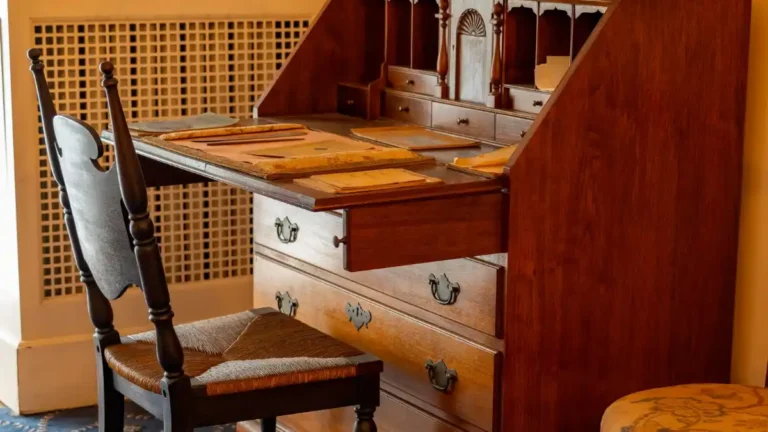
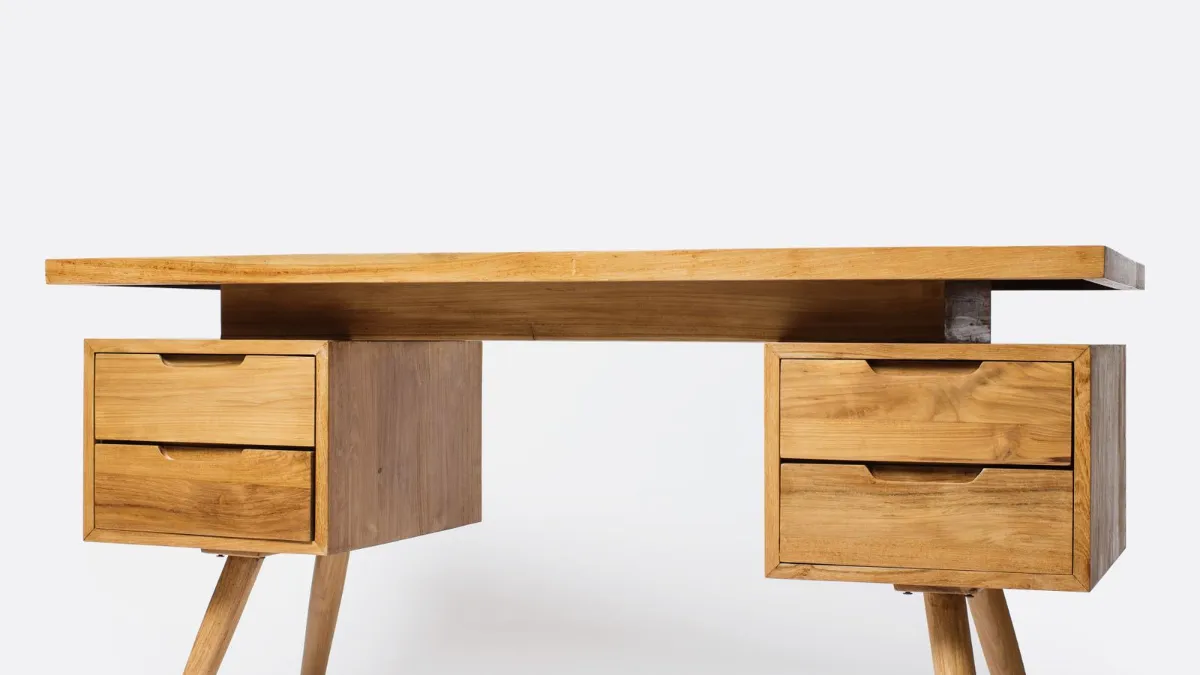
Single-pedestal desk: one side has a stack of drawers, and the other side is open for your legs. Double-pedestal desk: drawers on both sides, with a center knee space. Sturdy and roomy, but large. Desk with a center drawer (pencil drawer): a shallow drawer above your lap for pens and small items. Desk with a mobile pedestal: a freestanding drawer unit on wheels that can roll under the desk or out to the side. Writing desk with small drawers: a slim desk with one or two shallow drawers. Corner or L-shaped desk with drawers: see the corner desk and L-shaped desk guides. Secretary or hutch desk: drawers plus cubbies and a fold-down surface. Standing or sit-stand desk with drawers: check how drawers work when the desk moves.
| Type | Best for | Watch out for |
|---|---|---|
| Single pedestal | Home offices | One leg side only |
| Double pedestal | Large offices | Takes more room |
| Mobile pedestal | Flexibility | Needs under-desk clearance |
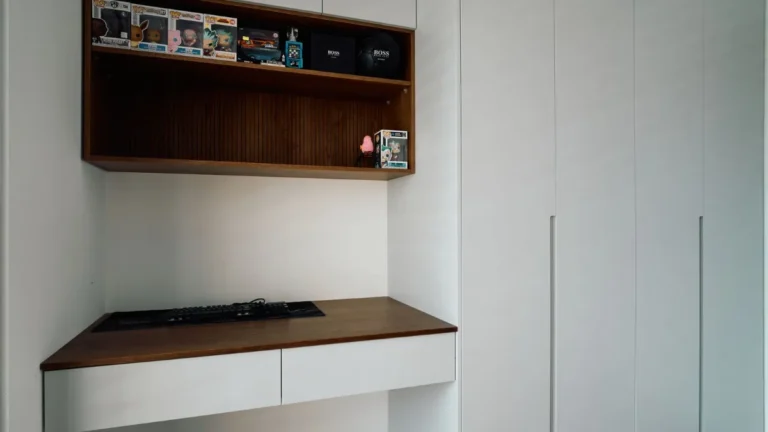
| Center drawer | Small items | Limits legroom |
Drawer Layouts
Common pedestal setups are: Box/box/file. Two shallow supply drawers plus one deep file drawer. File/file. Two full-depth file drawers for maximum filing capacity. Box/file. One supply drawer plus one file drawer.
A desk can also combine a pencil drawer, small supply drawers and a file drawer in one unit. You might find desks with a mix of drawer types.
Pick the layout based on what you store. If you keep a lot of paper, choose a file drawer. If you keep gadgets and stationery, choose several shallow drawers.
File Drawer Size
File drawers typically take letter or legal hanging files, and the drawers often lock for security. Check the interior width, because not all file drawers fit legal-size folders.
One retailer guide says legal folders need at least 15 to 16 inches of interior drawer width, so check that measurement for legal files. Letter files fit in narrower drawers. If you only use letter-size paper, a narrower drawer works.
Drawer slides matter. Full-extension slides matter most for file drawers. One guide notes that three-quarter extension slides open approximately 75 percent of the drawer depth, which leaves the back of the drawer hard to reach.
Desk Depth and Legroom
Desk depth typically ranges from 20 to 30 inches. A deeper desk provides more workspace and allows for a more comfortable distance from the monitor. The depth also influences how much legroom you have.
If you plan to park a mobile pedestal under the desk, measure the clearance. One guide says a desk depth of 24 inches minimum is needed to park a 20 inch deep pedestal fully under the desk surface with the front face flush.
Think about legroom: measure the knee space between pedestals; make sure there’s room for your chair; check the height under the center drawer; a single pedestal leaves one side open for your legs; avoid desks with drawers that hit your knees.
Sit at the desk in a store, if possible, or compare the product’s knee space with your own measurements.
Fixed vs Mobile Pedestals
Some pedestals are not a freestanding unit. They must be placed under a desk, credenza or return shell. Others, like full-height pedestals, are built into the desk. Measure the under-desk clearance before buying.
Fixed pedestals: stable and always in place. Mobile pedestals: roll out for access and tuck away when you don’t need them. Wheels need a smooth floor, and some pedestals have locks.
If you move often, a mobile pedestal gives flexibility. If you want maximum stability, a fixed one is better.
Weight and Durability
Check the weight rating. Never exceed the pedestal’s rated weight capacity in any single drawer. File drawers get heavy fast. For heavy use, one guide suggests commercial-grade pedestals with anti-tip interlocks, which stop more than one drawer from opening at once and help prevent tipping.
Look at: drawer construction. Metal or solid wood sides last longer than thin particleboard; slides. Ball-bearing slides are smoother and stronger; locks. Handy for privacy and security; frame. Sturdy legs and a solid top; desktop. A thick, scratch-resistant surface.
Features That Help
Key points: cord management. One desk has cord-management grommets on the desktop; comfortable edges. One product lists soft, waterfall-shaped edges that provide a comfortable typing surface; keyboard tray; hutch or shelves; built-in charging; locking drawers; anti-tip features.
How to Choose a Desk with Drawers
Decide what you’ll store. Paper files, supplies or gadgets? Choose the drawer layout. Check the file drawer width if you use legal files. Measure the room and desk depth. Leave space for your chair. Check legroom and knee space. Pick a fixed or mobile pedestal. Check the slides. Full extension for files. Check weight ratings. Look at cord management. Read reviews for notes on drawer slides and stability.
What mistakes should you avoid?
A few common mistakes are worth avoiding: not checking legroom (drawers can crowd your knees); buying a file drawer that is too narrow (legal files won’t fit); ignoring slide type (three-quarter slides make the back hard to reach); overloading drawers (they jam or fail); forgetting under-desk clearance (a mobile pedestal won’t fit); skipping anti-tip features (heavy drawers can tip a unit).
Frequently Asked Questions
What is a pedestal desk?
A desk with a stack of drawers on one or both sides, with an open space between for your legs.
What is a file drawer?
A deep drawer made to hold hanging file folders. Check the width for letter or legal size.
How deep should a desk with drawers be?
Desk depth typically ranges from 20 to 30 inches. A 24 inch depth is the minimum to park a 20 inch pedestal fully under the desktop, according to one guide.
What are full-extension slides?
Slides that let the drawer open all the way, so you can reach the back. Three-quarter slides open about 75 percent.
Should I choose a mobile pedestal?
If you want flexibility, yes. Make sure the desk has enough clearance.
How much weight can a desk drawer hold?
It depends on the model. Never exceed the rated capacity of a single drawer.
Conclusion
A desk with drawers keeps your workspace tidy and your supplies close. Choose a layout that fits what you store, check the file drawer width and slides and leave enough legroom.
Measure the depth and under-desk clearance, check the weight ratings and look for sturdy construction. With the right desk, your home office stays organized and comfortable.
Related guides
 Desk Shelf Guide: Clamp-On Shelves, Risers, Hutches, Sizes and Weight CapacityQuick answer: a desk shelf adds a second level to your desk for a monitor, books or supplies. Main types are…Read more →
 Wood Desk Guide: Solid Wood vs Veneer, Weight, Repairability, Size and CareQuick answer: a wood desk can be solid wood or a thin layer of real wood (veneer) over a cheaper core. Solid…Read more →
 Desk Pad Guide: Leather, PU, Felt and Cloth Materials, Size, Grip and CleaningA desk pad is a large mat that sits on your desk. It protects the surface from scratches, spills and heat,…Read more →