Shower Bench Guide: Built-In vs Freestanding, Size, Materials and Safety
A shower bench gives you a place to sit while you bathe. Some people want it for comfort, like shaving legs or relaxing under warm water. Others need it for safety, because standing for a whole shower is tiring or risky. Either way, the right bench makes the shower easier to use.
This article is part of our shower guide, where you can compare related options.
A shower bench is a seat inside a shower. It can be built into the wall, mounted to the wall so it floats, or placed on the floor as a freestanding piece. This guide covers the three types, the materials, the size and weight points to check, and how to keep a bench clean and safe. If you need a seat mainly for mobility support, read the shower chair guide too, because chairs with backs and arms work differently from benches.
Types of Shower Benches
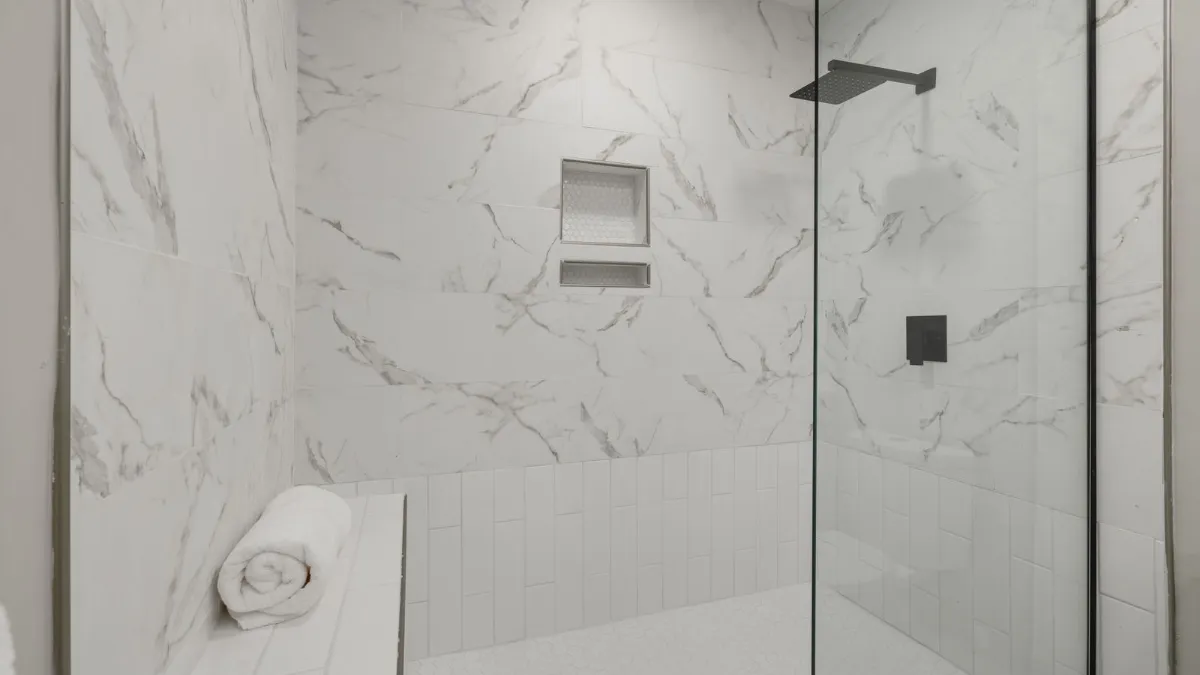
Built-in bench: a tiled or stone seat made as part of the shower. It looks clean and never moves. It must be planned during construction, and it needs a slight slope so water drains off. Floating (wall-mounted) bench: a seat that attaches to the wall studs or solid blocking. It folds up in some models, which saves floor space. The wall must be able to hold the load. Freestanding bench: a bench with legs that you set on the shower floor. It is the easiest to add to an existing shower and can be moved or removed. Corner bench: a triangle-shaped seat that fits in a corner. It works well in small showers.
| Type | Best for | Watch out for |
|---|---|---|
| Built-in | New builds, remodels | Cost, needs planning |
| Floating | Small showers, folding use | Needs solid wall support |
| Freestanding | Renters, quick upgrade | Can slide or tip if poorly made |
| Corner | Tight spaces | Smaller seat |
Materials
Teak and other water-resistant woods. Warm to touch and popular in spa-style showers. They need occasional care. Plastic and resin. Light, low cost and easy to wipe clean. Aluminum frames with plastic seats. Common for medical-style benches because they resist rust. Tile, stone or solid-surface. Used for built-in seats. Pick a textured or honed finish so it is not slippery. Stainless steel. Strong, but check the seat surface for grip.
Avoid anything that soaks up water and stays damp, since that invites mold.
Size and Weight Rating
Measure your shower first. Leave enough room to move and to turn off the water without stretching. A common seat height for comfortable sitting is roughly 17 to 19 inches, and many accessible-design guides use a similar range, but check the current ADA or local code if you are building to a standard. Seat depth often runs around 15 to 18 inches for a bench in a roll-in style shower.
Always check the weight rating on the product page. Pick a rating well above the heaviest user, and make sure the legs have rubber tips or suction feet. For wall-mounted benches, the mounting hardware and the wall structure matter as much as the bench.
Safety Tips
Choose a seat with drain holes or a slope so water does not pool. Look for non-slip feet and a textured seat. Install grab bars nearby. A bench is not a substitute for a grab bar. Never use a towel bar as a handhold. Test a freestanding bench on the wet floor before first use. Keep soap and shampoo within reach so you do not have to stand up and twist. If you have balance problems, ask an occupational therapist or doctor what seat is best.
Cleaning and Care
Soap scum and mildew build up on seats. Rinse the bench after each shower, and wipe it weekly with a mild cleaner that suits the material. Teak may need a gentle brush and occasional oil, following the maker’s directions. Lift a freestanding bench now and then to clean the floor beneath it, because water collects under the legs. See the shower tile cleaning guide for the surrounding surfaces.
How to Choose a Shower Bench
Decide who will use it and why. Measure the shower, including door swing. Pick the type: built-in, floating, freestanding or corner. Check the weight rating and the seat size. Choose a material that resists water and mold. Look for non-slip feet or secure mounting. Plan grab bars and reachable storage. Read reviews for notes on wobble and rust.
What mistakes should you avoid?
A few common mistakes are worth avoiding: mounting to tile only (the bench needs studs or solid blocking); choosing a bench with a flat top (water pools and the seat gets slippery); ignoring the weight rating (always leave a safety margin); placing the bench under the shower head with no screen (the seat gets soaked, and so does the floor); forgetting to clean underneath (mildew grows quickly).
Frequently Asked Questions
How big should a shower bench be?
Many seats are about 15 to 18 inches deep and sit around 17 to 19 inches high. Fit it to the user and to your shower size.
Is a built-in bench better than a freestanding one?
A built-in bench looks seamless and never moves. A freestanding bench is cheaper and works in an existing shower.
Can a shower bench hold a lot of weight?
It depends on the model. Always read the stated weight rating.
Do I need a bench in a small shower?
Not always. A folding or corner bench can fit tight spaces.
How do I stop a shower bench from getting moldy?
Rinse it, let it dry, wipe it weekly and choose a material that does not soak up water.
Conclusion
A shower bench adds comfort and safety when you pick the right type for your space. Measure carefully, check the weight rating, choose a water-friendly material and add grab bars nearby. Clean it often, and it will stay safe and pleasant to use.
Related guides
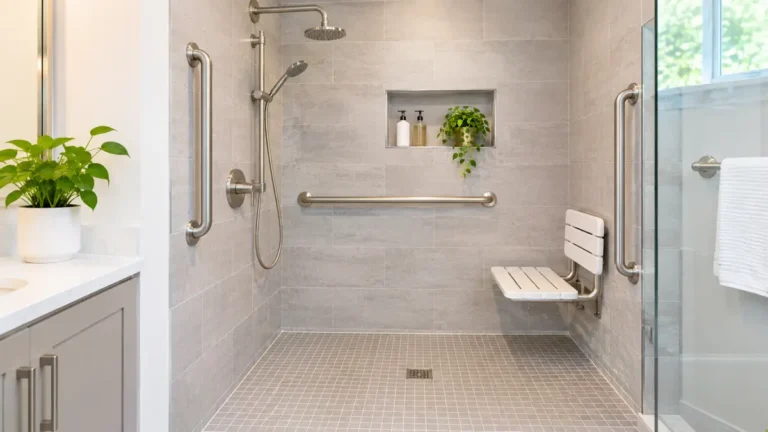 Roll-In Shower: Size, Threshold, Slope and What Accessibility Rules Usually RequireA roll-in shower is a shower with no curb, so a person using a wheelchair can roll straight in. Vendors…Read more →
 Shower Shelf: Tension Pole, Adhesive and Built-In Types, Weight and RustThere are three main types of shower shelf: tension-pole caddies, adhesive-mounted shelves and glued-in or…Read more →
 Camp Shower Guide: Solar Shower Bags, 5-Gallon Capacity, Heating Time, Water Temperature Safety and SetupQuick answer: a camp shower is a portable shower for camping, RV trips and beach days. The most common type is…Read more →
 Shower Squeegee Guide: How to Use It Daily, Prevent Mold and Hard Water Spots, Blade and Handle TipsQuick answer: a shower squeegee removes water from glass, tile and fixtures right after you shower, before it…Read more →