Shower Stool Guide: Stool vs Chair vs Bench, Height, Weight Capacity, Non-Slip Feet and Folding Options
A shower stool gives you a place to sit while you wash. For some people, it is a comfort: shaving legs, relaxing under the water or washing hair. For others, it is a safety tool: standing for a whole shower is tiring, and a slip in a wet shower can cause serious injury. A good stool is simple, stable and small, and it fits in showers where bigger seats do not.
This article is part of our shower guide, where you can compare related options.
A shower stool is a backless seat made for use in a shower. This guide explains how a stool differs from a chair and a bench, what seat height to choose, how weight capacity works, why non-slip feet matter, what folding and corner options exist and how to use one safely. This is not medical advice. If you or someone you care for has balance or mobility issues, ask an occupational therapist or doctor which equipment is best.

Stool vs Chair vs Bench
Shower stool: a seat without a back. Foldable models suit small showers, and they work best where you can easily move in and out of the shower. A shower stool is a seat without a back, and foldable stools offer easy storage, which can be helpful if you have a small shower. Shower chair: adds a backrest and often armrests. A shower chair includes both back support and armrests, offering greater stability and comfort. One guide suggests choosing a chair if you tire easily or need extra support. See the shower chair guide. Shower bench: a long seat, suited to spacious showers and tubs. If you have a spacious area, a bench may be the ideal solution, providing ample seating and storage for bath products. See the shower bench guide. Transfer bench: spans the tub rim to help you get in and out. A transfer bench is usually the better fit for a standard bathtub. See the tub transfer bench guide. Corner stool: a triangular stool that tucks into the corner of a shower. Saves space.
| Seat | Back | Best for | Notes |
|---|---|---|---|
| Stool | No | Small showers, light support | Easy to store |
| Chair | Yes | People needing back and arm support | More stable |
| Bench | Optional | Big showers, tubs | Takes space |
| Transfer bench | Yes | Standard tubs | Helps with the rim |
In smaller spaces, a shower stool can be more practical, as it fits neatly without overcrowding.
Seat Height
A common rule is to choose a seat height that lets you rest both feet flat on the floor with your knees bent at about 90 degrees. You want a stool that is tall enough to place your feet flat on the floor with your knees bent at 90 degrees.
Key points: adjustable height legs help you hit that; too low makes it hard to stand up; too high leaves your feet dangling; check the range on the product listing; consider who will use it. If several people use the stool, adjustable height is useful.
Weight Capacity
Standard shower seats often top out around 300 pounds. Standard shower chairs typically support up to about 300 pounds, but people who need a higher capacity should choose a bariatric model. Some heavy-duty models are rated at 350 to 450 pounds. Check the rating against the user’s weight with a margin. Remember that a person’s weight acts with force when they sit down.
Stools with a smaller footprint may have lower capacities than chairs and benches. Always check.
Non-Slip Feet
Look for rubber or anti-slip feet. Shower chairs typically rely on rubber feet or anti-slip for stability. A reputable seller advises that the product be specifically designed for wet environments to guarantee safety and durability.
Rubber tips on each leg. Suction cups on some models. Textured seat surface. A non-slip seat helps you stay put. Drainage holes so water does not pool. Check feet regularly, and replace worn tips. Use a non-slip mat on the shower floor. See the bath mat guide. Note that a hard stone bath mat can be slippery when wet. See the stone bath mat guide.
Foldable and Corner Options
Foldable stool: folds flat for storage. One guide recommends a lightweight and easy-to-fold shower bench for convenient mobility and storage. Folding stools suit small showers and travel. Corner stool: corner stools are another space-saver. One padded model tucks into the corner to save space in your shower. Wall-mounted fold-down seat: attaches to the shower wall and folds up when not in use. Needs secure mounting into studs. See the floating vanity and corner shelves guides for mounting principles. Hire a professional. Round or square stool: simple, with legs and a seat. Padded stool: more comfortable, but needs more drying. Stool with a tray or handle: for soap or support.
Materials
Key points: aluminum frame. Light, rust-resistant; plastic seat. Easy to clean; teak. Stylish, naturally water-resistant. Needs care. See the shower bench guide; stainless steel; foam padding. Comfortable, but may hold water.
Choose materials made for wet places, and avoid anything that traps moisture.
Safety Tips
Test the stool dry before first use. Make sure it is level and does not rock. Keep the shower floor free of soap film. Rinse the floor. Install grab bars nearby. A stool is not a grab bar. Don’t use a towel bar for support. Keep supplies in reach so you do not have to stand. Use a handheld shower head so you can wash while seated. See the best shower heads guide. Check water temperature before sitting. Move slowly when sitting and standing. Don’t exceed the weight limit. Have help nearby if you need it.
For serious mobility concerns, get advice from an occupational therapist.
Cleaning and Care
Key points: rinse after use; wipe with a mild cleaner weekly; dry fully when possible; check for mold in padded stools; tighten bolts and check feet; replace worn parts.
What are the main strengths and weaknesses?
On the plus side: small and affordable; lets you sit while washing; folds for storage; fits small showers. On the downside: no back support; not ideal for people with significant balance issues; can slip if feet are worn; lower weight capacity than some chairs.
How to Choose a Shower Stool
Decide who will use it and why. Ask a professional for medical needs. Compare stool, chair and bench for your shower size. Check seat height range so feet rest flat. Check weight capacity with margin. Look for rubber or anti-slip feet. Choose foldable or corner for small showers. Check materials for wet use. Check stability and reviews. Plan grab bars and a handheld shower.
What mistakes should you avoid?
A few common mistakes are worth avoiding: using a stool where a chair with a back is needed; ignoring the weight rating; skipping non-slip feet; choosing the wrong height; relying on a towel bar for support; not testing stability.
Frequently Asked Questions
What is the difference between a shower stool and a shower chair?
A stool has no back. A chair has a backrest and often armrests.
How high should a shower stool be?
High enough that your feet are flat on the floor with knees bent at about 90 degrees.
How much weight can a shower stool hold?
Standard models often hold about 300 pounds. Heavy-duty models may hold 350 to 450 pounds.
Are foldable shower stools stable?
They can be, if well built. Check reviews and weight capacity.
Do I need a stool or a bench?
Stools suit small showers. Benches suit larger showers and tubs.
Is a shower stool safe?
With non-slip feet, stable placement and grab bars, it can be. Ask a professional for medical needs.
Conclusion
A shower stool is a simple way to make showering more comfortable and safer. Choose the right seat height, check weight capacity and non-slip feet and pick a foldable or corner design for small showers.
Add grab bars and a handheld shower head, and keep the floor free of soap. For personal medical advice, talk to an occupational therapist or doctor.
Related guides
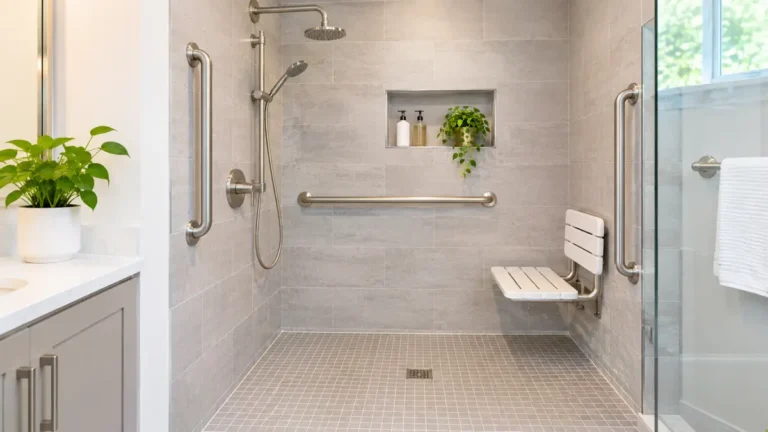 Roll-In Shower: Size, Threshold, Slope and What Accessibility Rules Usually RequireA roll-in shower is a shower with no curb, so a person using a wheelchair can roll straight in. Vendors…Read more →
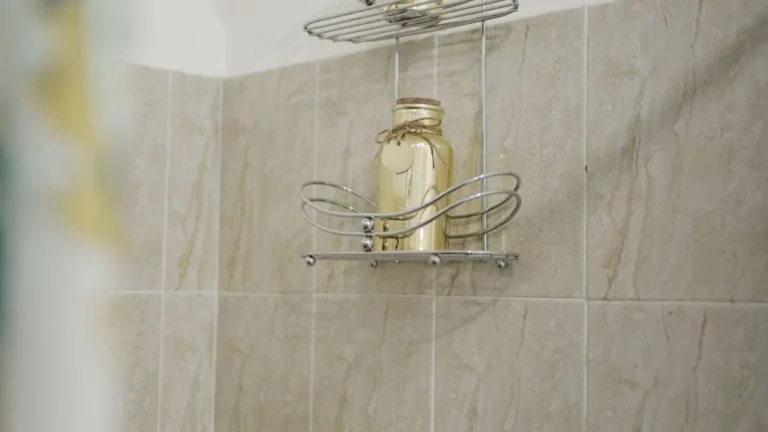 Shower Shelf: Tension Pole, Adhesive and Built-In Types, Weight and RustThere are three main types of shower shelf: tension-pole caddies, adhesive-mounted shelves and glued-in or…Read more →
 Camp Shower Guide: Solar Shower Bags, 5-Gallon Capacity, Heating Time, Water Temperature Safety and SetupQuick answer: a camp shower is a portable shower for camping, RV trips and beach days. The most common type is…Read more →
 Shower Squeegee Guide: How to Use It Daily, Prevent Mold and Hard Water Spots, Blade and Handle TipsQuick answer: a shower squeegee removes water from glass, tile and fixtures right after you shower, before it…Read more →