Medicine Cabinet with Mirror: Recessed vs Surface Mount, Sizes and Installation
A medicine cabinet with a mirror does two jobs in one spot above your sink. It gives you a mirror for grooming, and it hides toiletries behind the door. It’s one of the best small-bathroom upgrades because it adds storage without taking floor space. But choosing between recessed and surface-mounted models, and getting the size right, takes a little planning.
This article is part of our bathroom storage and mirror guide, where you can compare related options.
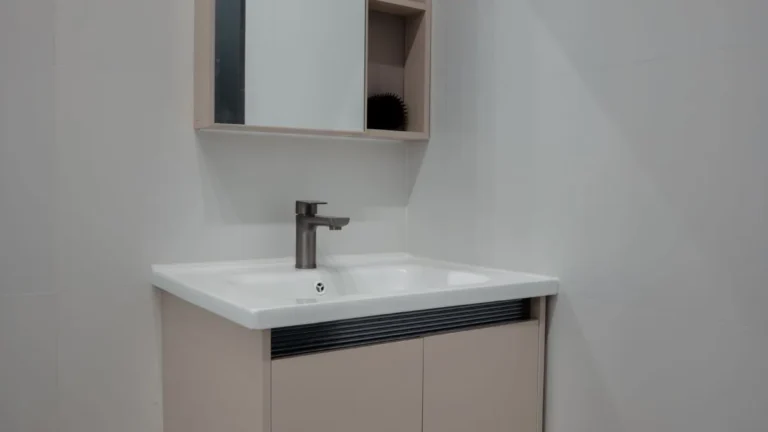
A medicine cabinet with a mirror is a wall-mounted cabinet whose door has a mirror on the front. It may be set into the wall (recessed), or it may be mounted on the wall’s surface. Some have one door, some have three, and some include lights, outlets or magnifying mirrors.
This guide explains recessed and surface-mounted cabinets, how stud spacing limits the size, installation basics and what to check before you buy. See the bathroom mirrors and bathroom cabinets guides for more. Some topics, like wiring for lighted cabinets, medication storage and outlet placement, were not covered in my sources, so check with the maker and local code. You’ll also find a comparison table, a checklist and answers to common questions.
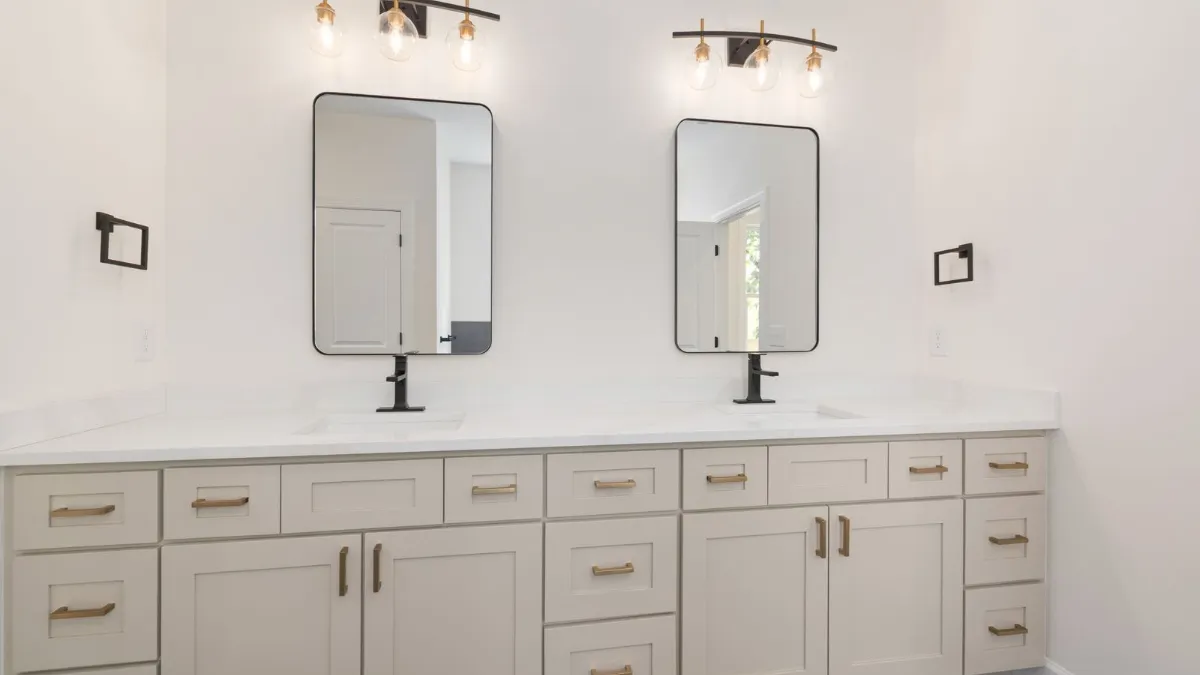
Recessed vs Surface-Mounted
Recessed cabinet: fits into the wall between the studs, so only the door and frame show. It looks clean and takes no room, but it needs a wall cavity. Recessed cabinets are typically limited in depth to the 2×4 wall cavity, which is about 3.5 inches. Surface-mounted cabinet: mounts on the face of the wall. It sticks out into the room. Surface-mount units can be deeper but project into the room. Recessed/surface combination: many cabinets can be installed either way, with a trim kit.
| Feature | Recessed | Surface-mounted |
|---|---|---|
| Look | Flush, clean | Stands out from the wall |
| Depth | Limited by wall cavity | Can be deeper |
| Install difficulty | Harder (cut wall) | Easier |
| Removal | Leaves an opening | Patch and paint |
| Storage | Smaller depth | More depth |
Surface-mount cabinets are easier to remove and patch, since a surface-mount cabinet can come off with a patch-and-paint repair, while removing a recessed cabinet leaves an opening that has to be framed and closed. If the vanity’s sink isn’t centered on a stud, a surface-mount cabinet may work better.
Stud Spacing and Size
Stud spacing limits the width of a recessed cabinet unless you cut and add a header.
At 16 inches on center, the clear space between studs is about 14.5 inches. A stud bay framed 16 inches on center gives roughly 14.5 inches of clear space between studs. Walls framed at 24 inches on center give about 22.5 inches. One says a rough opening a little over 14 inches wide, while another lists a 16-inch-wide recessed unit with a recess-mount rough wall opening of 13.5 inches wide by 23.5 inches high. Check the manufacturer’s rough-opening spec for your model.
If you want a wider cabinet than the stud bay, you may need to cut a stud and frame a header, which is a bigger job. Pipes, wires and vents inside the wall can also limit where you can recess a cabinet. For this reason, many people choose a surface-mounted cabinet for a wider unit.
Common cabinet sizes vary by brand, so check product listings. Measure the wall space above the sink and leave a margin around the cabinet.
Door Swing and Clearance
A surface-mount cabinet’s door swing needs clearance from fixtures, adjacent doors and trim, so check it before buying. Think about: light fixtures next to the cabinet; wall sconces; towel bars; adjacent door or window trim; faucet height (the cabinet should clear the faucet).
Test how far the door opens, and which way it hinges. Some cabinets let you reverse the hinge side.
Mirror and Lighting
My sources did not cover lighting and electrical details, so ask the maker and a licensed electrician. General points: A mirrored door helps you grooming at the sink. Some cabinets have built-in LED lighting, defoggers or outlets. These need an electrical connection. Plug-in models are available in some cases. Hardwired models should be installed by a licensed electrician. For wall checks, one source notes that a stud finder with an AC-detection mode can flag some live wiring.
Verify electrical work with local code or a licensed electrician. Never cut into a wall without checking for wires and pipes.
Shelves and Storage
One guide suggests that for smaller items like cosmetics, skin care or medications, choose a medicine cabinet with three or four shelves. Adjustable shelves let you fit tall bottles.
Key points: glass shelves look clean and are easy to wipe; metal shelves resist rust; interior mirrors help you see items; side mirrored doors on three-door models allow a side view.
Keep frequently used items at eye level. Store items you rarely use higher up.
Storing Medications
My sources did not give specific advice on how to store medications in the cabinet. Many pharmacists suggest a cool, dry place, and bathrooms can be steamy, so ask your pharmacist about your specific medicines and read the labels. If you have children, store medications in a locked or high location that is out of reach. Dispose of expired medicines properly.
Installing a Medicine Cabinet
Follow the maker’s instructions. Here is a general overview.
Surface-mounted:
- Choose the position and height. Hold the cabinet up and check the view in the mirror.
- Find the studs with a stud finder.
- Mark the screw holes with a level.
- Drill pilot holes.
- Attach the cabinet to the studs, or use heavy-duty anchors rated for the load.
- Check that the door opens and closes.
- Add shelves and test.
Recessed:
- Choose the position, and check the wall between studs for pipes and wires.
- Mark and cut the opening carefully.
- Frame the opening if needed.
- Set the cabinet in the opening and secure it to the studs.
- Add trim.
- Seal and paint.
Recessed installation is harder. If you aren’t confident, hire a professional. Always check the wall for plumbing and electrical lines first.
How to Choose a Medicine Cabinet with Mirror
Decide on recessed or surface-mounted. Check the wall. Stud spacing and hidden pipes. Measure the width and height above the sink. Check the door swing and clearances. Choose the shelves and storage you need. Pick the mirror type. Plain, beveled or magnifying. Decide on lighting. Built-in or separate. Check the material. Moisture-resistant frames. Match the style of your bathroom. Read reviews for notes on door alignment and rust.
What mistakes should you avoid?
A few common mistakes are worth avoiding: not checking for pipes and wires (cutting into a wall can be dangerous); ignoring stud spacing (the cabinet may not fit); forgetting the door swing (it hits a light or the faucet); mounting into drywall alone (the cabinet may pull out); choosing a cabinet without moisture resistance (it can rust); putting medications in a steamy bathroom without checking the label.
Frequently Asked Questions
What is the difference between a recessed and a surface-mounted medicine cabinet?
A recessed cabinet sits inside the wall. A surface-mounted cabinet hangs on the wall’s surface.
How wide can a recessed medicine cabinet be?
At 16 inches on center, the clear stud space is about 14.5 inches. At 24 inches on center, it’s about 22.5 inches. Wider needs framing changes.
How deep is a recessed medicine cabinet?
Limited by the wall cavity, about 3.5 inches for a 2×4 wall.
Can I replace a recessed cabinet with a surface-mounted one?
Often yes, but you’ll need to patch the opening or cover it. A surface-mount can be easier to remove later.
Do I need an electrician?
For a hardwired lighted or powered cabinet, yes. Verify with local code.
Where should I store medicine?
Ask your pharmacist. Heat and humidity can affect some medicines, and children should not be able to reach them.
Conclusion
A medicine cabinet with a mirror adds storage and a grooming mirror in one. Choose recessed for a flush look, or surface-mounted for easier installation and more depth. Check your stud spacing, door swing and the wall’s contents before you buy.
Follow the maker’s rough-opening specs, and leave electrical work to a pro. With the right cabinet, your bathroom gets neater and more useful.
Related guides
 LED Mirror Guide: IP44 Rating, 4000K Light, CRI 90+, Anti-Fog Pads, Dimming and SizeQuick answer: a good LED bathroom mirror has a water-protection rating of at least IP44, a neutral 4000K light…Read more →
 Smart Mirror Guide: LED Lighting, Anti-Fog, Bluetooth, Wiring and How to ChooseA smart mirror is a bathroom mirror with extra features built in: LED lights, an anti-fog heater, touch…Read more →
 Bathroom Cabinets: Types, Storage Ideas and How to ChooseBathrooms are small and full of stuff. Towels, toothpaste, medicine, cleaning products, hair tools and spare…Read more →
 Small Laundry Room Ideas: Stacked Machines, Folding Counters, Vertical Storage and Layouts That WorkQuick answer: the best small laundry room ideas are to stack the washer and dryer, add a folding counter or…Read more →