
Bathroom Mirrors: Size Rules, Height, Lighting and Anti-Fog Options
A bathroom mirror does a lot. You use it to shave, do makeup, brush your teeth and check your outfit. It also makes the room feel bigger and brighter. But the wrong size or height can look odd, cut off your face or fight with your lights.
This article is part of our bathroom storage and mirror guide, where you can compare related options.
A bathroom mirror is any mirror used in a bathroom, usually above the sink. It can be a simple framed mirror, a frameless wall mirror, a mirror with built-in lights or a mirrored cabinet. Round, rectangular, oval and arched shapes are all common.
This guide explains how to size a mirror to your vanity, how high to hang it, how to plan lighting, what anti-fog mirrors are and how to choose a shape and style. You’ll also find a comparison table, a checklist and answers to common questions.
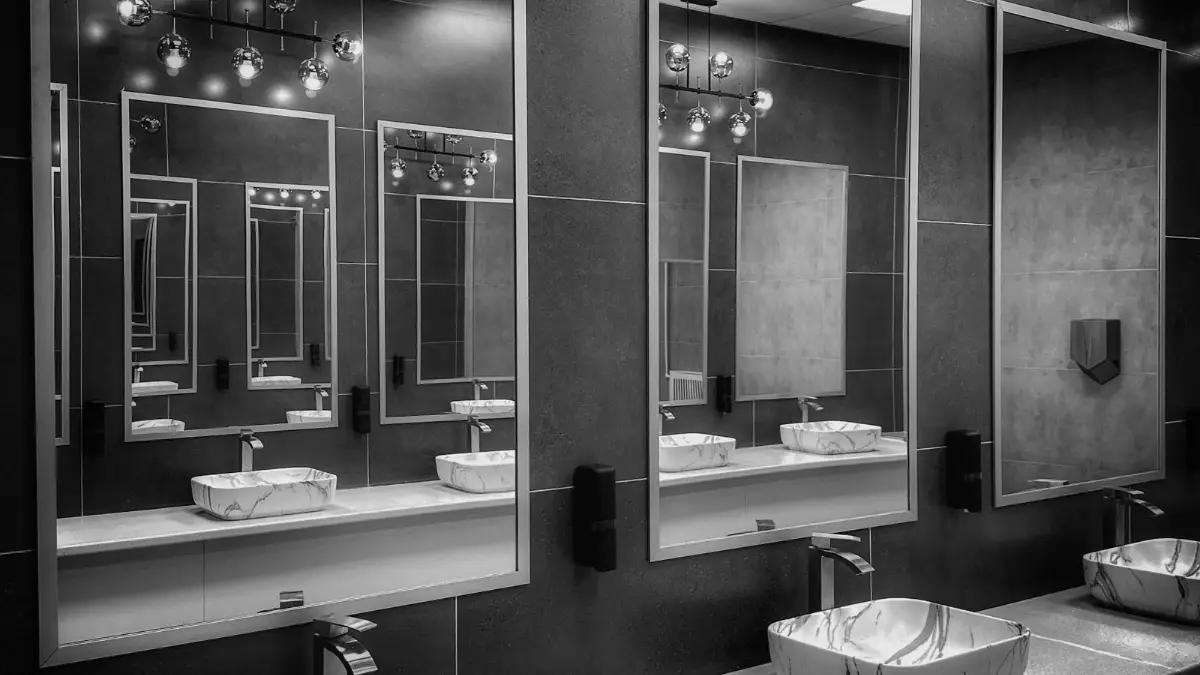
How Wide Should a Bathroom Mirror Be?
Several guides say the mirror should be a bit narrower than the vanity. One designer suggests roughly 70 to 90 percent of the vanity width. Another source gives 70 to 100 percent, and a third suggests a mirror about 2 to 4 inches narrower than the vanity. A general rule from one retailer is that a wall mirror should never be wider than the vanity beneath it.
If you plan to add wall lights on the sides, one guide recommends a mirror nearer 60 to 70 percent of the vanity width so the fixtures have room.
| Vanity width | Mirror width (about 70 to 90 percent) |
|---|---|
| 30 inches | 21 to 27 inches |
| 36 inches | 25 to 32 inches |
| 48 inches | 34 to 43 inches |
| 60 inches | 42 to 54 inches |
| 72 inches | 50 to 65 inches |
These are my calculations from the percentage range, to give you a starting point. With a double vanity, you can use two mirrors, one over each sink, or one long mirror across both.
How High Should You Hang a Bathroom Mirror?
One guide suggests a mirror height of 600 to 900 mm (about 24 to 35 inches) for facial coverage, with the center around 1,500 to 1,600 mm (about 59 to 63 inches) above the floor, which matches average adult eye level.
Other sources say ceiling height, the splashback, faucet height and whether lights go above or beside the mirror all shape the final height. A good method is to hold the mirror up with a helper and check the position while standing at the sink. Think about the tallest and shortest people using the bathroom.
Leave a gap above the faucet and backsplash. If you hang the mirror below a light fixture, one retailer advises leaving 3 to 6 inches between the top of the mirror and the fixture to reduce glare.
Bathroom Mirror Lighting
Built-in LED lighting: described as giving even illumination that suits makeup and shaving. Some models add touch sensors or dimming. Vanity lights beside the mirror: lights on both sides reduce shadows on your face. Lights above the mirror: can cast shadows below the eyes and chin. Use them with other lighting. Light size: for a vanity light bar, one manufacturer suggests it be at least 75 percent of the mirror’s width, while another suggests about three-quarters of the mirror width. Color temperature: choose warm to neutral light for natural-looking skin tones. Some mirrors offer adjustable color temperature.
Placement matters as much as the fixture. Even light on both sides of your face helps you shave and apply makeup more accurately.
Anti-Fog Mirrors
Anti-fog mirrors use a built-in heating element to prevent condensation. They stay clear after a hot shower, so you can use them right away. They need an electrical connection, and many are tied to the light switch.
Temporary alternatives include commercial anti-fog products or homemade coatings, though these wear off. Good ventilation also helps. Run the exhaust fan during and after showers.
Mirror Shapes and Styles
Rectangular: classic, versatile and the most common shape. Round: softens straight lines. Works well over a small sink. Oval: elegant and traditional. Arched: a modern, soft look. Square: suits modern bathrooms. Full-length mirror: useful in a large bathroom or on a door. Framed mirror: adds style. Wood, metal and painted frames are common. Choose moisture-resistant finishes. Frameless mirror: a clean, simple look. Mirrored cabinet: a mirror on a door that hides storage. Mirrored cabinets add storage and keep counters clear. The sources I found didn’t cover medicine cabinets in detail.
Mirror Style Tips for Small Bathrooms
A large mirror above the sink, or one that spans the whole wall, is a common way to add visual depth. Place mirrors where they reflect light from a window or fixture. A round or oval mirror can soften a boxy room. A mirrored cabinet adds storage without taking floor space.
Installation Basics
Mirrors can be heavy. Use the hardware that comes with the mirror, and attach it to studs or with proper anchors for the weight. Use a level to hang it straight. For large mirrors, ask a helper. Seal edges or use mirror-safe adhesive if instructed. If you aren’t sure, hire a pro, especially for heavy mirrors or ones with electrical connections. Hire a licensed electrician for hardwired lighted or anti-fog mirrors.
Care and Cleaning
Clean with a glass cleaner or a mix of water and vinegar. Wipe with a lint-free cloth. Avoid spraying cleaner directly on the mirror edges, where it can damage the backing. For framed mirrors, wipe the frame with a damp cloth. Run the fan to reduce moisture.
How to Choose a Bathroom Mirror
Measure the vanity width. Aim for about 70 to 90 percent. Check the wall space. Include lights, switches and windows. Choose the height. Center it around eye level. Plan lighting. Built-in or separate. Decide on anti-fog. Useful if you use the mirror right after showers. Pick the shape and style. Match your bathroom. Check the material. Moisture-resistant frames and backing. Check the weight and mounting. Plan the electrical needs. Set a budget.
What mistakes should you avoid?
A few common mistakes are worth avoiding: choosing a mirror wider than the vanity (it looks off-balance); hanging it too high or too low (eye level is the goal); ignoring lighting (shadows make grooming hard); using the wrong finish (non-moisture-resistant frames can warp); skipping a level (a crooked mirror is hard to ignore); overlooking the glare (lights too close can cause glare).
Frequently Asked Questions
How wide should a bathroom mirror be?
Roughly 70 to 90 percent of the vanity width, according to one designer. Never wider than the vanity.
How high should I hang a bathroom mirror?
The center should be near eye level, about 59 to 63 inches above the floor in one guide. Adjust for the people who use it.
What size mirror for a double vanity?
Use two mirrors, one over each sink, or one long mirror that spans both.
What is an anti-fog mirror?
A mirror with a built-in heating element that prevents condensation.
How much light does a bathroom mirror need?
Even light on both sides of the face is best. Choose lights at least 75 percent of the mirror’s width, as one manufacturer suggests.
What shape is best for a bathroom mirror?
It depends on the room. Rectangles are versatile, round and oval soften a room and arched shapes feel modern.
Conclusion
A good bathroom mirror is the right size for the vanity, hung at eye level and lit evenly. Aim for a mirror 70 to 90 percent of the vanity width, center it around eye level and plan lighting that reduces shadows.
Choose a moisture-resistant style that suits your bathroom, and consider anti-fog features if you use the mirror right after showers. With the right mirror, your bathroom is brighter and easier to use.
Related guides
 Bathroom Shelf Guide: Floating, Corner and Over-Toilet Types, Spacing, Weight Capacity and Moisture-Safe MaterialsQuick answer: bathroom shelves add storage on the wall. Common types are floating, recessed, corner, ladder,…Read more →
 LED Mirror Guide: IP44 Rating, 4000K Light, CRI 90+, Anti-Fog Pads, Dimming and SizeQuick answer: a good LED bathroom mirror has a water-protection rating of at least IP44, a neutral 4000K light…Read more →
 Bathroom Organizer Guide: Under-Sink, Drawer, Countertop and Shower Storage IdeasBathrooms collect clutter fast. Half-used bottles, tangled hair tools, spare towels, makeup, cleaning supplies…Read more →
 Bathroom Mats Guide: Cotton vs Microfiber vs Memory Foam, Non-Slip Backing, Sizes and Washing Without DamageQuick answer: a bathroom mat catches drips and gives your feet a soft, safe landing. Cotton is absorbent and…Read more →




2 Comments