
Smart Mirror Guide: LED Lighting, Anti-Fog, Bluetooth, Wiring and How to Choose
A smart mirror is a bathroom mirror with extra features built in: LED lights, an anti-fog heater, touch controls, sometimes a clock, magnifier or Bluetooth speaker. It gives even light for grooming, stays clear after a hot shower and tidies up the vanity by replacing separate lights and gadgets. For a modern bathroom, it can be a good upgrade. But it is an electrical product, so wiring and features need planning.
This article is part of our bathroom storage and mirror guide, where you can compare related options.
A smart mirror, in the bathroom context, is a mirror with built-in electronics. The “smart” part varies a lot. It can mean a touch switch and dimmable lights, or app control and Bluetooth audio. This guide explains the common features, how wiring and installation work, how to choose size and light, and what to check before you buy. Always follow the manual and use a licensed electrician if you are unsure.

Common Features
LED lighting: lights built into or behind the mirror give even, shadow-free light for shaving and makeup. Many are dimmable, and some offer adjustable color temperature. Smart dimmable LED bathroom mirrors let you fine-tune brightness and color temperature through touch controls, mobile apps or voice commands. Look for models with smooth gradient dimming, memory presets and integration with smart home hubs. Touch controls: a touch sensor on the mirror turns the light on and off, changes brightness and color and runs the demister. Retail listings commonly pair a touch switch with anti-fog and memory functions. One listing describes a single touch activating both the LED light and the demister pad together. Anti-fog (demister) pad: manufacturer FAQs describe the defogger as a built-in pad behind the glass that gently heats the surface to prevent condensation. It keeps the mirror clear after a shower. Memory function: remembers your last brightness and color setting. Bluetooth speaker: plays music or podcasts from your phone. Bluetooth is usually a speaker function rather than voice control. Clock and temperature display: shows the time. Magnifier: a small zoom section, often 3x, for makeup and tweezers. Shaver socket: some mirrors have an outlet for an electric razor. App or smart-home control: a few mirrors connect to apps. I found no source that addresses voice-assistant integration, such as Alexa, Google or Siri, so check the specs if you want it.
| Feature | What it does | Worth it if |
|---|---|---|
| LED dimming | Even light, adjustable | You groom or do makeup |
| Anti-fog pad | Keeps glass clear | You shower with hot water |
| Touch control | Switches lights and demister | You like simple controls |
| Bluetooth speaker | Plays audio | You want music |
| Magnifier | Zooms in | You use tweezers or makeup |
| Shaver socket | Power for razors | You shave at the mirror |
Wiring and Installation
This is where careful planning matters.
Electrical connection. Smart LED bathroom mirrors often require a hardwired junction box and may benefit from a dedicated circuit for features like heated defoggers. Some models are simpler to install. One listing says its mirror needs just one point of wiring. Plug-in vs hardwired. Some mirrors have a cord and plug. Others are hardwired into a junction box. A cord running across a bathroom is not ideal. Check the manual. Safety and local rules. A UK manual for a smart mirror with a heated defogger pad calls for installation under local wiring regulations (Part P in the UK) and shows live, neutral and earth connections for the mains supply. US rules differ, so check local code. Bathrooms usually require GFCI protection and approved fixtures for wet areas. Hire an electrician if you are unsure. Mixing water and electricity is risky. Mounting. Mirrors are heavy. Mount into studs or with proper anchors rated for the weight. Use the brackets or cleat that come with the mirror. Cord and cable hiding. Plan how to hide wiring behind the mirror.
I found no clear information in the results on power draw or ingress protection (IP) ratings for bathroom zones. IP ratings tell you how well the device resists water. Check the product manual and ask the seller what zone the mirror is rated for.
Choosing Size and Shape
Width. About as wide as your vanity, or slightly narrower. For a double vanity, you can use two mirrors or one wide one. See the master bathroom ideas guide. Height. Tall enough to reflect your face for the tallest user. Shape. Rectangle, round, oval or arched. Match the vanity and fixtures. Mounting orientation. Some mirrors can be mounted horizontally or vertically. Frame. Frameless with edge lighting is common. Framed mirrors have a more traditional look.
Typical retail sizes include 24 by 36 inches, 30 by 32 inches, 80 by 60 centimeters and 100 by 60 centimeters. Measure your space before buying.
Light Quality
Good light matters for grooming.
Color temperature. Warm white is flattering, neutral white is accurate for makeup and cool white is bright. Adjustable color is helpful. Brightness. Dimmable lets you set the mood or use full light for tasks. Even light. Edge or front-lit mirrors reduce shadows. Color rendering.
Cleaning and Care
Key points: turn off power before cleaning; wipe the glass with a soft cloth and glass cleaner sprayed onto the cloth; avoid soaking edges, where electronics are; do not use abrasive cleaners; keep the touch sensor clean; check cables and connections occasionally; ventilate the bathroom to reduce moisture.
What are the main strengths and weaknesses?
On the plus side: even, adjustable light; anti-fog keeps the mirror clear; fewer separate lights and gadgets; modern look; some add music and a clock. On the downside: costs more than a plain mirror; needs electrical work; electronics can fail; harder to replace if a part breaks; features and quality vary a lot.
How to Choose a Smart Mirror
Decide what features you will use. Check the electrical plan: plug-in or hardwired, outlet location. Choose a size and shape for your vanity. Check light quality and dimming. Check the anti-fog feature. Check the safety rating and the bathroom zone. Plan mounting into studs. Check the warranty. Read reviews for notes on flicker and touch sensitivity. Hire an electrician if needed.
What mistakes should you avoid?
A few common mistakes are worth avoiding: buying before planning the wiring; ignoring water-resistance ratings; choosing a size that is too small for the vanity; mounting into drywall without anchors; paying for features you will not use; soaking the edges when cleaning.
Frequently Asked Questions
What is a smart mirror?
A mirror with built-in electronics such as LED lights, anti-fog and touch or app control.
Does a smart mirror need to be hardwired?
Some are hardwired and some plug in. Check the manual.
Do smart mirrors work with Alexa or Google?
I found no source on this. Check the product specs.
How does the anti-fog feature work?
A built-in pad behind the glass gently heats the surface to prevent condensation.
Can I install a smart mirror myself?
Possibly, but wiring in a bathroom is safest with a licensed electrician.
Are smart mirrors safe in bathrooms?
Mirrors made for bathrooms are designed for it. Check the water-resistance rating and follow the manual.
How big should a bathroom smart mirror be?
About as wide as the vanity or slightly narrower, and tall enough for all users.
Conclusion
A smart mirror combines lighting, anti-fog and extras in one piece. Decide which features you will actually use, plan the electrical connection, check water-resistance ratings and choose a size that fits your vanity.
Use a licensed electrician when in doubt. With the right choice, a smart mirror makes mornings easier and your bathroom more modern.
Related guides
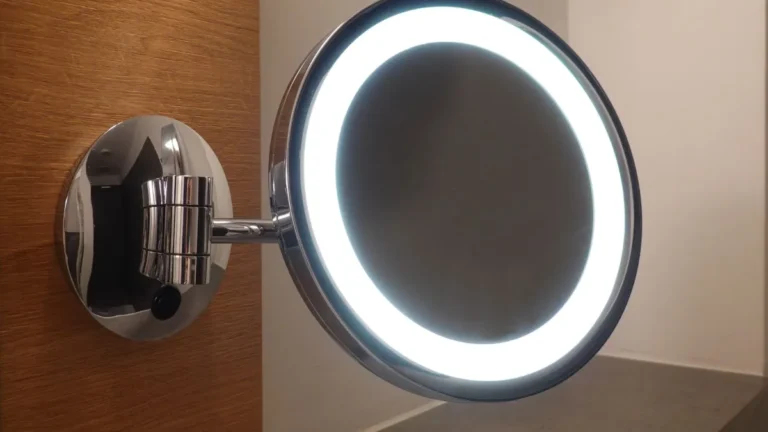 LED Mirror Guide: IP44 Rating, 4000K Light, CRI 90+, Anti-Fog Pads, Dimming and SizeQuick answer: a good LED bathroom mirror has a water-protection rating of at least IP44, a neutral 4000K light…Read more →
 Bathroom Mirrors: Size Rules, Height, Lighting and Anti-Fog OptionsA bathroom mirror does a lot. You use it to shave, do makeup, brush your teeth and check your outfit. It also…Read more →
 Medicine Cabinet with Mirror: Recessed vs Surface Mount, Sizes and InstallationA medicine cabinet with a mirror does two jobs in one spot above your sink. It gives you a mirror for grooming,…Read more →
 Smart Toilet Guide: Features, Power Needs, Costs and Smart Toilet vs Bidet SeatA smart toilet adds comfort features to a normal toilet: a warm seat, warm-water cleaning, a warm-air dryer and…Read more →


2 Comments