
Bathroom Shelf Guide: Floating, Corner and Over-Toilet Types, Spacing, Weight Capacity and Moisture-Safe Materials
Quick answer: bathroom shelves add storage on the wall. Common types are floating, recessed, corner, ladder, mirrored cabinet, niche and over-toilet shelves. Space shelves about 10 to 12 inches apart, leave at least 6 inches below the ceiling or any light, test the toilet lid’s full range before marking height and avoid particleboard, which absorbs moisture.
This article is part of our bathroom storage and mirror guide, where you can compare related options.
Bathroom shelves are one of the cheapest, fastest ways to add storage. A few shelves hold towels, baskets, plants and toiletries without taking floor space. But bathrooms are humid, and shelves can sag, rust or peel if they are the wrong material. This guide explains types, heights, spacing, weight capacity, moisture-safe materials, installation and how to choose. Many search results were spam or garbled, so I rely on a few reliable guides and listings. Numbers like spacing come from one guide, and weight ratings vary by product. Always follow the manufacturer’s rating.
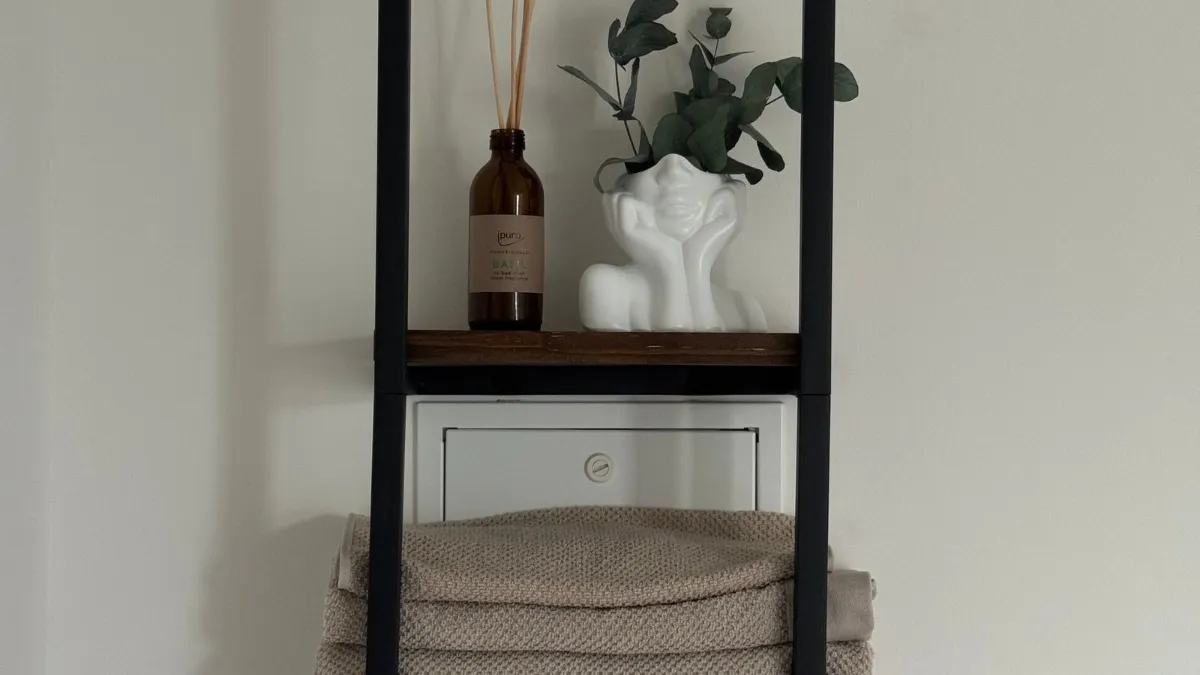
Types of Bathroom Shelves
The most popular types of bathroom shelves are floating shelves, recessed shelves, corner shelves, ladder shelves, mirrored cabinet shelves, niche shelves and over-toilet shelves.
Floating shelves. Unlike over-toilet cabinets or ladder shelves, a floating shelf adds zero visual weight, per Ashdeco. No legs or frame. Recessed shelves. Built into the wall between studs. Corner shelves. Fit awkward corners. Tension-pole and wall-mounted types exist. Ladder shelves. Leaning units. See the ladder bookshelf guide for anchoring. Mirrored cabinet shelves. See the bathroom wall cabinet guide. Niche shelves. Built into shower walls. See the shower inserts guide. Over-toilet shelves. Racks or shelves above the tank. See the bathroom storage guide.
Over-Toilet Shelf Sizes and Height
Retailer listings for over-toilet units show roughly 27 inches wide by 8 inches deep, with heights from about 37 to 44 inches. One listing says the 37 inch height ensures this shelf fits over standard-size toilets.
Check: Toilet lid. Some toilet lids open higher than others. Test the lid’s full range before marking your shelf height. Clearance. Measure from the floor to the underside of any existing cabinetry or lighting fixtures. Access. Ensure the shelf will not obstruct access to the toilet or interfere with the door.
Spacing and Layout
One guide suggests: About 10 to 12 inches between shelves, enough room for baskets, rolled towels or decorative items. At least 6 inches below the ceiling or any light fixture for the top shelf.
Ideas: stack two or three floating shelves above the toilet; place a shelf above the door for spare towels; use a narrow shelf beside the mirror for daily items; keep heavier items on the lowest shelf.
Weight Capacity
Capacity depends on the materials and construction, and the manufacturer’s rating should be followed. One guide estimates light-duty shelves, often made from thinner materials like particleboard or lightweight metal, might have a weight capacity of 10 to 20 pounds per shelf. A retailer listing for a 27 inch over-toilet shelf gives a weight capacity of 50 pounds for the toilet shelf and 80 pounds for the bath shelf.
Humidity can lower the load a material can safely carry, so one source recommends more conservative estimates in poorly ventilated bathrooms. Mount into studs or rated anchors. See the floating nightstand and floating bathroom vanity guides for stud mounting tips.
Moisture-Resistant Materials
Solid wood that is sealed or treated, powder-coated metal and certain plastics such as HDPE offer varying degrees of moisture resistance. Stainless steel, powder-coated metal and high-quality plastics are among the options that last longest. Wood needs a sealant or varnish. Particleboard is the material to avoid. It is susceptible to moisture absorption, which can weaken its structural integrity and reduce its load-bearing capability over time. Glass shelves resist moisture but need secure brackets. Bamboo needs sealing.
Ventilate the bathroom with a fan to protect shelves.
Installation Tips
- Find studs with a stud finder.
- Mark the height and level.
- Use brackets rated for the load.
- Use wall anchors rated for tile or drywall if studs are not available. Drilling through tile needs a tile bit.
- Seal holes to keep water out of the wall.
- Test by pressing gently.
For recessed shelves, open the wall between studs, check for pipes and wires and waterproof the cavity. Hire a pro if unsure.
What to Store
Key points: folded towels and rolled towels in baskets; toiletries in matching containers; plants and candles (battery-operated); spare toilet paper in a basket; accessories like a soap dish. See the soap dish and bathroom accessories guides.
Keep medicines and chemicals out of children’s reach.
Styling
Key points: use baskets and trays to group items; mix open and closed storage; keep a few decorative items, such as a plant; match finishes to your faucet; keep shelves uncluttered; use consistent containers.
Shelf Ideas for Small and Large Bathrooms
Tiny powder room. One or two floating shelves above the toilet with a basket for spare paper, and a small plant. See the powder room guide. Narrow bathroom. A shelf above the door frame for seasonal towels and a slim corner shelf by the vanity. Family bathroom. Deeper shelves with labeled baskets for each person, and a low shelf for kids’ items within reach. Master bath. Wide floating shelves beside the tub for candles, plants and rolled towels. Shower niche. Built-in shelves for shampoo, sealed with waterproofing. See the shower inserts guide. Behind the door. A slim shelf or hooks for robes and towels. See the bath robe and hand towels guides.
Cleaning and Maintenance
Key points: wipe shelves weekly with a damp cloth and mild cleaner; dry wood shelves after cleaning; check for rust on metal shelves and brackets; check screws and anchors every few months, since humidity can loosen them; replace swollen or peeling shelves; rotate items so none sits in the same damp spot for long; keep the exhaust fan running after showers.
What are the main strengths and weaknesses?
On the plus side: cheap and quick; uses vertical space; many styles; easy to install (floating). On the downside: limited capacity; moisture damage on poor materials; items on display get dusty and humid; needs secure mounting.
How to Choose a Bathroom Shelf
Decide the location and purpose. Measure the wall, lights, door and toilet. Choose the type: floating, corner, over-toilet or other. Choose a moisture-resistant material. Check the weight rating. Plan spacing (10 to 12 inches between shelves). Plan mounting into studs. Check finish and style. Read reviews for rust and sag. Check the return policy.
What mistakes should you avoid?
A few common mistakes are worth avoiding: choosing particleboard; mounting with plastic plugs only; not testing the toilet lid; overloading the shelf; ignoring the ceiling and light clearance; skipping ventilation.
Frequently Asked Questions
How far apart should bathroom shelves be?
About 10 to 12 inches, per one guide.
How high should a top shelf be?
At least 6 inches below the ceiling or any light fixture.
How much weight can a bathroom shelf hold?
Light-duty shelves may hold 10 to 20 pounds. One listing rates 50 pounds for the toilet shelf and 80 for the bath shelf. Follow the maker’s rating.
What material is best?
Sealed solid wood, powder-coated metal, stainless steel or high-quality plastic.
Should I avoid particleboard?
Yes. It absorbs moisture and weakens.
Can I put a shelf over the toilet?
Yes. Check the lid’s range, clearances and the door.
Conclusion
A bathroom shelf is a simple storage upgrade. Choose a moisture-resistant material, check the weight rating, space shelves 10 to 12 inches apart and mount into studs.
Test clearances before drilling, and avoid particleboard. A well-chosen shelf keeps a bathroom tidy for years.
Related guides
 Bathroom Organizer Guide: Under-Sink, Drawer, Countertop and Shower Storage IdeasBathrooms collect clutter fast. Half-used bottles, tangled hair tools, spare towels, makeup, cleaning supplies…Read more →
 Bathroom Shelves Guide: Types, Materials, Placement and Installation TipsBathrooms are small, and they hold a lot: towels, toiletries, cleaning supplies, spare toilet paper, hair tools…Read more →
 Bathroom Cabinets: Types, Storage Ideas and How to ChooseBathrooms are small and full of stuff. Towels, toothpaste, medicine, cleaning products, hair tools and spare…Read more →
 Shower Shelf: Tension Pole, Adhesive and Built-In Types, Weight and RustThere are three main types of shower shelf: tension-pole caddies, adhesive-mounted shelves and glued-in or…Read more →


5 Comments