Tub Transfer Bench Guide: Weight Capacity, Fit, Seat Height, Safety and How to Choose
Getting in and out of a bathtub is one of the riskiest moves in the home. You lift a leg over a high rim while standing on a wet, slippery surface. For people with limited mobility, balance problems, weakness or recovery after surgery, it can be dangerous. A tub transfer bench makes this safer. You sit on the bench outside the tub, slide across and bathe seated, without stepping over the rim.
This article is part of our bathtub guide, where you can compare related options.
A tub transfer bench is a bath seat that bridges the edge of the tub. Two legs stand inside the tub and two stand outside, with the seat spanning the rim. This guide explains how it works, how to check weight capacity and fit, which features matter (padding, adjustable height, back and arms), how to stay safe and how to choose. This is general information, not medical advice. Ask an occupational therapist or your doctor which equipment is right for you.
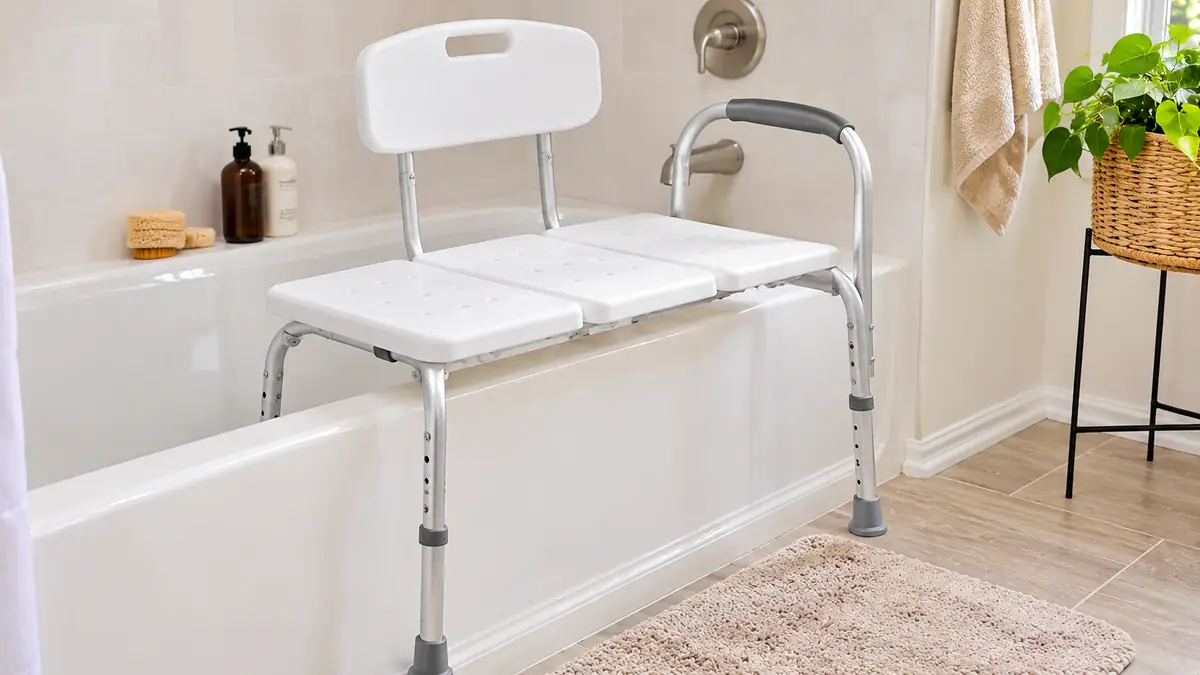
How a Tub Transfer Bench Works
- You sit on the outside end of the bench, with your feet on the floor outside the tub.
- You lift or slide your legs over the rim, one at a time or together, while seated.
- You slide across the bench into the tub.
- You bathe seated, often with a handheld shower.
- You reverse the steps to get out.
This removes the need to step over the tub wall. Some benches have a cutout for hygiene or a back for support, and some have a handle or arms to help you slide.
Tub Transfer Bench vs Shower Chair
Tub transfer bench. Spans the tub rim. Designed for getting in and out safely over the edge of a tub. Often used with a handheld shower and a shower curtain split by the bench. Shower chair. Sits inside a shower or tub. Does not help you get over the rim. See the shower chair guide. Shower bench. A built-in or freestanding seat in a walk-in shower. See the shower bench guide.
If you have a walk-in shower with no tub rim, a shower chair or shower bench may be enough. For a tub, a transfer bench is the safer option for people who struggle to step over the edge.
Weight Capacity
Common ratings are 300, 350 and 400 pounds, with bariatric models rated higher. One listing describes a bariatric shower and bathtub transfer bench with a 500-pound capacity, and another bariatric model is rated at 600 pounds. Choose a rating with margin above the user’s weight, because moving and sliding puts extra force on the legs. Always check the manufacturer’s stated limit.
| Rating | Typical use |
|---|---|
| 300 to 350 lb | Standard models |
| 400 lb | Heavy duty |
| 500 to 600 lb | Bariatric |
Checking the Fit
Measure before you order.
Tub width. The bench must fit across the tub rim, with the inside legs resting on the tub floor and the outside legs on the floor outside. Many benches have adjustable leg widths. Bench width. One guide warns that a 32-inch wide bench will crowd very compact bathrooms. Tub rim height and shape. Check the seat height range against the tub rim. One listing gives a minimum height of 19 inches. Tub floor. Suction-cup feet are common, but one source notes they work best on smooth enamel or fiberglass tubs. Textured tub bottoms may need rubber-foot alternatives. Bathroom space. Make sure there is room beside the tub for the outside legs and for moving. Curtain. A shower curtain may need to be adjusted. Many people use a curtain that tucks inside the tub.
Measure the inside tub width at the top and at the bottom, since many tubs taper.
Features to Look For
Adjustable seat height: many models let you set the height so your feet rest flat on the floor and your knees are comfortable. Adjustable legs also help level the bench on uneven floors. Padded seat: some listings mention a padded seat as a separate option, so check for it explicitly. A padded seat is more comfortable and warmer, but may need more cleaning. Backrest: a backrest gives support. Some are removable or reversible. Arms or handles: help you push up and slide. A fixed handle can add stability. Cutout (commode opening): helps with washing, though not all models have it. Reversible design: lets you install the bench with the backrest on the left or right. Drainage holes: water drains off the seat. Safety belt: one listing for a model includes a safety belt. Suction-cup or rubber feet: keep the bench from sliding. Tool-free assembly: some benches advertise tool-free assembly. Material: aluminum frames resist rust and are lightweight. Plastic seats and backs are easy to clean.
Safety Tips
Test it dry first. Sit on the bench and check that it is level and stable. Check the feet. Make sure all four feet are firmly in place and the suction cups grip. Use non-slip mats in the tub and on the floor outside. A stone bath mat is hard and slippery when wet. See the bath mat guide. Install grab bars on the wall. A bench is not a replacement for a grab bar. Keep your weight central on the bench, and avoid sudden movements. Move slowly and keep three points of contact where you can. Use a handheld shower so you do not need to stand. See the best shower heads guide. Keep the water temperature safe. Check it before sitting. Have help nearby if you need it. Inspect the bench regularly for loose bolts, cracks and worn feet. Follow the weight limit.
Ask a professional to show you the safest way to transfer.
Cost and Coverage
I did not find reliable price figures in my sources, but listings and roundups show a range from budget models to premium bariatric models. Prices change often.
On insurance, none of the results addressed whether Medicare covers tub transfer benches. From general knowledge, Medicare often does not cover bath safety aids, because they are not always considered durable medical equipment, but this is unverified here. Check with Medicare, your plan or a medical supplier before assuming coverage. Some listings mention FSA and HSA eligibility, so ask your plan administrator about flexible spending or health savings accounts.
Care and Cleaning
Key points: rinse the bench after each use to remove soap; wipe with mild soap and water, and dry; clean suction cups and feet to keep them gripping; check for mold in crevices; do not use harsh abrasives that can scratch plastic; tighten bolts and replace worn parts.
Alternatives
Key points: walk-in tub. A tub with a door. See the walk-in tub guide; walk-in shower or curbless shower. See the walk-in shower ideas guide; shower chair inside a shower; grab bars and a handheld shower; portable shower seat; lift seat. Mechanical or powered seats for tubs.
If you are planning a remodel, a curbless shower may be a long-term solution.
How to Choose a Tub Transfer Bench
Ask a professional about your needs. Measure your tub width, rim height and floor. Pick a weight rating with margin. Choose features: padding, back, arms, adjustable height. Check the feet for your tub surface. Check bathroom space and curtain fit. Check assembly and tools. Check coverage or reimbursement options. Read reviews for stability and comfort. Check the return policy.
What mistakes should you avoid?
A few common mistakes are worth avoiding: not measuring the tub; ignoring the weight rating; using suction feet on a textured tub bottom; skipping grab bars; assuming insurance will cover it; not testing stability before first use.
Frequently Asked Questions
What is a tub transfer bench?
A bath seat that spans the tub rim so you can sit outside the tub and slide in without stepping over the edge.
What is the difference between a transfer bench and a shower chair?
A transfer bench bridges the tub edge. A shower chair sits entirely inside.
How much weight can a tub transfer bench hold?
Common ratings are 300 to 400 pounds, with bariatric models rated up to 500 or 600 pounds.
Does Medicare cover tub transfer benches?
Check with Medicare or your supplier.
Will it fit my tub?
Measure your tub width and rim height, and check the bench’s adjustable range.
Can a transfer bench be used in a shower?
Some can. Check the manufacturer.
Do I still need grab bars?
Yes. A bench does not replace them.
Conclusion
A tub transfer bench can make bathing safer by letting you sit and slide over the tub rim instead of stepping over it. Check the weight rating, measure your tub, choose features that suit you and use non-slip mats and grab bars.
Talk to an occupational therapist or doctor for personal advice. With the right bench and setup, bathing can feel safer and more comfortable.
Related guides
 Clawfoot Tub Guide: Types, Weight, Floor Support, Faucets and Installation CostA clawfoot tub is a freestanding bathtub that stands on four decorative feet, often shaped like a claw gripping…Read more →
 Soaking Tub Guide: Depth, Freestanding vs Alcove, Materials, Weight and Water HeaterA soaking tub is made for lying back and letting the water reach your shoulders. It s deeper than a standard…Read more →
 Walk-In Tub: Pros, Cons, Cost, Installation and Medicare CoverageA walk-in tub has a door in the side, so you can step in instead of climbing over a high wall. For people with…Read more →
 Shower Bench Guide: Built-In vs Freestanding, Size, Materials and SafetyA shower bench gives you a place to sit while you bathe. Some people want it for comfort, like shaving legs or…Read more →