
Vessel Sink Guide: Faucet Height, Counter Fit, Cleaning and Cost
A vessel sink is a bowl that sits on top of the counter instead of being set into it. Because the bowl adds height, you need a tall deck-mounted faucet or a wall-mounted one. Two sources suggest about 6 inches between the spout and the bowl to cut down on splashing. One plumbing source says most vessel sinks need only a single hole drilled in the counter.
This article is part of our bathroom vanity and sink guide, where you can compare related options.
The look is the main reason people choose one. A glass, stone or ceramic bowl turns the sink into a small piece of art, which works well in a powder room or guest bathroom. But the extra height changes everything around it, from the faucet to the vanity to the way you clean.
This guide covers faucet height, counter and vanity fit, cleaning, drains and cost. Treat the height numbers as rough and confirm them with the sink and faucet makers.
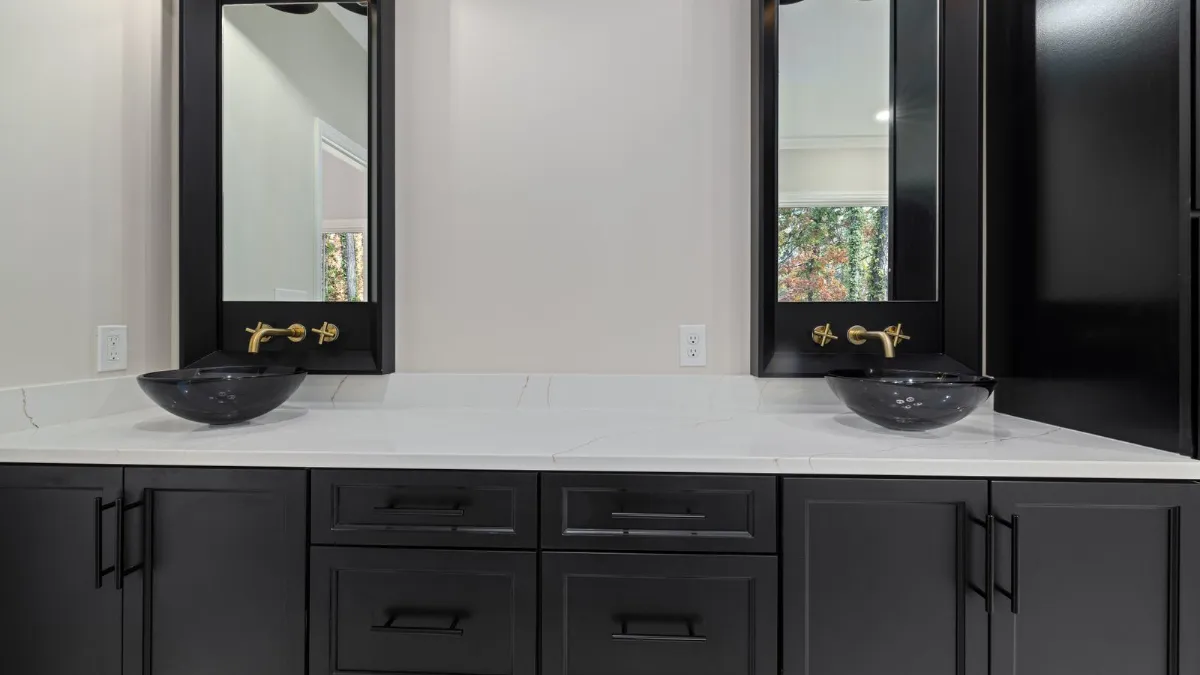
What is a vessel sink?
A vessel sink sits above the countertop rather than under it or flush with it. The bowl can be round, oval, square or rectangular, and it comes in glass, ceramic, stone, metal and concrete. Some are semi-recessed, which means they sit partly inside the counter and stand a bit lower. Angi and Durovin Bathrooms both publish pros and cons guides, and our bathroom sinks guide compares other sink types.
How tall should a faucet be for a vessel sink?
The faucet needs to clear the rim and reach well into the bowl. Vessel sinks raise the working height, so a standard short faucet won’t work. Vigo and Horow explain that tall deck-mounted faucets or wall-mounted faucets are the usual fix. A deck-mounted faucet stands on the counter beside the bowl, while a wall-mounted one comes out of the wall above it and frees up counter space.
One guide recommends at least 6 inches between the spout and the sink, and a second source gives the same number. If the spout sits too low or too high, water splashes more and you wipe up more often. Deeper bowls may need a higher faucet. Wall mounting also locks the position, so one source says it suits you less if you might change the sink or faucet later.
How does a vessel sink change the counter height?
It adds the bowl’s height to your counter, so the rim ends up quite high. Many vanities stand at around 32 to 36 inches, and a 5 to 6 inch bowl on top lifts the rim well above that. Some people choose a lower vanity to make up the difference. Measure from the floor to the rim before you buy, and think about who will use the sink, including kids.
Our floating bathroom vanity, small vanity and double vanity guides cover vanity sizes. The search found no accessibility data on vessel sinks, so if anyone in your home has limited reach, check the final rim height first.
Are vessel sinks hard to install?
They can be simpler than a full cutout. One plumbing company notes that most vessel sinks need only a single hole in the counter for the drain, plus faucet holes if you use a deck-mounted faucet. That works well with thick or delicate counters that are hard to cut. A plumber still has to line up the drain and supply lines.
Many vessel sinks have no overflow hole, so you need a drain that matches. Follow the maker’s sealing instructions. One source puts the installed cost at $250 to $2,000 depending on the model, which is a wide range, so get local quotes.
Are vessel sinks hard to clean?
They take a bit more effort because there are more edges and seams. You’ll want to clean around the faucet base, the outside of the bowl, the backsplash and the line where the bowl meets the counter. Leave room around the bowl so a cloth can reach every side. Wipe the bowl daily with a soft cloth and a cleaner that suits the material.
Glass shows water spots, and stone needs sealing and gentle cleaners, as our limestone sink guide explains. Skip abrasive pads on glass and polished finishes. Dry the counter under the bowl so water doesn’t sit there.
Vessel sink or undermount sink?
Pick a vessel sink for style and an undermount sink for easy cleaning. An undermount sink gives you a clean counter line and lets you sweep crumbs straight into the bowl. It uses a standard faucet and leaves more counter space, but it needs a large cutout. A vessel sink makes a bolder statement and may suit a small powder room. If you want the simplest daily routine, or you have small children, an undermount is usually easier.
What materials do vessel sinks come in?
Vessel sinks come in glass, ceramic, stone, metal and concrete, and each one needs different care. Glass looks light and modern but shows water spots and fingerprints. Ceramic and porcelain are the easiest to clean and feel classic. Natural stone, like the limestone in our limestone sink guide, looks warm but needs sealing and gentle cleaners. Metal can scratch or develop a patina, and concrete usually needs sealing too.
Native Trails, a stone and metal sink maker, publishes a pros and cons guide that is worth reading for those materials. Pick the material first, then read the maker’s care sheet before you commit. A pretty bowl that you dread cleaning won’t look pretty for long.
Who should choose a vessel sink?
A vessel sink suits people who want a strong visual feature and don’t mind a little extra cleaning. It fits well in a powder room or guest bathroom where the sink gets lighter use. It can also help if you have a thick or delicate countertop that is hard to cut, since you only drill small holes. Some people like how it frees them from picking a specific cutout size.
It’s a weaker fit for busy family bathrooms with small children, for anyone who needs easy reach and for people who want the simplest cleaning routine. If you’re unsure, try a semi-recessed bowl, which sits partly in the counter and stands lower. Whatever you pick, order the faucet and the drain together so the heights and the parts match, and ask a plumber to confirm the plan before you buy.
Frequently Asked Questions
What is a vessel sink?
It’s a bowl-shaped sink that sits on top of the counter.
What faucet do I need for a vessel sink?
A tall deck-mounted faucet or a wall-mounted faucet.
How far should the spout be from the bowl?
Two sources suggest about 6 inches.
How much does installation cost?
One source puts it at $250 to $2,000, depending on the model. Get local quotes.
Are vessel sinks harder to clean?
They have more edges and seams, so they need a little more care.
Conclusion
A vessel sink adds style, but it asks for the right faucet, a sensible vanity height and a regular cleaning habit. Plan about 6 inches of spout clearance, measure the final rim height and pick a material you’re happy to care for.
If easy cleaning matters most, consider an undermount instead. Confirm all measurements with the makers before you order.
Related guides
 Limestone Sink Guide: Sealing, Stain and Etch Care, pH-Neutral Cleaning, Sizes and WeightQuick answer: a limestone sink is a natural stone basin, often a vessel style. Limestone is porous, so seal it…Read more →
 Bathroom Sinks Guide: Pedestal, Wall-Mounted, Undermount, Drop-In and Vessel Types ComparedQuick answer: the five common bathroom sink types are pedestal, wall-mounted, undermount, drop-in and vessel.…Read more →
 Pedestal Sink: Pros, Cons, Sizes, Installation and vs Wall-Mounted SinksA pedestal sink is the classic choice for small bathrooms and powder rooms. A basin sits on a column, so the…Read more →
 Small Laundry Room Ideas: Stacked Machines, Folding Counters, Vertical Storage and Layouts That WorkQuick answer: the best small laundry room ideas are to stack the washer and dryer, add a folding counter or…Read more →



3 Comments