
Bathroom Sink: Types, Materials, Sizes and How to Choose
The bathroom sink is one of the most used fixtures in the house. You use it every morning and every night, so it needs to be comfortable, easy to clean and right for the space. It also sets the style for the whole room.
This article is part of our bathroom vanity and sink guide, where you can compare related options.
A bathroom sink is the basin and fixture where you wash your hands and face and brush your teeth. It may sit in a vanity cabinet, on a pedestal or on the wall. The basin, the faucet and the drain all work together, so you need to think about them as a set.
This guide explains the main sink types, the common materials, how to think about size and what to check before you buy. You’ll also find a comparison table and answers to common questions.
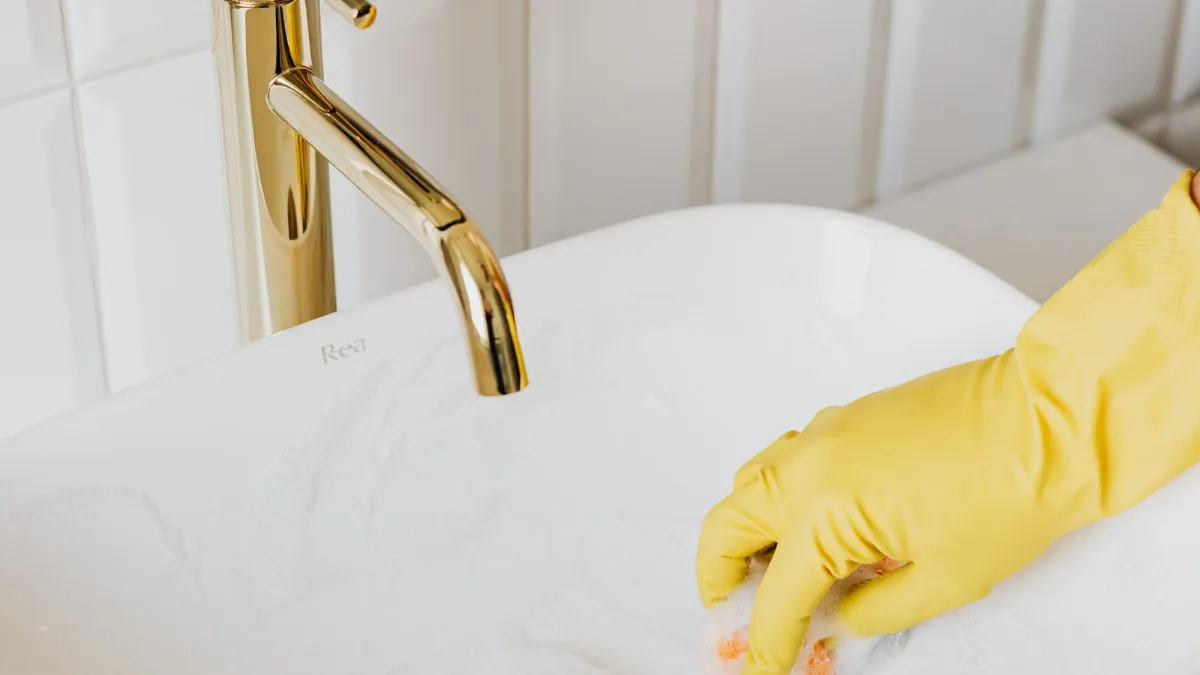
Types of Bathroom Sinks
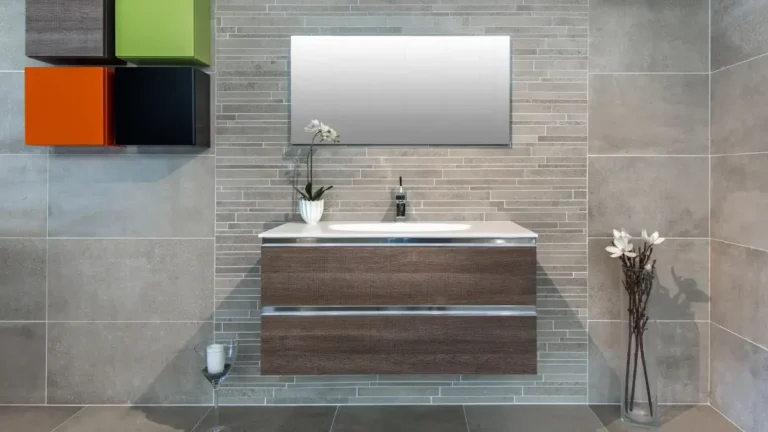
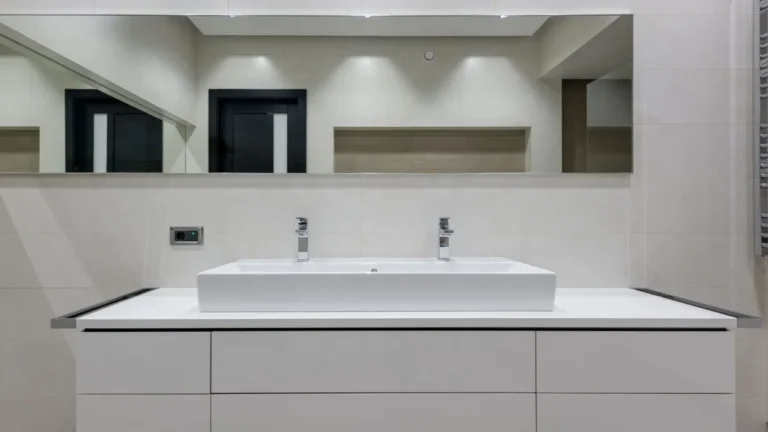
Undermount: mounted below the counter, so the counter edge stays exposed. It’s the easiest to wipe clean. It works only with waterproof tops such as granite, marble or solid surface. Drop-in (top-mount): set into a cutout from above, so the rim shows. It’s easy to install and works with many countertop materials. Vessel: sits on top of the counter like a bowl. It’s a bold design choice. It needs a faucet mounted on the wall or a tall faucet on the counter, and it may need a lower-than-standard vanity. Pedestal: a basin on a floor-mounted stand that hides the plumbing. It suits small rooms without a vanity, such as a powder room. Wall-mounted: hangs directly from the wall with no vanity. It has a clean, modern look, but offers little storage and counter space. Console: basically a wall-mounted sink with legs, usually two but sometimes four. Integrated (vanity top): the sink and countertop are one piece, usually in solid surface, ceramic or cultured marble. No seams to clean. Corner sink: made to fit into a corner, which saves space. Trough sink: a long basin, sometimes with two faucets, for shared bathrooms.
| Type | Storage | Cleaning | Best for |
|---|---|---|---|
| Undermount | Yes, with vanity | Easy | Stone or solid surface counters |
| Drop-in | Yes | Rim collects dirt | Budget, easy install |
| Vessel | Yes | Medium | Style statement |
| Pedestal | No | Easy | Powder rooms |
| Wall-mounted | No | Easy | Small, modern rooms |
| Console | Little | Easy | Mid-size bathrooms |
| Integrated | Yes | Very easy | Simple, seamless look |
Sink Materials
Vitreous china and porcelain: common, durable and easy to clean. One source recommends easy-to-clean, non-porous materials such as ceramic, resin and porcelain. Solid surface and resin: smooth and seamless. Can be repaired if scratched. Natural stone: granite, marble and similar stones look rich. Denser stone is used for some wall-hung styles. Stone needs sealing and care. Glass: striking, but shows water spots and needs regular cleaning. Stainless steel: durable and modern, though it can show scratches. Copper and brass: warm look that develops a patina. Needs care. Cast iron with enamel: heavy and durable.
What Size Should a Bathroom Sink Be?
There is no standard size for a bathroom sink. Pedestal and console sinks are generally larger than wall-mounted ones but smaller than standard undermount and drop-in sinks. One source gives a typical height of 32 to 38 inches for these styles, but it’s unclear whether that is basin height or overall height, so check each product.
Match the basin to the room. A very large basin in a small bathroom looks out of proportion. A tiny basin in a big bathroom feels lost. Think about how you use the sink. A family bathroom benefits from a roomy basin and counter space. A powder room can use a small one.
Measure the space for the sink and the room to move. Leave room for the door swing and for people to stand at the sink. Check the faucet type. A taller faucet may be needed for a vessel sink.
How to Choose a Bathroom Sink
Think about storage. If you need storage, a vanity sink is usually best. A pedestal or wall-mounted sink works when you have storage elsewhere. Measure the room. Corner and pedestal sinks free up floor space in small bathrooms, and console and trough sinks work well in larger rooms. Pick the mounting type. Undermount, drop-in, vessel, pedestal, wall-mounted or console. Choose the material. Ceramic and porcelain for easy cleaning, stone for style. Check the faucet. The sink and faucet must match. Check hole count and spacing. Wall-mounted faucets need the sink to be close to the wall and compatible plumbing. Look at the depth and shape. Rectangular and oval basins have different feels. A deeper basin reduces splashing. Check the overflow and drain. Make sure the drain fits your plumbing. Plan the installation. Wall-mounted and vessel sinks need precise measurements and support. A professional can help. Set a budget. Include the faucet, drain and installation. Think about cleaning. Rims, seams and rough surfaces catch dirt.
Installation Notes
Some sinks are easy to install, and others need a plumber. Drop-in sinks are usually simpler. Undermount sinks need precise cutouts and strong adhesives. Wall-mounted sinks need solid backing inside the wall to hold weight. Vessel sinks need the right faucet height and a counter that can support the load.
Check the plumbing. Make sure the drain location matches the sink, and check the water supply lines. Hire a licensed plumber if you aren’t sure.
Care and Cleaning
Wipe the sink daily with a soft cloth. Clean with a mild cleaner designed for your sink material. Avoid abrasive pads on glass, stainless steel and glossy finishes. For stone, use a pH-neutral cleaner and reseal as needed. Remove hard-water spots with a gentle vinegar solution on non-stone surfaces. Check the caulk around the sink and replace it if it cracks.
What mistakes should you avoid?
A few common mistakes are worth avoiding: ignoring storage needs (pedestal sinks look nice but offer none); choosing the wrong faucet (vessel sinks need taller faucets); picking by looks alone (cleaning and function matter); skipping the countertop check (undermount sinks need waterproof counters); making the basin too large (it can crowd a small bathroom); forgetting the wall support (wall-mounted sinks need solid backing).
Frequently Asked Questions
What are the main types of bathroom sinks?
Undermount, drop-in, vessel, pedestal, wall-mounted and console, plus integrated and corner sinks.
What is the best bathroom sink for a small bathroom?
Pedestal, wall-mounted and corner sinks free up floor space.
What size should a bathroom sink be?
There is no standard size. Match it to your room and use. Check each product’s dimensions.
What material is easiest to clean?
Ceramic, porcelain and resin are non-porous and easy to wipe clean.
Can I install a bathroom sink myself?
Drop-in sinks are often DIY-friendly. Wall-mounted, vessel and undermount sinks can be harder. Hire a plumber if you’re not comfortable.
Do I need a vanity with my sink?
Not always. A vanity gives storage and counter space. A pedestal or wall-mounted sink saves space but offers none.
Conclusion
The right bathroom sink fits your room, your storage needs and your style. Undermount and integrated sinks are easy to clean, vessel sinks make a statement and pedestal or wall-mounted sinks save space.
Choose a material that is easy to maintain, check the faucet and plumbing compatibility and measure the space. A well-chosen sink makes the room more comfortable and easier to use every day.
Related guides
 Bathroom Sinks Guide: Pedestal, Wall-Mounted, Undermount, Drop-In and Vessel Types ComparedQuick answer: the five common bathroom sink types are pedestal, wall-mounted, undermount, drop-in and vessel.…Read more →
 Vessel Sink Guide: Faucet Height, Counter Fit, Cleaning and CostA vessel sink is a bowl that sits on top of the counter instead of being set into it. Because the bowl adds…Read more →
 Limestone Sink Guide: Sealing, Stain and Etch Care, pH-Neutral Cleaning, Sizes and WeightQuick answer: a limestone sink is a natural stone basin, often a vessel style. Limestone is porous, so seal it…Read more →
 Bathroom Mats Guide: Cotton vs Microfiber vs Memory Foam, Non-Slip Backing, Sizes and Washing Without DamageQuick answer: a bathroom mat catches drips and gives your feet a soft, safe landing. Cotton is absorbent and…Read more →

One Comment