
Floating Bathroom Vanity Guide: Mounting Height, Wall Blocking, Weight Support and Sizes
Quick answer: a floating bathroom vanity mounts to the wall instead of standing on the floor. Anchor it into wall studs or solid wood blocking, never drywall alone. Vendors claim a properly installed one can support about 200 to 500 pounds, finished counter height is usually 30 to 36 inches and about 21 inches of clearance in front is recommended.
This article is part of our bathroom vanity and sink guide, where you can compare related options.
A floating vanity makes a bathroom look lighter and bigger, because you can see the floor below. It also makes cleaning easier and suits modern and small bathrooms. But the weight of the cabinet, sink, countertop and everything inside hangs on your wall, so the wall structure matters more than the cabinet itself. This guide explains mounting height, how to support the weight, stud and blocking rules, sizes, plumbing and how to choose. The load figures are vendor claims and not independent tests, and I found no engineering standard. Ask a contractor to confirm the wall. This is not structural advice.

What Is a Floating Vanity?
It is a wall-mounted bathroom cabinet. It attaches to the wall with brackets or a hanging rail, leaving open space below. Variants: single-sink floating vanity (24 to 36 inches); double-sink floating vanity (48 to 72 inches); floating vanity with drawers; floating vanity with open shelf; floating vanity with a vessel sink. See the bathroom sinks guide; narrow floating vanity for small bathrooms. See the small vanity guide.
Why Choose Floating?
Key points: makes the room feel bigger; easy to clean under; modern look; lets you tuck a basket or lighting under it; helps accessibility if installed with knee clearance.
Drawbacks: needs strong walls, can cost more to install and storage may be limited.
Mounting Height
Another notes that some guides specify mounting the cabinet 6 to 12 inches off the ground for a dramatic floating effect, while others aim for a finished counter height of 30 to 36 inches.
The 30 to 36 inch range refers to finished counter height, so the cabinet mounting height is lower. Think about: the overall height of the cabinet, countertop and sink; faucet reach and basin depth; users’ height, including children; mirror and light placement; a comfortable height is often 32 to 36 inches (general guideline).
Supporting the Weight
The vanity should go into wall studs or solid blocking, not drywall alone. One vendor says drywall alone is not strong enough to support the weight of a floating vanity.
A vendor guide estimates a properly installed floating bathroom vanity can typically support around 200 to 500 pounds, depending on wall structure and hardware. The 500 pound figure is vendor-supplied and not an independent test. A bracket listing for a different product also cites 500 pounds.
Consider the load: cabinet weight (solid wood and stone are heavy); countertop and sink; water, plumbing and contents; people leaning on it. Do not use it as a step or hold it for support.
Blocking and Wall Type
Studs. Locate studs and use them where possible. Wood blocking. One manufacturer notes that wood blocking can be installed between the studs using standard 2 by 4s. Another advises that the installer must identify studs or provide solid timber blocking between studs at the exact mounting height specified by the cabinet maker. Metal studs. One guide notes that metal studs need special toggle bolts or additional blocking. Plaster, tile or concrete walls. Need appropriate anchors.
Best practice: plan blocking before the wall is closed, during a remodel. If the wall is already finished, open a section, add blocking and repair. Ask a contractor. See the bathroom remodel cost guide for scope and the powder room guide for layout.
Plumbing
Rough-in plumbing must match the vanity layout. Drain and supply lines can be hidden in the wall or run to the vanity. Exposed plumbing under a floating vanity needs finishing. Consider a P-trap in a nice finish. Install shut-off valves. Hire a licensed plumber for changes.
Sizes and Clearance
Common widths: 24, 30, 36, 48, 60 and 72 inches. A 36 inch floating vanity is typically one-user, per a vendor. Confirm you have at least 21 inches of clearance in front of the vanity, a number from a vendor that matches other bathroom guides (see the small vanity guide for the discussion). Check local code.
Measure width, depth and height. Shallower vanities save space.
Materials
Key points: solid wood and plywood. Strong, but heavy; MDF and particleboard. Lighter, but check moisture resistance; lacquered or laminated finishes. Easy to clean; ceramic or quartz tops. Heavy.
Choose moisture-resistant materials. Ventilate the bathroom.
Installation Steps (Overview)
Steps vary by product, so follow the manual. General outline from vendor guides:
- Locate studs and mark the mounting height.
- Install blocking if needed.
- Install the mounting rail or brackets, level.
- Hang the cabinet.
- Connect plumbing.
- Secure the countertop and sink.
- Seal edges with caulk.
- Test for leaks and load.
Signature Hardware and Engineerfix publish installation guides. Consider a professional for the wall and plumbing work.
Safety
Key points: do not rely on drywall anchors; do not overload the vanity; re-check the mounting periodically; keep electrical items away from water; do not hang from or sit on the vanity.
What are the main strengths and weaknesses?
On the plus side: open, airy look; easier to clean the floor; modern style; can fit small bathrooms. On the downside: needs strong wall support; installation is harder; plumbing may show; less storage than floor-standing units.
How to Choose a Floating Bathroom Vanity
Measure the space and keep 21 inches in front. Check the wall structure: studs, blocking and wall type. Choose width and depth. Choose mounting height. Check the maker’s load rating and weight of the unit. Choose materials that resist moisture. Plan plumbing. Choose sink and top. See the bathroom sinks guide. Hire pros for walls and plumbing. Read reviews.
What mistakes should you avoid?
A few common mistakes are worth avoiding: mounting into drywall only; not adding blocking; trusting vendor load claims blindly; ignoring plumbing location; skipping caulk and moisture protection; using the vanity as a step.
Frequently Asked Questions
How much weight can a floating vanity hold?
Vendors claim about 200 to 500 pounds when properly installed. These are not independent tests.
Do I need studs?
Yes, or solid wood blocking. Drywall alone is not enough.
How high should a floating vanity be?
Finished counter height is often 30 to 36 inches. Some guides mount the cabinet 6 to 12 inches off the floor for effect.
How much clearance is needed in front?
About 21 inches, per a vendor. Check local code.
Can I install one on a metal stud wall?
You need special toggle bolts or additional blocking.
Is a floating vanity good for small bathrooms?
Yes, it makes the room feel larger.
Conclusion
A floating bathroom vanity gives your bathroom a light, modern look, but the wall must do the heavy work. Mount into studs or solid blocking, choose a finished height of 30 to 36 inches, leave front clearance and plan plumbing.
Treat vendor load claims with care and ask a contractor to confirm your wall. Then your vanity will hang securely for years.
Related guides
 Floating Vanity Guide: Wall Support, Weight Capacity, HeightA floating vanity hangs on the wall, so you can see the floor underneath. It makes a small bathroom feel…Read more →
 Bathroom Vanity Guide: Single vs Double Sink Sizes, Height, Depth, Countertops and StorageThe vanity is the hardest-working piece of furniture in a bathroom. It holds the sink, hides the plumbing,…Read more →
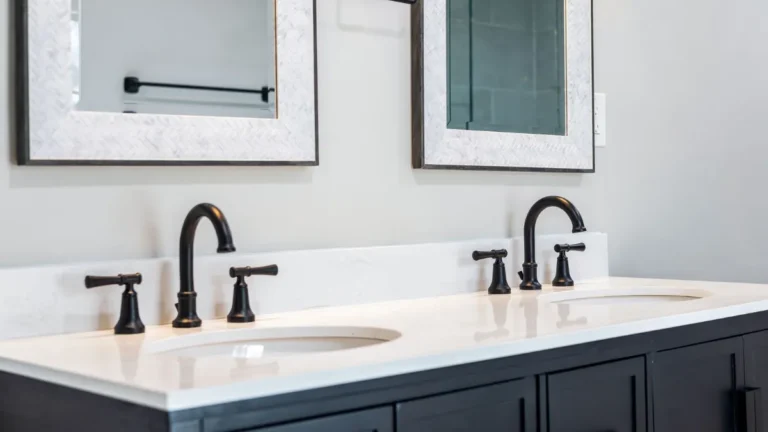 Double Vanity Guide: 60 vs 72 Inch Sizes, Sink Spacing (30 Inches Center to Center), Clearances and FitQuick answer: a double vanity has two sinks side by side. Sources put widths at 60 to 72 inches, with 60 inches…Read more →
 Bathroom Mats Guide: Cotton vs Microfiber vs Memory Foam, Non-Slip Backing, Sizes and Washing Without DamageQuick answer: a bathroom mat catches drips and gives your feet a soft, safe landing. Cotton is absorbent and…Read more →


One Comment