Pedestal Sink: Pros, Cons, Sizes, Installation and vs Wall-Mounted Sinks
A pedestal sink is the classic choice for small bathrooms and powder rooms. A basin sits on a column, so the room feels open. It looks light and clean, and it fits where a vanity won’t. But it gives up storage, so it’s not right for every bathroom.
This article is part of our bathroom vanity and sink guide, where you can compare related options.
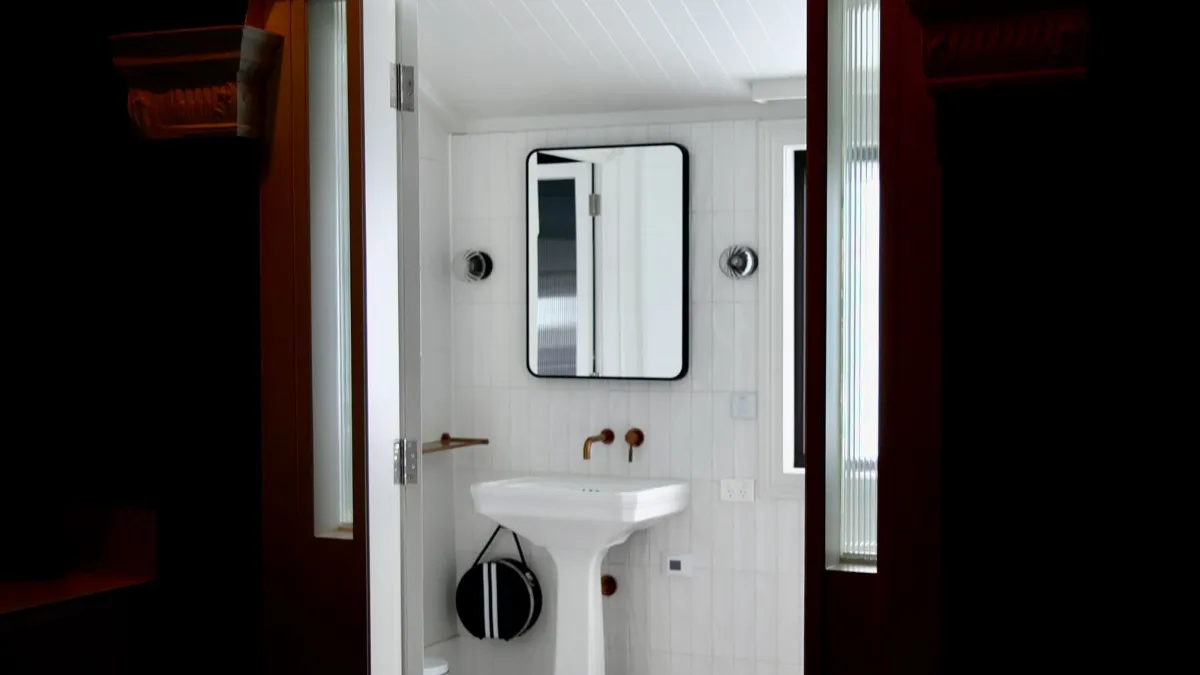
A pedestal sink is a bathroom sink with a basin supported by a freestanding column or pedestal. The pedestal hides most of the plumbing and helps carry the weight. The basin is usually attached to the wall as well. See the bathroom sink guide for other sink types.
This guide explains how a pedestal sink works, the pros and cons, how it compares with a vanity and a wall-mounted sink, sizing and installation notes and care tips. You’ll also find a comparison table, a checklist and answers to common questions.
How a Pedestal Sink Works
The basin is mounted to the wall, usually with brackets or bolts. The pedestal stands under it and gives visual and some structural support. Water supply lines and the drain run from the wall and floor. The pedestal hides the drain pipe and often the supply lines.
Open-base models expose the pipes. Semi-pedestal models use shrouds to hide plumbing all the way to the wall.
Pros of a Pedestal Sink
Small footprint: one guide says their footprint is small because the pedestal is just a narrow stand under the basin, and another says they work well where there’s no room for cabinetry. This can be a practical, attractive choice for a small space. Open, airy look: the room feels bigger. Classic style: suits traditional and modern bathrooms. Lower cost than some options: it can be cheaper than a custom vanity. Easier to clean around: some sources say the design is very sleek, which makes cleaning a breeze, though opinions differ. Hides plumbing: compared with a wall-mounted sink with exposed pipes.
Cons of a Pedestal Sink
Little storage: this is the main drawback. Pedestal sinks offer little storage space, so you’ll need shelves, baskets or a cabinet elsewhere. If adequate storage exists elsewhere, a pedestal sink’s unique design can enhance the look of a small or medium-size bathroom. Little counter space: a 16 inch basin has almost no usable deck area beyond the faucet holes, according to one guide. Wall needs support: the sink still hangs from the wall, which may need blocking. One notes that with the sink sitting on top of the counter, cleaning around it can be difficult. Expect to clean the base and the floor behind it. Exposed pipes on some models: open-base designs show the plumbing. Harder to adapt for accessibility: the basin height and the column make wheelchair access difficult.
| Pro | Con |
|---|---|
| Small footprint | Little storage |
| Open, airy look | Little counter space |
| Classic style | Wall needs support |
| Often cheaper | Cleaning around the base |
Pedestal Sink vs Vanity vs Wall-Mounted Sink
Pedestal vs vanity: a vanity gives storage and counter space. A pedestal gives floor space and an open look. One retailer estimates a mid-range pedestal sink, installed at $325 to $730, versus $130 to $280 for a mid-range vanity sink. Costs vary by region. See the bathroom vanities guide. Pedestal vs wall-mounted: a wall-mount sink is the only type that doesn’t take up any floor space. It can be installed in very small, compact areas where a vanity will take up too much space. The floor is open, which makes mopping easier, and the sink is entirely exposed. The pipes are still exposed, though, so they need covers. Protective linings and padded shrouds are available to cover the water and drain pipes under the sink.
Wall-mounted sinks need a stronger wall. You have to first make sure that the wall is strong enough to support the weight of the sink. As with a pedestal sink, you may need to install blocking in the wall. Wall-mounted sinks don’t allow storage underneath. Installing a wall-mounted faucet can be tricky, so a plumber is a good idea.
| Feature | Pedestal | Vanity | Wall-mounted |
|---|---|---|---|
| Floor space | Small footprint | Larger | None |
| Storage | Little | Plenty | None |
| Counter | Little | Plenty | Little |
| Look | Classic | Varies | Modern |
| Wall support needed | Yes | Less | Yes |
For a small bathroom with little storage elsewhere, a wall-mounted sink saves the most floor space and is easiest to clean underneath. A pedestal sink is the cheaper and easier-to-mount option with its own base, but it gives up storage.
Sizing and Faucet Holes
Basin sizes vary. Measure your space, including the width of the room and the distance to the wall and door. Leave room to stand at the sink and use it comfortably.
Faucet hole spacing matters. One guide notes that a standard three-hole configuration spreads the holes across a span of 4 inches, while a wide configuration spaces them 8 to 16 inches apart. Choose a faucet that matches the holes in the sink. Single-hole sinks give more flexibility.
Check the height of the rim. Many sinks sit about 31 to 34 inches off the floor, which is general knowledge and not from my sources, so check the product. Make sure the height is comfortable for the people who use it.
Installation Notes
Installation varies by model, so follow the maker’s guide. A general overview:
- Check the wall. Add blocking behind the drywall if the wall isn’t strong enough.
- Mark the position for the basin and bolts.
- Install the faucet on the basin before mounting, when it’s easier to reach.
- Mount the basin to the wall brackets or bolts.
- Position the pedestal and level it.
- Connect the drain and supply lines.
- Check for leaks.
- Caulk where the sink meets the wall.
- Secure the pedestal to the floor if the instructions say so.
Plumbing changes can be tricky, so hire a plumber if you aren’t confident. Check with your local building authority about permits.
Care and Cleaning
Wipe the sink after use. Clean with a mild cleaner suited to the material, such as porcelain or vitreous china. Avoid abrasive pads that scratch the glaze. Clean the pedestal and the area behind it. Check the caulk and replace it if it cracks. Tighten the mounting hardware occasionally. Never lean or sit on the basin.
Storage Ideas With a Pedestal Sink
Since the sink offers little storage, plan for it.
Key points: add a wall shelf above the toilet. See the over the toilet storage guide; install a medicine cabinet or mirrored cabinet. See the bathroom cabinets and bathroom mirrors guides; use baskets on shelves; add a freestanding cabinet or tall tower; use hooks for towels; keep only daily items near the sink.
How to Choose a Pedestal Sink
Measure the room. Think about storage elsewhere. Check the wall strength. Choose the style. Full pedestal or semi-pedestal. Pick the basin size. Check the faucet holes. Choose the finish. White porcelain is classic. Check the height. Plan installation. Read reviews.
What mistakes should you avoid?
A few common mistakes are worth avoiding: ignoring storage needs (plan where things will go); skipping wall blocking (the sink may sag); choosing the wrong faucet (it must match the holes); buying a basin that’s too small (there’s no deck for items); forgetting exposed plumbing (choose a semi-pedestal if you want it hidden); over-tightening bolts (it can crack the porcelain).
Frequently Asked Questions
What is a pedestal sink?
A bathroom sink with a basin supported by a column that hides much of the plumbing.
Are pedestal sinks good for small bathrooms?
Yes. They have a small footprint and keep the room open, but they offer little storage.
Does a pedestal sink need wall support?
Yes. The basin is typically attached to the wall, and the wall may need blocking.
How much does a pedestal sink cost?
One retailer estimates a mid-range pedestal sink, installed, at $325 to $730. Costs vary by region.
Are pedestal sinks hard to clean?
Opinions differ. They’re sleek and open, but you’ll need to clean around the base and behind it.
Can I replace a vanity with a pedestal sink?
Yes, but you’ll lose storage, and the plumbing may need changes.
Conclusion
A pedestal sink is a classic choice for small bathrooms and powder rooms. It saves space and gives the room an open, clean look, but it gives up storage and counter space.
Check the wall support, match the faucet to the sink and plan storage elsewhere. Compare it with a vanity and a wall-mounted sink before you decide, and choose the one that fits your bathroom best.
Related guides
 Vessel Sink Guide: Faucet Height, Counter Fit, Cleaning and CostA vessel sink is a bowl that sits on top of the counter instead of being set into it. Because the bowl adds…Read more →
 Limestone Sink Guide: Sealing, Stain and Etch Care, pH-Neutral Cleaning, Sizes and WeightQuick answer: a limestone sink is a natural stone basin, often a vessel style. Limestone is porous, so seal it…Read more →
 Bathroom Sinks Guide: Pedestal, Wall-Mounted, Undermount, Drop-In and Vessel Types ComparedQuick answer: the five common bathroom sink types are pedestal, wall-mounted, undermount, drop-in and vessel.…Read more →
 Small Laundry Room Ideas: Stacked Machines, Folding Counters, Vertical Storage and Layouts That WorkQuick answer: the best small laundry room ideas are to stack the washer and dryer, add a folding counter or…Read more →