
Bathroom Sinks Guide: Pedestal, Wall-Mounted, Undermount, Drop-In and Vessel Types Compared
Quick answer: the five common bathroom sink types are pedestal, wall-mounted, undermount, drop-in and vessel. Pedestal and wall-mounted sinks save space but offer no storage. Undermount sinks are the easiest to clean. Drop-in sinks are the simplest and usually cheapest to install. Vessel sinks are a design statement but need taller faucets.
This article is part of our bathroom vanity and sink guide, where you can compare related options.
Choosing a bathroom sink is partly about looks and partly about daily use. A sink affects counter space, cleaning, storage, plumbing and budget. This guide explains each type, what each is good at, where it falls short, how to match the sink to your room and what to check before buying. Check manufacturer specs and your vanity or wall space before you order. See the small vanity guide for vanity sizes.

1. Pedestal Sinks
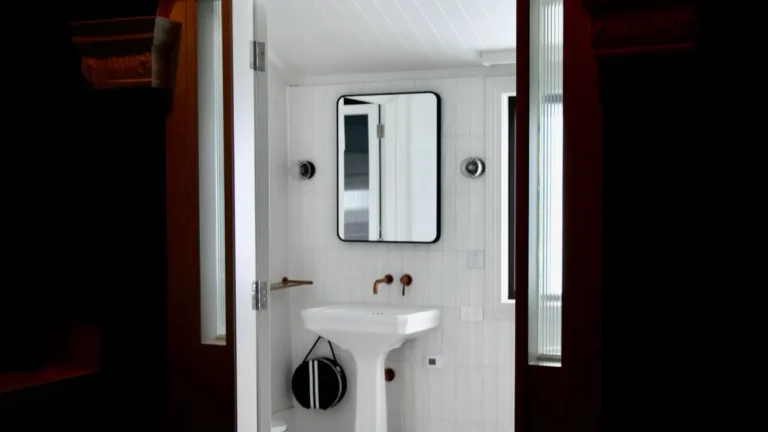
A pedestal sink is a basin on a single column that hides the pipes. It has a classic look.
Pros
Suits tight spaces, like powder rooms. The pedestal hides the drain and supply lines. The pedestal is open in the back to provide access for the drainpipe and supply lines. Classic style.
Cons
Key points: no storage. Add shelves or a medicine cabinet; little counter space; some have shrouds that cover the plumbing.
One source notes that most pedestal and console sinks are larger than wall-mounted styles because they can hold their own weight, but still smaller than standard undermount and drop-in sinks.
2. Wall-Mounted Sinks
A wall-mounted sink attaches directly to the wall, with no vanity or pedestal.
Pros
Frees the most floor space, so it suits small rooms and powder rooms. Open space below makes a small room feel larger. Good for accessible designs when installed with knee clearance.
Cons
Little or no storage. Pipes under the sink are often exposed unless covered. Requires professional installation, since the wall must be able to carry the sink’s weight.
Wall-mounted sinks need strong support behind the wall, usually blocking installed during construction or remodel. Ask a plumber or contractor.
3. Undermount Sinks
The basin mounts below the countertop cutout, so the counter has no visible rim.
Pros
Key points: easiest to clean because of the seamless design. You can wipe water and crumbs straight into the sink; clean, modern look; more usable counter space.
Cons
Unless you remove the vanity top, you cannot install an undermount sink as a retrofit. Needs a solid countertop such as stone, quartz or solid surface, and a precise cutout. Usually costs more to install.
4. Drop-In (Self-Rimming) Sinks
A drop-in sink is installed from the top, with an exposed rim that rests on the counter.
Pros
Key points: simplest to install and typically more cost-effective than other varieties; works with most countertop materials; easy to replace.
Cons
Key points: the rim can trap dirt and debris where the basin meets the counter; less seamless look; uses a bit of counter space.
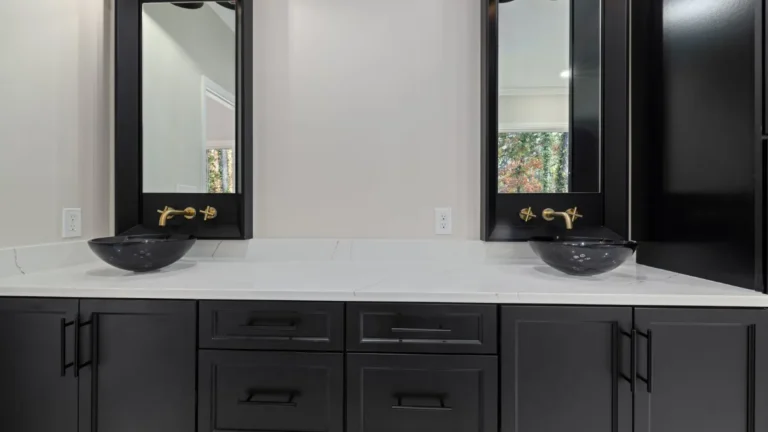
5. Vessel Sinks
A vessel sink sits on top of the counter like a bowl.
Pros
Key points: striking design statement; many shapes and materials: glass, stone, ceramic and metal; easy to replace.
Cons
Because of their height, vessel sinks must be paired with taller faucets. Vessel sinks often do not include an overflow hole, and splashing onto the counter is common. The rim and base can trap dirt. Raises the overall height of the sink, which may be uncomfortable for some users and children.
Check the combined height of the vanity, the vessel and the faucet before ordering. See the small vanity guide for height ranges.
6. Other Types
Integrated sink and countertop. A one-piece top with a molded sink. Seamless and easy to clean. Console sink. A sink on legs with a shelf or towel bar. Trough sink. A long basin for two faucets. Corner sink. Fits a corner in a tiny bathroom. Semi-recessed sink. Partly sits in the counter, saving space.
Comparison Table
| Type | Storage | Cleaning | Install | Good for |
|---|---|---|---|---|
| Pedestal | None | Moderate | Moderate | Powder rooms |
| Wall-mounted | None | Easy | Pro needed | Tiny rooms |
| Undermount | Vanity | Easiest | Cutout needed | Stone counters |
| Drop-in | Vanity | Rim traps dirt | Easiest | Budget remodels |
| Vessel | Vanity | Rim and base trap dirt | Moderate | Design focus |
Materials
Key points: porcelain and vitreous china. The common choice. Hard, glossy and easy to clean; ceramic. Similar but can chip; glass. Shows water spots, fragile; stone and marble. Beautiful but needs sealing; stainless steel and copper. Durable, may show water spots and patina; solid surface and composite. Seamless, repairable; cast iron with enamel. Heavy and durable.
Choose a finish that suits your cleaning habits and water hardness.
Matching Basin Size to the Room
One source advises that a luxuriously large basin in a small bathroom could create a disproportionate and unbalanced design, so basin size should be matched to the room. Think about: how many people use the sink at once; how much counter you need around the basin; splash zone: a shallow basin splashes more; space for a faucet; knee room if a family member uses a wheelchair or needs a seat.
For small bathrooms, wall-mounted, pedestal and compact undermount sinks are common. See the small bathroom remodel guide.
Faucet Compatibility
Sinks come with faucet hole options: single-hole, 4-inch centerset or 8-inch widespread, or none for wall-mounted faucets. Match the faucet to the sink. Vessel sinks need tall or wall-mounted faucets. Check that the faucet spout reaches over the basin and that the handle clears the wall.
Installation and Plumbing
Plumbing location matters. Moving the drain or supply lines costs money. A pedestal or wall-mounted sink will show the pipes, so decide whether you want them visible. A licensed plumber can check venting, traps and codes. This guide does not replace a professional.
Cleaning and Care
Key points: wipe daily with a soft cloth; use mild cleaners. Avoid abrasive pads on glossy finishes; clean around the rim of drop-in and vessel sinks; seal natural stone as advised; replace caulk when it cracks; clear slow drains with a drain snake, not harsh chemicals if your pipes are old.
How to Choose a Bathroom Sink
Measure the space and note the door swing. Decide whether you need storage. Choose the type from the five above. Check the plumbing location. Choose a material and finish. Check faucet compatibility. Check the sink and vanity heights. Plan for cleaning habits. Set a budget (including installation). Ask a plumber if you are unsure.
What mistakes should you avoid?
A few common mistakes are worth avoiding: choosing a vessel sink without a tall faucet; buying an undermount for a laminate top; forgetting storage with pedestal sinks; choosing a basin too big for the room; ignoring wall strength for wall-mounted sinks; skipping the faucet hole check.
Frequently Asked Questions
What type of bathroom sink is easiest to clean?
Undermount sinks, because of the seamless design.
What is the cheapest bathroom sink to install?
Drop-in sinks are typically the most cost-effective.
Do wall-mounted sinks need special installation?
Yes. They need professional installation to ensure the wall can support the weight.
Why do vessel sinks need tall faucets?
Because the bowl sits above the counter. They also often lack an overflow and splash more.
Which sink is best for a small bathroom?
Wall-mounted, pedestal or a compact undermount, depending on storage needs.
Can I replace a drop-in with an undermount?
Not easily. An undermount needs a countertop with a cutout.
Conclusion
The right bathroom sink depends on space, storage, cleaning and budget. Pedestal and wall-mounted sinks save room, undermount sinks clean easily, drop-in sinks are simple and vessel sinks are bold.
Match the basin to the room, check faucet and plumbing needs and ask a plumber for help. Then your sink will look good and work well.
Related guides
 Bathroom Sink: Types, Materials, Sizes and How to ChooseThe bathroom sink is one of the most used fixtures in the house. You use it every morning and every night, so…Read more →
 Vessel Sink Guide: Faucet Height, Counter Fit, Cleaning and CostA vessel sink is a bowl that sits on top of the counter instead of being set into it. Because the bowl adds…Read more →
 Limestone Sink Guide: Sealing, Stain and Etch Care, pH-Neutral Cleaning, Sizes and WeightQuick answer: a limestone sink is a natural stone basin, often a vessel style. Limestone is porous, so seal it…Read more →
 Bathroom Mats Guide: Cotton vs Microfiber vs Memory Foam, Non-Slip Backing, Sizes and Washing Without DamageQuick answer: a bathroom mat catches drips and gives your feet a soft, safe landing. Cotton is absorbent and…Read more →


One Comment