
Floating Vanity Guide: Wall Support, Weight Capacity, Height
A floating vanity hangs on the wall, so you can see the floor underneath. It makes a small bathroom feel bigger, makes cleaning easier and gives the room a light, modern look. It also puts the full weight of the sink, countertop and stored items on your wall, so how it’s mounted matters.
This article is part of our bathroom vanity and sink guide, where you can compare related options.
A floating vanity, also called a wall-mounted or wall-hung vanity, is a bathroom cabinet attached directly to the wall with no legs or floor support. It holds a sink and a countertop, and offers drawers or doors for storage.
This guide explains how a floating vanity is supported, what weight it can hold, how high to mount it, the pros and cons and what to plan before you install. See the bathroom vanities and pedestal sink guides for related choices. You’ll also find a comparison table, a checklist and answers to common questions.
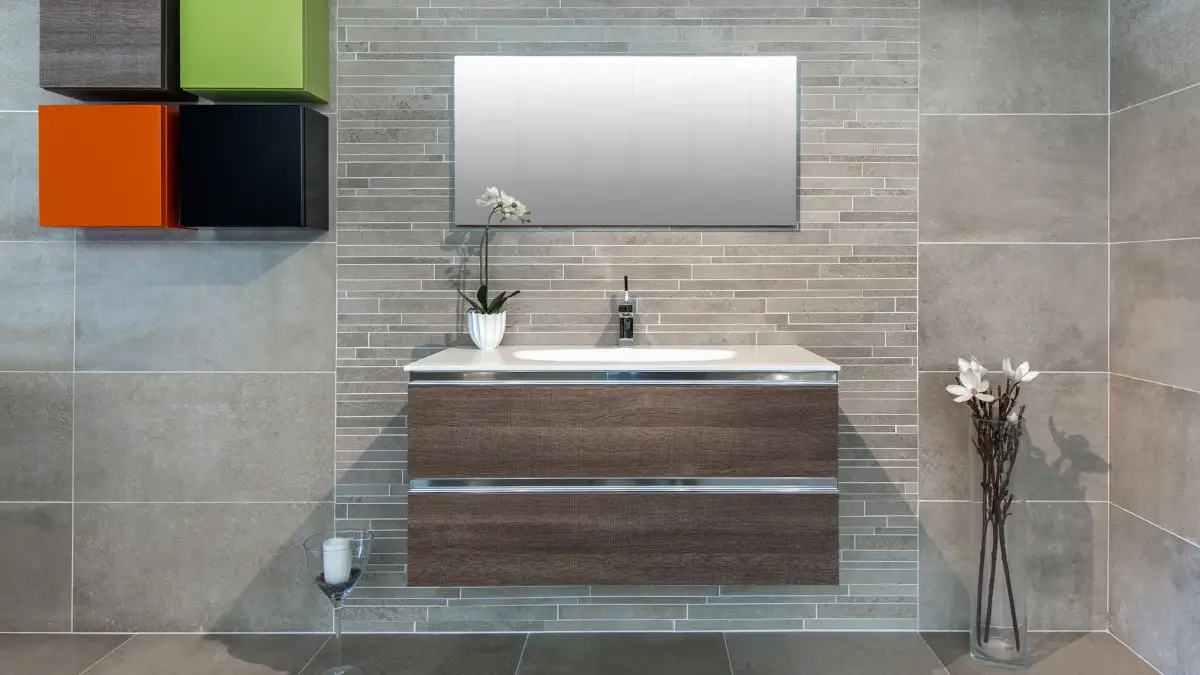
How a Floating Vanity Is Supported
The vanity should be anchored into studs or solid blocking, not drywall alone. One vendor notes that drywall alone is not strong enough to support the weight of a floating vanity.
The full load includes more than the cabinet. One guide points out that the vanity’s entire weight, along with the weight of the sink, countertop and stored items, must be safely carried by the wall structure.
Blocking is the usual fix when studs don’t line up with the mounting points. One retailer suggests 2×6 or 2×8 blocking between the studs at the exact height you plan to mount. Blocking is a horizontal board installed between studs inside the wall, which gives a strong place to screw into.
A good sequence recommended in one guide: structure and blocking first, plumbing and electrical rough-in next, waterproofing and wall finishes after that, then precise cabinet mounting. If your walls are already finished, you may need to open the wall to add blocking.
Weight Capacity
Figures vary by source. One vendor says most floating vanities can support 200 to 500 pounds when properly mounted into wall studs or a solid backing board. Another vendor’s size-based estimates run from approximately 200 to 250 pounds for 24 to 36 inch units up to approximately 450 to 500 pounds or more for 72 inch and larger. The two vendor pages don’t fully agree, so check the manufacturer’s rating for your specific unit.
Actual capacity depends on more than the vanity. One source lists wall condition, stud placement, backing support, mounting hardware and the precision of the install itself.
| Vanity width | Approximate capacity (one vendor’s estimate) |
|---|---|
| 24 to 36 inches | About 200 to 250 pounds |
| 72 inches and larger | About 450 to 500 pounds or more |
For stone countertops or double-sink units, the additional weight requires precise load calculations during installation to prevent stress on the fasteners and drywall. For a large floating vanity (60 inches and above), one vendor strongly recommends professional installation.
Add up the load: cabinet, countertop, sink, faucet, water, towels, bottles and other contents.
Mounting Height
The standard range is about 32 to 36 inches, but since the vanity is wall-mounted, you can set it wherever suits your household. One guide says a floating vanity installs at whatever height works for you. Another guide suggests typically between 30 and 36 inches for ergonomic use.
Height affects looks as well as function, so consider sightlines and the flooring you see beneath the unit. One article on this topic also discusses how far off the floor a floating vanity should be, but I did not find a firm number.
Think about: Who uses the vanity (kids, tall adults, wheelchair users). The height of the faucet and mirror. See the bathroom mirrors guide. The space under the vanity for baskets or a scale. The look of the floor below.
Mark the height with painter’s tape before you commit.
Pros of a Floating Vanity
Easier floor cleaning: you can sweep and mop under it. The toe-kick area doesn’t trap water. One source notes that standing water can soak into the toe-kick or wood at the bottom of a traditional vanity and cause it to rot, which isn’t a concern with a floating vanity. Feels bigger: in small bathrooms, the open floor makes the room feel larger, and the cabinet still provides storage. Floating cabinets provide efficient storage without occupying floor space. Modern look: clean lines and visible floor. Flexible height: mount it where it suits you. Works with underfloor heating: the floor is open.
Cons of a Floating Vanity
Harder installation: installing a floating bathroom vanity is more complex than with other types of vanities. A comparison table lists $200 to $600 labor for mounting into studs or blocking, versus a simpler install for a floor-standing unit. Plumbing is more involved: with floating units, pipes are often visible or need in-wall routing, while floor units hide them behind the cabinet base. Weight limits: heavy stone tops and double sinks add strain. Less storage than some floor models: depth and drawers vary. Changing it later is hard: once mounted, moving the vanity means redoing the wall work. Wall damage risk: if poorly mounted, it can pull the wall apart.
| Pros | Cons |
|---|---|
| Easy floor cleaning | Harder installation |
| Feels bigger | Plumbing more involved |
| Modern look | Weight limits |
| Flexible height | Hard to move later |
Plumbing and Layout
Plan the plumbing before the walls are closed up.
Key points: drain and supply lines must line up with the sink; exposed pipes can be covered with a decorative trap or cabinet; in-wall routing hides pipes but needs more work; shut-off valves should be accessible; electrical outlets and lights should be placed to avoid conflicts.
If you’re replacing an existing vanity, check where the plumbing sits. Moving pipes adds cost. A plumber can advise.
Small Bathroom Takeaways
A 24 to 36 inch unit is the usual choice for small bathrooms, and the sources list roughly 175 to 200 pounds for a 30 inch unit, which is comfortably within what a properly blocked wall should handle. See the small bathroom ideas guide for more layout tips.
Combine a floating vanity with a wall-mounted faucet, a large mirror and light colors to maximize the open feeling. Add storage elsewhere if the vanity is small.
How to Install a Floating Vanity (Overview)
This is a general overview, not a full guide. Follow the maker’s instructions, or hire a professional, especially for large units.
- Plan the height and layout.
- Find the studs and add blocking if needed.
- Mark the mounting line with a level.
- Install a mounting rail or brackets into studs or blocking.
- Hang the cabinet on the rail, and check that it’s level.
- Secure the cabinet with screws.
- Install the countertop and sink.
- Connect plumbing and test for leaks.
- Caulk the edges.
- Load gradually and check for movement.
How to Choose a Floating Vanity
Check your wall. Is it strong, or can you add blocking? Pick the width for your bathroom. Choose single or double sink. Check the weight rating and the countertop weight. Choose the height. Plan the plumbing. Choose drawers or doors. Pick moisture-resistant materials. Plan installation. Hire a pro for large units. Read reviews for notes on mounting hardware.
What mistakes should you avoid?
A few common mistakes are worth avoiding: mounting into drywall alone (it can fail); skipping blocking (studs may not line up); ignoring countertop weight (stone adds a lot); forgetting plumbing (pipes may not line up); overloading with storage (check the rating); DIY on a large unit (professional installation is strongly recommended for big vanities).
Frequently Asked Questions
What is a floating vanity?
A bathroom vanity mounted on the wall with no legs, so the floor is visible underneath.
How much weight can a floating vanity hold?
Vendors say 200 to 500 pounds when mounted into studs or blocking. Check the manufacturer’s rating.
Do I need blocking for a floating vanity?
Often yes, if studs don’t line up. Blocking gives a strong place to mount.
How high should a floating vanity be?
Typically 30 to 36 inches, but you can choose the height that suits you.
Are floating vanities good for small bathrooms?
Yes. They make the room feel bigger, and the cabinet still gives storage.
Is a floating vanity hard to install?
It’s more complex than a floor-standing vanity. A professional is recommended for large units.
Conclusion
A floating vanity makes a bathroom feel open and modern, but it depends on your wall. Anchor it into studs or solid blocking, check the weight rating and plan the plumbing before the walls are closed.
Choose a height that suits your household, and consider professional installation for large or stone-topped units. With a solid mount, a floating vanity gives you style and easy cleaning.
Related guides
 Floating Bathroom Vanity Guide: Mounting Height, Wall Blocking, Weight Support and SizesQuick answer: a floating bathroom vanity mounts to the wall instead of standing on the floor. Anchor it into…Read more →
 Double Vanity Guide: 60 vs 72 Inch Sizes, Sink Spacing (30 Inches Center to Center), Clearances and FitQuick answer: a double vanity has two sinks side by side. Sources put widths at 60 to 72 inches, with 60 inches…Read more →
 Small Vanity Guide: 24-Inch Bathroom Vanity Size, Depth, Height, Clearance and Storage IdeasQuick answer: a small bathroom vanity is usually 18 to 30 inches wide. A 24-inch vanity is a practical middle…Read more →
 Small Laundry Room Ideas: Stacked Machines, Folding Counters, Vertical Storage and Layouts That WorkQuick answer: the best small laundry room ideas are to stack the washer and dryer, add a folding counter or…Read more →





3 Comments