
Shower Door Guide: Framed, Semi-Frameless and Frameless, Glass Thickness and Cost
A shower door keeps water in the shower and gives the bathroom its look. A clear glass door can make a small bathroom feel larger, and a good door can last for decades. But there are many types, from thin framed sliders to heavy frameless glass, and the choice affects cost, cleaning and leak protection.
This article is part of our shower guide, where you can compare related options.
A shower door is a door or glass panel that encloses a shower or tub. It may slide, swing out or pivot. The glass can be held by a metal frame or stand on its own with only small hinges and clips.
This guide compares framed, semi-frameless and frameless doors, explains glass thickness and opening styles, covers cost and cleaning and shows how to choose. You’ll also find a comparison table, a checklist and answers to common questions. See the walk-in shower and small bathroom ideas guides for related layouts.

Framed vs Semi-Frameless vs Frameless
Framed doors: metal frames surround the glass on all edges. The frame carries the load, so thinner glass can be used. Framed doors are commonly value-oriented. Semi-frameless doors: have a frame on some parts, such as the top and sides, and frameless glass on the door itself. Semi-frameless commonly sits in the middle in price. The term is confusing, and one source notes that it is not an industry standard, so specs vary by model. Frameless doors: use thick glass with hardware only at the hinges and edges. They look clean and modern. They commonly cost more.
| Type | Look | Glass thickness | Cost | Notes |
|---|---|---|---|---|
| Framed | Metal edges | Thinner | Lowest | Frame carries load |
| Semi-frameless | Mix | Medium | Middle | Spec varies by model |
| Frameless | Clean, minimal | Thickest | Highest | Shows every wall imperfection |
Glass Thickness
Frameless doors rely on the glass itself, and the usual recommendation is 3/8 or 1/2 inch tempered glass for rigidity. One guide advises at least 3/8 inch of thickness, but ideally about 1/2 inch thick glass. Framed and semi-frameless doors can use thinner glass because the metal carries the load, as the frame adds support.
Glass thickness is a major driver of cost. Frameless doors are more expensive than framed due to the thickness of the glass required. Tempered (safety) glass is standard for shower doors, because it breaks into small pieces. Check that the glass is marked as tempered.
Opening Styles
Sliding (bypass) doors: two panels slide past each other on a track. Good for tubs and tight spaces where a swinging door would hit something. The track can collect grime. Pivot or swing doors: open outward, and sometimes inward, on hinges. Need clearance in the bathroom to swing. Hinged doors: similar to a regular door, with side hinges. Neo-angle doors: for corner showers. Neo angle shower doors consist of three glass panels, with the center panel as the swing door. Round enclosures: use a curved sliding door that rolls on a track around the semi-round shower base. Fixed panels: a fixed glass panel for a walk-in shower with no door. See the walk-in shower guide. Folding or bi-fold doors: fold inward to save space.
Many semi-frameless models support features such as pivot or swing-open functionality. Sliding, pivot and hinged designs are available across types.
Cost
One guide says framed construction is commonly value-oriented, semi-frameless commonly sits in the middle and frameless commonly costs more. Size also matters: the larger the glass panels and the more of them, the higher the cost.
The sources I found did not give dollar figures, so get quotes. Ask what is included: glass, hardware, handles, seals, installation and removal of the old door. Installation by a professional may add cost, but gives better results for heavy glass.
Cleaning
Each type has trade-offs.
Semi-frameless doors require periodic cleaning of the framed portions but are generally easier to maintain than fully framed systems. One vendor guide claims framed doors can be difficult to clean, while another says frameless doors require more maintenance. These claims conflict, so treat them as rough guidance. Sliding tracks collect soap scum and mildew. Glass shows water spots.
Tips for any door: squeegee the glass after each shower; wipe the tracks and seals weekly; use a mild glass cleaner or a vinegar and water mix on glass (check frames and seals); consider a water-repellent glass coating, if offered; run the exhaust fan.
See the how to clean shower tiles guide for cleaning the surrounding surfaces.
Leaks and Fit
Leak concerns also matter. One source notes that if leak protection is a high priority, especially in family bathrooms or shared spaces, a framed or semi-frameless door may offer more peace of mind.
Start with your opening. If your top and bottom widths differ by more than about 1/4 inch, lean toward a framed or semi-frameless door, because the adjustable jamb hides the gap. A fully frameless door shows every imperfection.
Check: is the wall plumb and the curb level?; are the walls straight?; what seals does the door use? Clear sweeps and strips help; does the door close tightly?.
A wall that is out of square can cause gaps and leaks.
How to Measure for a Shower Door
- Measure the opening width at the top, middle and bottom. Use the smallest width.
- Measure the height from the curb to the top of the wall or ceiling.
- Check the curb or tub edge. Note whether it’s level.
- Check the wall angle with a level.
- Note the swing direction and room for the door.
- Check for obstacles like towel bars, faucets and shelves.
- Write down all measurements and compare with the product specs.
Follow the manufacturer’s measuring guide. For frameless doors, consider having a professional measure and install.
How to Choose a Shower Door
Measure the opening. Decide on the style. Framed, semi-frameless or frameless. Choose the opening type. Slide, pivot or hinge. Check the glass thickness. At least 3/8 inch for frameless. Confirm tempered glass. Check the hardware finish. Chrome, brushed nickel or black. Look at the seals. Good seals prevent leaks. Think about cleaning. Set a budget. Include installation. Read reviews and check the warranty.
What mistakes should you avoid?
A few common mistakes are worth avoiding: not measuring at several points (walls are rarely perfectly straight); choosing frameless for an out-of-square opening (it shows every gap); ignoring swing space (the door hits the toilet or vanity); skipping professional install for heavy glass (it can be dangerous); using the wrong cleaner (it can damage seals and finishes); forgetting about ventilation (moisture builds up).
Frequently Asked Questions
What is the difference between framed and frameless shower doors?
Framed doors have metal around the glass. Frameless doors use thick glass with minimal hardware.
What glass thickness should a frameless shower door be?
At least 3/8 inch, and ideally about 1/2 inch, according to sources.
Which shower door is cheapest?
Framed doors are commonly the most value-oriented.
Are frameless doors harder to keep clean?
Sources conflict. Frameless doors have fewer places for grime but show water spots. Squeegee after showers.
What does semi-frameless mean?
It’s not an industry standard. It usually means some framing with a frameless door panel. Check each model.
Which shower door is best for a tub?
Sliding doors are common for tubs. Pivot doors need space to swing.
Conclusion
A shower door is a long-term part of your bathroom. Framed doors are the most affordable and forgiving, frameless doors look the cleanest and cost the most, and semi-frameless doors sit in the middle.
Measure your opening carefully, choose tempered glass of the right thickness and pick an opening style that fits your space. With good seals and regular cleaning, your shower door can stay clear and leak-free for years.
Related guides
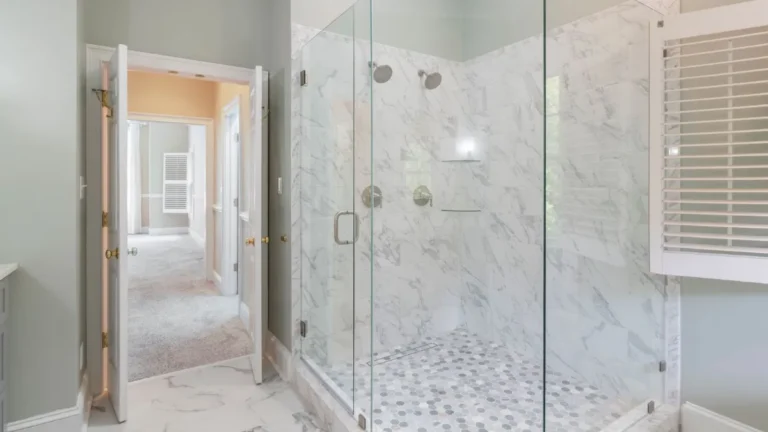 Frameless Shower Doors: Glass Thickness, Hinges, Cost and MaintenanceFrameless shower doors use thick tempered glass, typically about 3/8 to 1/2 inch, held by specialized hinges…Read more →
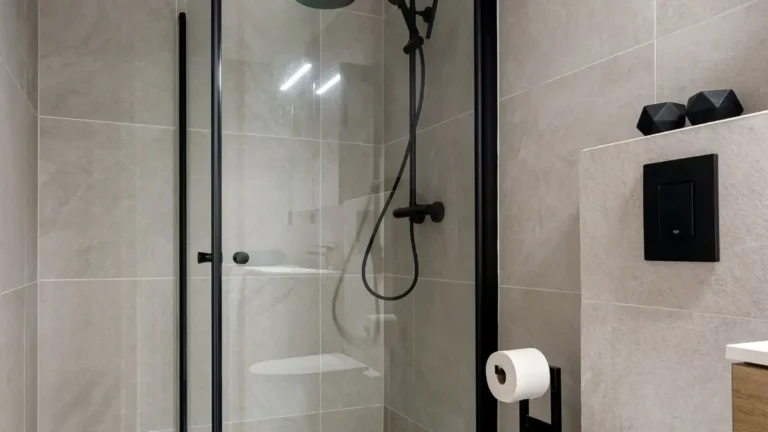 Frameless Shower Door Guide: Glass Thickness, Hardware, Seals, Cost and InstallationA frameless shower door looks like glass with almost nothing holding it. There is no metal border around the…Read more →
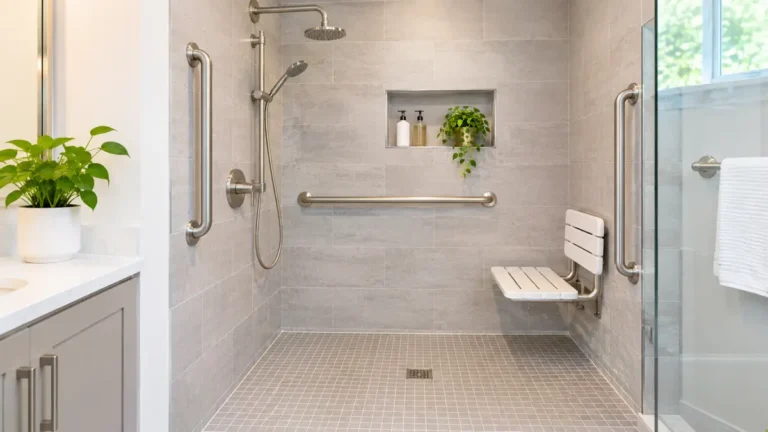 Roll-In Shower: Size, Threshold, Slope and What Accessibility Rules Usually RequireA roll-in shower is a shower with no curb, so a person using a wheelchair can roll straight in. Vendors…Read more →
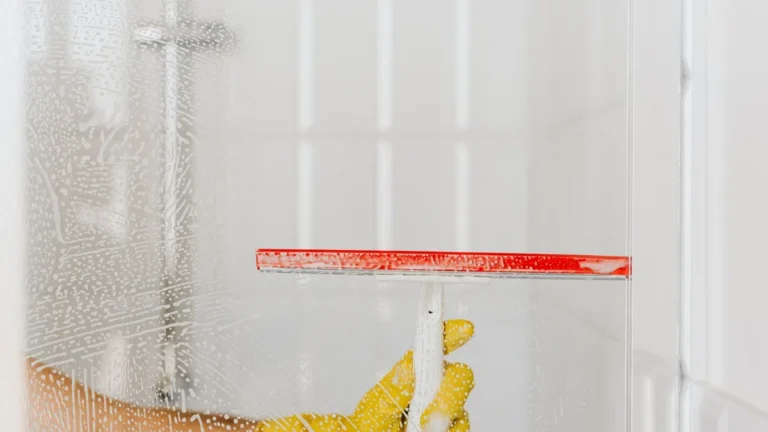 Shower Squeegee Guide: How to Use It Daily, Prevent Mold and Hard Water Spots, Blade and Handle TipsQuick answer: a shower squeegee removes water from glass, tile and fixtures right after you shower, before it…Read more →




One Comment